Heroin: The Image and the Drug, 1989–1999
Subscribe
https://meridian-archive.com/feed.xmlOpen in your app, or paste the link above into any other:
The Maintenance City, 1989
By 1989 a heroin user in New York could report each morning to one of a citywide network of clinics and receive a legal, medically dispensed dose of a substitute opioid — methadone — under a treatment protocol that Vincent Dole and Marie Nyswander had first documented at a Manhattan hospital in 1965, and that by the end of the 1980s anchored routine outpatient care across the five boroughs.1 A methadone patient held a job, kept an apartment, and appeared in no newspaper account of any drug epidemic, because the entire clinical purpose of the treatment was that nothing legible happened: the population that had started on heroin in the 1960s and 1970s aged onto the program in large numbers and simply continued, a standing municipal apparatus for administering opioid dependence that ran for decades beneath the city’s louder arguments about drugs, unremarked because it worked.
The aesthetic that the decade argued about took its name from a drug that its two founding images did not contain. In the June 1993 issue of British Vogue, a nineteen-year-old Kate Moss appeared in a West London flat — hair pulled back, a pink cotton vest, black mesh underwear, a string of colored fairy lights taped to the wall behind her — photographed by Corinne Day for a lingerie feature the magazine titled “Under Exposure.”2 The pictures were flat, gray, deliberately amateur, and they set off a running argument in the British press about whether a magazine had just glamorized anorexia, drug use, or child pornography. The same year, Moss appeared near-naked for Calvin Klein’s Obsession campaign, shot in the Virgin Islands by Mario Sorrenti — her boyfriend at the time, sent to the islands with her and no crew — a body that read, against the tanned and lacquered supermodels it was replacing, like a runaway’s.3
The look acquired a name: heroin chic. Its grammar was consistent and quickly legible — extreme thinness, pallor, dark circles under the eyes, unwashed hair, blank affect, and a setting that read as a cheap apartment or a bathroom rather than a beach or a ballroom. The photographers who worked in it — Day, Sorrenti, David Sims, Juergen Teller — were building a case against the gloss of the 1980s, drawing on the same wasted, unglamorous register that Kurt Cobain and the Seattle grunge scene had pushed into the culture at large, and for most of the models, stylists, and art directors involved, the case was aesthetic rather than pharmacological. The thinness was a diet and a genetic lottery; the dark circles were makeup; the squalor was set dressing. The style peaked between 1993 and 1996 across the American magazines that reproduced it, and it was named for a real drug that, in most cases, no one making the pictures was taking.
A Death, 1997
On February 4, 1997, Davide Sorrenti died in New York at the age of twenty. He was Mario Sorrenti’s younger brother, a photographer in the same downtown circle, and the family had come from Naples to New York in 1982 in part so that he could be treated for thalassemia, the inherited blood disorder he had lived with since birth. The press reported his death as a heroin overdose.4 His mother, the photographer and stylist Francesca Sorrenti, said afterward that the disorder was what made the drugs fatal — that there were narcotics in his system but not in quantities that would have killed a healthy man, and that his body, chronically short of the blood a transfusion supplied, could not absorb what a heavier user survived nightly.5
The death broke a silence. On May 20, 1997, Amy M. Spindler wrote in The New York Times that the fashion industry’s refusal to connect its imagery to the drug use among its own young photographers and models had become a form of complicity, and that a photographer’s death at the center of the scene was the fact the silence could no longer absorb.4 In the weeks that followed, editors who had commissioned the look conceded in print what the business had spent years denying — that the strung-out image had drawn on real use among the young people making it, and that the pictures held their seductive charge precisely because they were not entirely staged. The next day, May 21, President Clinton addressed the United States Conference of Mayors and named the aesthetic directly: “The glorification of heroin is not creative, it’s destructive. It’s not beautiful, it is ugly. And this is not about art, it’s about life and death.”6 Within months the magazines that had published the look announced a turn — brighter, healthier imagery promised for the July issues, the strung-out apartment set aside for the summer.7 By the end of May the aesthetic had already become a punchline, mocked in a fast-food chain’s television advertising, which was the surest sign that its life as a serious style was finished.8 The panic had a name, a date, a presidential quotation, and a corpse. What it did not have was much to do with the drug itself.
The Old Drug
Heroin had been in New York far longer than the photographs, and for most of that history it had belonged to the same downtown the fashion image was borrowing from. It was the drug of postwar jazz — of Charlie Parker’s bebop generation — and of the 1970s Lower East Side, of the lofts and the punk clubs and the galleries, the world in which Jean-Michel Basquiat, dead of an overdose in 1988, had been the most recent famous casualty, months before the decade turned. By 1989 that heroin had been overshadowed, on the street and in the coverage, by crack — newer, cheaper, more visibly destructive, and coded in a way that made it the drug the city argued about. Heroin kept going underneath the argument.
Its long-term users kept going with it. The population that had started in the 1960s and 1970s did not disappear; it aged, and a large share of it aged onto the methadone system already described.1 Others simply kept copping, from dealers they had used for fifteen years, at doses that had plateaued long before. The drug the fashion world discovered as a look in 1993 had been running a quiet maintenance economy in the same city for thirty years.
The New User
What was new in the 1990s was not the drug but the user, and the actual users did not photograph like the pictures because most of them did not look like the pictures. The retail product grew steadily more potent across the decade as Colombian supply displaced the older Southeast Asian trade — from a rough twenty to thirty percent purity in the Asian-supplied 1980s to substantially higher through the 1990s — and the rising strength changed who could use it and how.9 At the higher concentrations, the drug could be snorted rather than injected — which removed the needle, and with the needle the track marks, the visible stigma, and, in a decade organized around the fear of shared blood, the risk that mattered most to a cautious professional. A whole population entered heroin in the 1990s without ever touching a syringe.
Régis Andrade, Stephen Sifaneck, and Alan Neaigus studied twenty-three of them on the Lower East Side in 1996 and 1997: non-injecting heroin users who were, in the aggregate, white, college-educated, employed, in their mid-twenties to mid-thirties, and renting apartments in Manhattan.10 They bought one to four times a week. Over the study window, none progressed to injection. The behavior the drug produced was the near-opposite of the cocaine and alcohol that ran the magazine floors — soft-spoken, slowed, turned inward, a warm heaviness that pulled a person toward the corner of a room rather than the center of it. A user might nod mid-sentence, lean too far into a chair, excuse himself to rest his eyes. The functional exterior held for a long time, because so little of it showed on the outside.
The clearest first-person record of that life belongs to Ann Marlowe, a critic for The Village Voice and the New York Press who snorted heroin for roughly seven years while filing copy, held no job she lost to it, entered no clinic, and quit by walking away from it. How to Stop Time: Heroin from A to Z, her account of that career, was published in 1999 and named one of the year’s best books by the Voice she had been writing for throughout.11 The organizing fact of the book is a distinction the addiction memoir usually erases: Marlowe understood herself as a writer who used heroin, not as an addict who happened to write, and the framing predicted the outcome. It was the drug of a scene, not yet the ruin of a life, and it sat in a long downtown lineage — the loft-and-guitar world that Lou Reed had catalogued on New York in 1989, the older bohemia that William Burroughs, still alive at the far end of a heroin habit that had run since the 1940s and still publishing through it, personified — that treated a controlled habit as a fact of the trade rather than a confession.12
The shape of that life was set as much by its exits as by its doses. The users who became visible — who lost the job, entered the clinic, wrote the book — were the minority in whom the drug climbed past the plateau. The larger group left the way it had entered: quietly, on a life event rather than a crisis, a pregnancy or a move or a job change or a relationship that could not survive the Saturday errand, and mostly without a clinic. Nothing legible happened on the way out any more than on the way in, and so the exit produced no record either. The memoir was written by the exception. The others said nothing, told one or two people in a working lifetime — a peer in an adjacent trade, never family — and aged out of the drug without anyone at the office ever learning it had been there.
The Heraldry
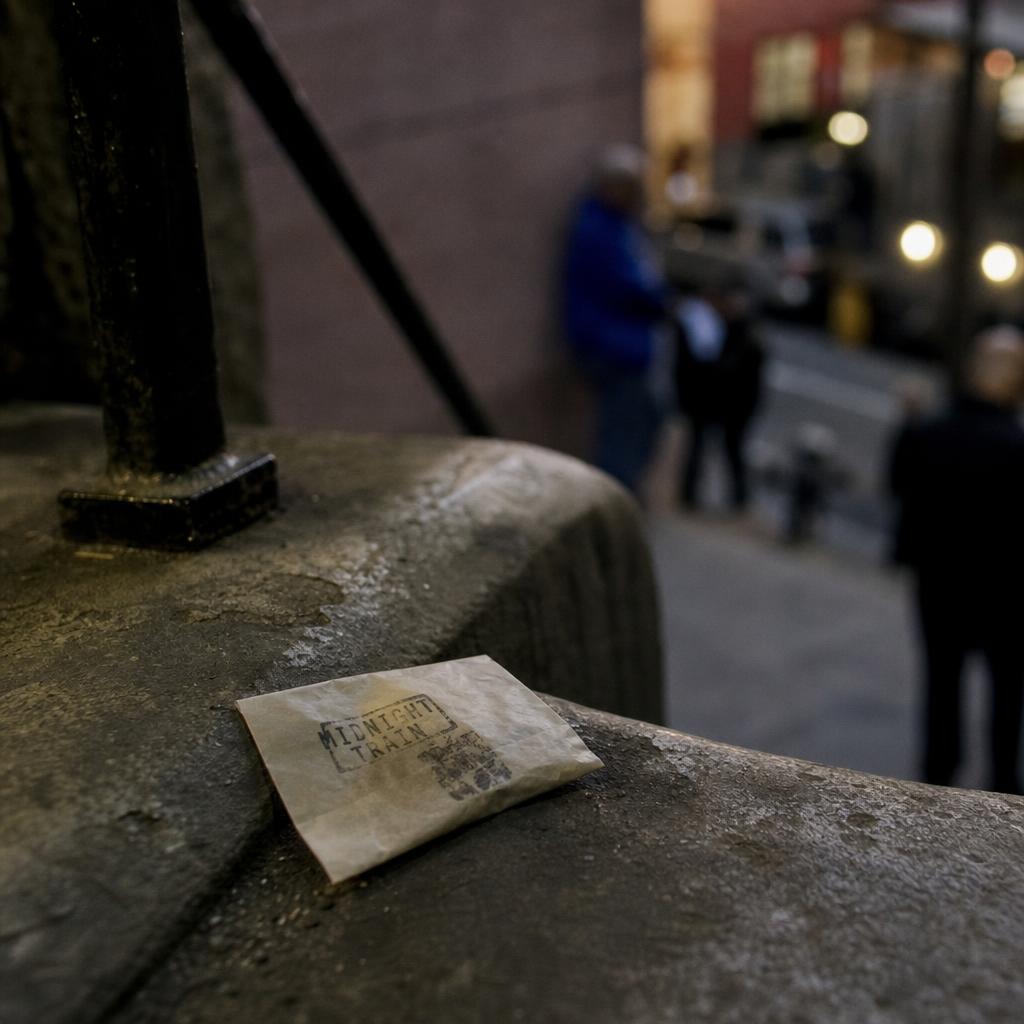
At street level the drug was cheap and branded. On Stanton and Ludlow Streets, retail heroin was sold in glassine bags for about ten dollars each, and the bags were stamped with names — a marketing practice that Travis Wendel and Ric Curtis called the heraldry of heroin, tracing it back to the early 1970s.9 A stamp was a batch brand: “DOA,” “Body Bag,” “No Regrets,” names lifted from carmakers and Latin mottoes, each one a claim about the potency of that day’s supply and a way for a satisfied customer to find the same bag again. The transaction ran out of tenement doorways, and it distinguished its customers by volume. A daily user needed something like ten bags a day. A weekend snorter needed two or three, twice a week.
The economics were the part the moral panic ignored. At a bag a night on the weekend, a snorting habit cost a few thousand dollars a year — less than the annual rent on a walk-up in Park Slope, well inside the means of anyone drawing a professional salary, and invisible on any ledger because it was paid in cash and folded into a night out.10 The wholesale end sat uptown, in the Dominican-run trade around Washington Heights that supplied much of the region; the retail end sat on the Lower East Side, a short walk or a subway ride from the lofts and share apartments of the people who came down to buy. For a certain kind of buyer the trip became a regularity rather than a rupture — a fixed Saturday errand set among the weekend’s other stops, the bar and the record store and the walk home.
Four Points of Contact
The image and the drug belonged to different populations, and for the most part they did not meet. The models and art directors who built the look mostly did not use, and the employed snorters who used mostly did not appear in anyone’s campaign. Where the two overlapped, they overlapped by accident, in a small number of predictable places.
One was the bathroom of a downtown bar — Max Fish or the Mars Bar or any room along Avenue A — where a model performing the aesthetic and a bartender who actually used it could end up sharing a stall without either recognizing the other as anything but a stranger in a line. Another was the shared supplier: a photo studio in the West Twenties and the tenement two blocks over could be served by the same dealer, so that the assistant loading film and the man on the stoop were customers of one business. The distance was real but thin, a matter of who paid retail and who got styled.
The place the distance collapsed entirely was Davide Sorrenti’s own life, where the performance of the drug and the use of it were the same act in the same body, until he died. His death was the single point at which the fashion world’s picture of heroin and an actual person’s heroin became indistinguishable — the image and the drug in one room, no longer arguable as separate things. The memorial that followed drew both of the worlds he had belonged to into one gathering: the photographers and stylists who had built the look, and the downtown scene in which the drug had never been a look at all.
That the contact points were so few was a fact of geography and money before it was a fact of temperament. The image was made in studios and shot for magazines edited above Fourteenth Street; the drug was bought in doorways below it. The two economies ran on different hours, different prices, and different parts of the city, and a person could spend a career inside one without ever crossing into the other. It took a death that belonged to both to make them, briefly, the same story — and the fashion world’s response to that story was to stop telling it, because a real death was the one thing it could not use.
The decade held a loud argument about a photograph and almost none about a drug. The photograph had everything a public argument needs — a name, a villain, a famous face, a dead young man, and a president willing to say the word out loud — and the drug had none of it, because the people using it in the way the research actually found were not dying on schedule or losing their jobs on schedule or doing anything legible enough to argue about. They were buying a ten-dollar bag on a Saturday, filing their copy on Monday, and paying less for the year’s habit than for the year’s rent. The gap between the heroin that got named and the heroin that got used was not a matter of degree. It was the difference between what a decade says about itself and what it goes on quietly doing while it says it.
Meridian would have run the heroin-chic panic in The Feature Well, closing it into the July issue behind the fashion industry’s own reversal. The Sorrenti death, Clinton’s remarks to the mayors, and the trade’s pledge of healthier pages for summer would have given a features editor the whole arc before the close, the story already sequenced by the people it examined. The piece would have argued what the industry had itself just conceded: that the imagery had drawn on real use among the photographers and models who made it, and that a death was the fact the silence could no longer absorb. It would have carried the President’s line as quotation, not commentary, the well existing to hold a story the industry’s own admissions had already proven.
The piece would have arrived competent and a little late, assembled from three weeks of daily coverage a monthly could not have matched for speed. A features editor’s job would have been synthesis rather than discovery, folding what the dailies had already reported into a longer piece with room the daily columns lacked. The editors who had commissioned the look would have talked to Meridian’s writer, because by July they would have already talked to everyone else.
Footnotes
-
Vincent P. Dole and Marie E. Nyswander, “A Medical Treatment for Diacetylmorphine (Heroin) Addiction,” Journal of the American Medical Association 193, no. 8 (1965): 646–650. ↩ ↩2
-
“Under Exposure,” photographs by Corinne Day, Vogue (British edition), June 1993. Moss was photographed in the flat she shared with the photographer Mario Sorrenti; the images drew complaints to the magazine and a wider British-press argument over whether they glamorized thinness and drug use. ↩
-
“Calvin Klein, Kate Moss, Mario Sorrenti Unite for Obsessed Fragrance,” Women’s Wear Daily, June 2017, documenting the original 1993 Obsession campaign, shot by Sorrenti in the U.S. Virgin Islands. ↩
-
Amy M. Spindler, “A Death Tarnishes Fashion’s Heroin Look,” The New York Times, May 20, 1997. ↩ ↩2
-
See Know Evil, directed by Charles Curran (2018), a documentary on Davide Sorrenti and the heroin-chic era, drawing on the account of his mother, the photographer and stylist Francesca Sorrenti. ↩
-
“Clinton Blasts ‘Glorification of Heroin’ in Magazine Fashion Photo Spreads,” The Washington Post, May 22, 1997, reporting remarks made May 21 to the United States Conference of Mayors. ↩
-
“Fashion Leaders Yank Addict Look,” The Spokesman-Review, May 25, 1997, reporting the industry’s pledge of a healthier aesthetic in the July issues. ↩
-
“Fashion’s Bad Habit,” The Baltimore Sun, May 29, 1997. ↩
-
Wendel and Curtis, “The Heraldry of Heroin: ‘Dope Stamps’ and the Dynamics of Drug Markets in New York City,” Journal of Drug Issues 30, no. 2 (2000): 225–259. ↩ ↩2 ↩3 ↩4
-
Andrade, Sifaneck, and Neaigus, “Dope Sniffers in New York City,” Journal of Drug Issues 29, no. 2 (1999): 271–298. ↩ ↩2
-
Ann Marlowe, How to Stop Time: Heroin from A to Z (Basic Books, 1999). The Village Voice, where Marlowe was a critic, named it one of the twenty-five best books of 1999. ↩
-
Lou Reed, New York (Sire Records, 1989). ↩
-
Norman E. Zinberg, Drug, Set, and Setting: The Basis for Controlled Intoxicant Use (Yale University Press, 1984). ↩
-
Lee N. Robins, John E. Helzer, and Darlene H. Davis, “Narcotic Use in Southeast Asia and Afterward,” Archives of General Psychiatry 32, no. 8 (1975): 955–961. ↩