
The Pre-9/11 Mood: What 2000–2001 Actually Felt Like
Subscribe
https://meridian-archive.com/feed.xmlOpen in your app, or paste the link above into any other:
The Peak and the Fall
An employee who had exercised an incentive stock option and held the shares owed the alternative minimum tax on the spread between the strike price and the stock’s market value at the moment of exercise — a bill calculated whether or not a single share was ever sold. When the underlying stock collapsed the following year, the gain the tax had been assessed against no longer existed in anyone’s account; the liability, computed against it, remained due regardless. By the early 2000s the mechanism reached roughly five million taxpayers, routine enough that a reform advocacy group organized in Washington to press Congress for relief that did not arrive for years.1 The bill came addressed, among many others, to editors and writers who had left magazine mastheads in 1998 and 1999 for the promise of equity in a Silicon Alley loft, where stock had for a while been treated as almost beside the point next to itself — a currency so certain of its own future value that a salary alongside it seemed almost an afterthought.
That certainty had a closing value. It was 5,048.62, the NASDAQ Composite Index at the close of trading on Friday, March 10, 2000, built from the combined worth of companies that had mostly existed for fewer years than the number itself contained digits; the people who had spent the preceding half-decade filling loft floors between 14th and 41st Streets with foosball tables and stock-option paperwork treated the day it posted less as a milestone than as confirmation of what they had believed all along.2 A stretch of the city — the lofts of the Flatiron district, Chelsea, and lower SoHo, spilling south toward the Financial District — had organized itself in barely five years around a single premise: that an audience measured in page views was worth more than any audience had ever been worth before, worth more than the magazines and newspapers whose staff it had spent the second half of the 1990s recruiting away with doubled salaries and stock grants that had, on paper, already made junior editors into millionaires.
The buildings themselves made the case for the difference before anyone spoke a word of it. A Silicon Alley loft ran open floor plans, exposed brick and ductwork, a foosball table by the kitchen, a dog asleep under someone’s desk; a Midtown magazine floor ran carpet, a closed office door, an assistant screening the phone. The founders were mostly in their late twenties and early thirties, more often out of a Wall Street analyst program or a business school than out of a garage, dressed by 1999 in fleece vests and cargo pants where three years earlier they had worn a blazer over an oxford shirt.
The reversal, when it came, arrived as a sequence rather than a single event. On March 13, news that Japan had slipped into a fresh recession triggered a global sell-off in technology stocks; the index fell 2.6 percent that single session, and did not recover. By January 2001 it stood near 2,300, a decline of some 54 percent from the March peak; by April it had fallen under 2,000.2 The geography of the collapse could be dated almost building by building. Pseudo.com, the SoHo streaming-media outfit whose founder Josh Harris had staged an elaborate performance-art installation in its own loft through the last weeks of 1999, laid off all 175 of its remaining employees on September 18, 2000, its chief executive, David Bohrman, delivering the news in person.3 Kozmo.com, whose bicycle messengers in orange nylon jackets had made same-hour delivery a familiar sight on the avenues, shut down without notice on April 11, 2001, laying off its entire staff of eleven hundred after burning through some $280 million in financing, sixty million of it supplied by Amazon.4 The trade press that had chronicled the boom folded inside the bust it was covering: the Industry Standard, on pace by mid-2000 to carry more advertising pages that year than any other American magazine,5 announced it would cease publication on August 17, 2001, and filed for bankruptcy soon after.6
For the editors and writers who had left print mastheads in 1998 and 1999 for the promise of equity, the sequence that followed ran in something close to a fixed order: a hiring freeze, then a private anxiety about a vesting schedule that no longer mattered because the stock underneath it did not either, then a layoff notice delivered by electronic mail, then a walk to the elevator with a cardboard box, then a telephone call to an old assigning editor, asking, in a register that had not been necessary two years before, whether anything was open. Real magazine houses felt the collapse from the other direction, through the advertising ledger: Time Inc., the industry’s largest publisher, entered a cycle of layoffs that year that its own executives linked to advertising’s migration toward the internet and to the strains of a corporate merger, six months old, that had joined its parent company to a technology conglomerate many times its market value.7
The collapse can be read company by company.
The Alley’s Balance Sheet
| Company | Peak | Outcome |
|---|---|---|
| theglobe.com (founded by Cornell undergraduates Stephan Paternot — great-grandson of a Nestlé co-founder — and Todd Krizelman) | IPO priced at $9 a share, Nov. 13, 1998; closed its first trading day at $63.50 — a 606 percent gain8 | Delisted from Nasdaq in April 2001; stock fell below ten cents, market value down roughly 95 percent9 |
| Pets.com | IPO at $11 a share, Feb. 9, 2000; ten days earlier, its sock-puppet mascot had starred in a $1.2 million Super Bowl advertisement rated the game’s most popular spot10 | Shutdown announced Nov. 7, 2000, laying off 255 of its 320 employees;11 dissolution took effect Jan. 18, 200112 |
| About.com (founded by Scott Kurnit as The Mining Company) | Sale to Primedia announced Oct. 30, 2000, at a nominal $690 million in stock13 | Value fell to roughly $517 million as Primedia’s own shares dropped the same day13 |
| Inside.com (founded by Kurt Andersen, Michael Hirschorn, and Deanna Brown) | Launched May 2000 on $12 million from Jim Cramer and Flatiron Partners; a print edition followed that December14 | Sold to Steven Brill in April 2001; ceased publication that October14 |
| NASDAQ Composite | Closed at 5,048.62, March 10, 20002 | Bottomed near 1,114 roughly two and a half years after the peak — down 78 percent15 |
| Urbanfetch (founded by Ross Stevens) | Same-hour delivery service, operating in New York and London since 199916 | Ceased retail operations Oct. 23, 2000; corporate-delivery arm sold off separately16 |

The Millennium That Didn’t Happen
The federal government alone spent an estimated $8.5 billion hunting a single software defect, and American businesses and governments together spent something closer to $100 billion pursuing the same repair: the two-digit year field, standard since the 1960s, that misread the year 2000 as 1900 in any system left unpatched.17 On the night of December 31, 1999, the ball descended over Times Square on schedule. The lights in every surrounding building stayed on. Banks that had built contingency plans for a run on cash opened for ordinary business on January 3, and the ordinary business was, in fact, ordinary.
The alarm had been genuine and the money had mostly worked — the code was patched or replaced, system by system, by people whose names appeared nowhere in the coverage that followed. What the public retained instead was the shape of the warning without the labor that discharged it: the bottled water, the home generators, the sober magazine features on supply-chain and grid failure, set against a January morning on which none of it had turned out to be visibly necessary. The residue was a specific kind of embarrassment, durable enough to outlast the year that produced it — the suspicion, available to anyone who wanted it, that an expert warning delivered in full sincerity could still describe a catastrophe already prevented before it arrived, and that successful prevention looked, from the outside, exactly like nothing having been wrong to begin with.
Thirty-Six Days in Florida
New York backed Al Gore for president by a lopsided twenty-five points — Gore took 60.2 percent of the vote to George W. Bush’s 35.2 percent.18 The rest of the country was not so settled. The evening of November 7, 2000, closed with Florida’s twenty-five electoral votes undetermined and the national result hanging on them; officials in Miami-Dade, Palm Beach, and Broward Counties spent the following weeks examining ballots by hand and by fluorescent light, while lawyers for both campaigns argued, in state and then federal court, over what a punch card with an incompletely detached chad was supposed to mean.19
At approximately ten o’clock on the night of December 12, the Supreme Court released its decision. Seven justices agreed that the varying recount standards applied across Florida’s counties violated the Constitution’s equal protection guarantee; five of the seven, dividing along the same line that had decided most of the court’s contested cases that decade, held that no constitutionally uniform recount could be completed before the federal deadline for certifying electors. Florida’s electoral votes went to Bush. Al Gore conceded the following evening, in a televised address watched in newsrooms up and down Manhattan: “While I strongly disagree with the court’s decision, I accept it.”19
A city and state that had backed Gore by that same lopsided margin absorbed the outcome with a specific, quiet disorientation — not the ordinary disappointment of an election lost, but the more particular experience of watching a result installed by the branch of government furthest from a ballot box, on a legal rationale a substantial part of the professional and editorial class considered, privately and then in print, to have been written backward from its answer. Bush’s inauguration on January 20, 2001, was cold and wet in Washington; protesters lined the parade route, and some of them threw eggs. New York watched the address on television with the detachment of a city that had not chosen this particular outcome.
A Recession With No Name Yet
The National Bureau of Economic Research, months afterward, dated the peak of the business cycle to March 2001 — the technical beginning of a recession it did not announce until that November.20 People living through the spring and summer of 2001 had no such official confirmation and did not need one to feel the contraction. Office space in the Flatiron and Chelsea loft districts, which had commanded steep premiums at the 1999–2000 peak, sat on the sublet market in growing quantity; hand-lettered FOR LEASE notices multiplied along Park Avenue South and lower Fifth. Young product managers and developers who had drawn comfortable salaries at companies with no working revenue model were unemployed in a market contracting from two directions at once — print retrenching from the loss of technology advertising, the digital jobs that had drawn them away from print already gone. Manhattan apartment prices, which had climbed steadily through the second half of the 1990s, plateaued in late 2000 and softened through the first half of 2001, ahead of most of the year’s other economic news.
Real institutions absorbed the reversal in ways that could be dated and priced rather than merely felt. Advertising pages industry-wide had peaked in 1999 and 2000; publishers cut staff, deferred travel budgets, and killed commissioned stories the following year for reasons that had nothing to do with a story’s merit and everything to do with an issue that no longer had enough paid pages to carry it. The magazine world’s anxiety was not abstract. It concerned a specific and answerable question — whether the advertisers leaving were leaving because of a cyclical downturn or because the internet had permanently taken over a function magazines had performed alone for most of the century — and in the summer of 2001 nobody on either side of the question could have said with confidence which answer was correct.
The industry’s confidence was not uniform, and the exceptions were conspicuous. Condé Nast, whose 1998 purchase of Wired from its financially exhausted founders for a reported $80 million had already signaled that establishment publishing would pay for the internet’s cultural capital even while distrusting its business model, moved its headquarters to 4 Times Square starting in June 1999 — an expensive, deliberate statement of confidence planted at the exact geographic seam where old media and new media had spent the decade eyeing one another.2122 Glossy prestige launches kept appearing through the downturn regardless — Talk, George, O, The Oprah Magazine — proof that a publisher with sufficient backing could still bet heavily on print at the same moment smaller, purely digital operations were folding by the week.
The Last Ordinary Summer
Rudolph Giuliani, term-limited and in his final year as mayor, was governing a city whose attention toward him had shifted partly to his personal life — his separation from Donna Hanover, made public the previous year, still supplying tabloid copy. By the summer of 2001, the murder count that had made New York a national byword for urban danger through the 1980s had fallen by roughly seventy percent from its 1990 peak of just over 2,200 homicides to 649 in 2001, a decline attributed by researchers to some combination of more aggressive policing, the ebbing of the crack epidemic, and demographic shifts that no single explanation accounted for completely.23 The parks were usable in a way they had not reliably been a decade earlier. The restaurants, after ten years of steady expansion, were good. In Central Park, Mike Nichols directed a production of Chekhov’s The Seagull that opened at the Delacorte Theater on August 12 with Meryl Streep, Kevin Kline, Natalie Portman, John Goodman, Philip Seymour Hoffman, and Christopher Walken in the cast, playing to lines that in some cases had formed a day in advance; the run closed on August 26.24
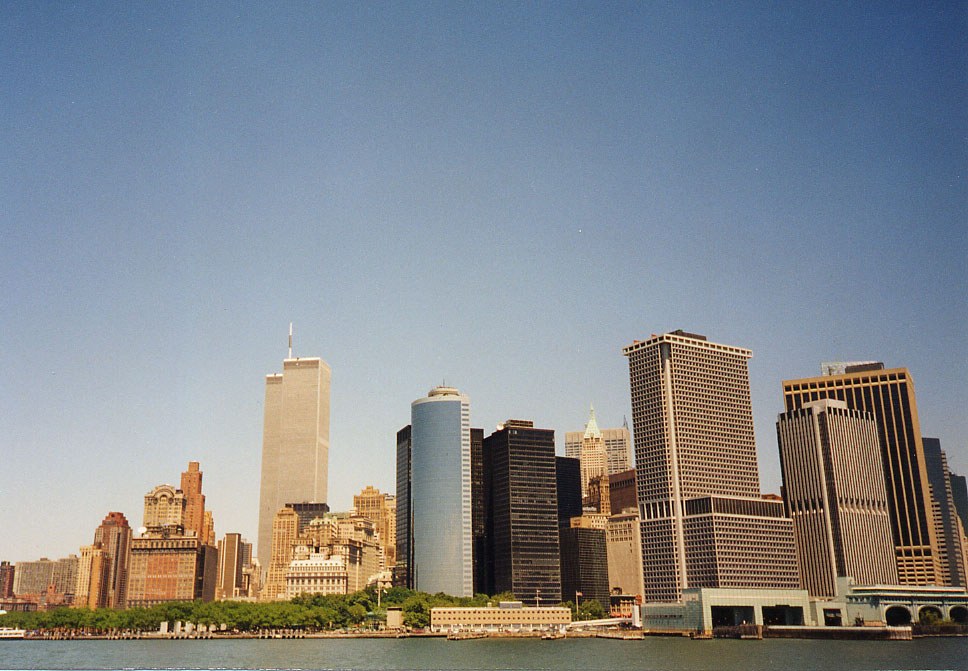
Early that August, a heat wave settled over the city severe enough to be dangerous: temperatures in Central Park reached 103 degrees Fahrenheit, with more than a week above 95 degrees combined with heavy humidity, and at least four New Yorkers died of heat-related illness before the emergency-management system’s cooling centers and advisories brought the toll no higher.25 What the heat wave interrupted was, by any measure available at the time, an ordinary run of a good summer — the Meatpacking District mid-transition from slaughterhouses to restaurants, SoHo increasingly given over to retail, galleries thick along the West 20s where light-industrial blocks had stood a decade before. The city had traded a version of itself that had been dangerous and, in places, cheap for a version that was safer, more expensive, and, in the accounts of people who remembered the earlier one, less peculiar — a trade few New Yorkers that August were prepared to call a bad one.
What the Culture Was Arguing About
The television being discussed in editorial offices that spring was The Sopranos, whose third season began a two-hour premiere on HBO on March 4, 2001, to reviews so uniformly admiring that critics who had spent three years arguing about the show’s merits had, by that point, largely stopped arguing. The record industry was in open litigation against its own customers: a federal appeals court upheld an injunction against Napster that February,26 and on July 11 the file-sharing service went dark for good.27 Outkast’s Stankonia, released the previous October, was still on every third car radio; the soundtrack to O Brother, Where Art Thou? was collecting Grammy nominations for music considerably older than the film built around it.
The book was Jonathan Franzen’s The Corrections, published September 1, 2001, by Farrar, Straus and Giroux.28 The story that had held the country’s attention through the entire summer, ahead of anything from overseas, concerned a congressional intern named Chandra Levy, last seen at a Washington gym on April 30 and unaccounted for since, and a California congressman named Gary Condit, whose denials of any knowledge of her whereabouts, delivered on national television that August 23, had made him the summer’s most covered public figure; the story was still running, without resolution, in the first days of September.29
What the Floor Could Not Yet Read
What was publicly known about al-Qaeda in the summer of 2001 was not nothing. Osama bin Laden had given on-camera interviews to American television — to CNN’s Peter Arnett in 1997, to ABC’s John Miller in 1998 — in which he called explicitly for attacks on American targets, and the bombings that followed had been covered as news, not rumor: the U.S. embassies in Nairobi and Dar es Salaam, bombed within minutes of each other on August 7, 1998, killing 213 people in Kenya and 11 in Tanzania; the USS Cole, attacked in the harbor at Aden on October 12, 2000, killing seventeen American sailors.30 Bin Laden’s name was known in every newsroom in the country. The threat he represented was understood, in general terms, to be real and ongoing.
What was not known, outside a small circle inside the government, was the density of the warning that had accumulated by that August. Richard Clarke, the National Security Council’s counterterrorism coordinator, had been pressing the new administration on the threat since its first weeks in office.31 The Central Intelligence Agency had produced dozens of reports on a possible al-Qaeda attack in the months before September, and on August 6 delivered a briefing to the president titled, without qualification, “Bin Ladin Determined To Strike in US.”32 The Federal Aviation Administration had issued advisories to airlines and airports through the spring and summer warning of hijacking risk.31 None of this had reached the editorial floors of the city’s magazines, because none of it had been declassified, leaked, or briefed to a reporter in a form specific enough to print. What a foreign correspondent might have carried back from a source inside the counterterrorism world was, at most, a generalized sense of heightened concern — not an operational detail, not a date, nothing a fact-checker could confirm or an editor could defend committing to print against the competing, more immediately reportable claims on a September issue’s limited space. The gap between what was privately sensed and what was publicly printable was not a failure of anyone’s nerve. It was the ordinary operation of an institution that could act only on what it could source.
None of what happened in New York between the spring of 2000 and the first days of September 2001 was, on its own terms, catastrophic. A stock index gave back what an unusual five years had added to it. A government spent enormous sums on a disaster that did not arrive. An election was settled by a court rather than a count. A summer got hot, and then it cooled, and the theater closed its run on schedule. Measured against the crises the city had lived through in the twelve years before it — recession, an epidemic, a record homicide count — the period was, by any ordinary standard, a good stretch: safer streets, better restaurants, a magazine world thinner but still standing, a population that had traded some of its old, dangerous texture for a version of itself that worked. What distinguished the interregnum was not what happened in it but what accompanied it without yet being named — a private, unspecific unease sitting alongside genuine and reasonable confidence, each one true at the same time, in the same rooms, for the same people, without either canceling the other out.
The heat wave that killed four New Yorkers that August would have reached the floor first as a line inside that summer’s closing piece, and would then have been drawn back out of it at the room stage: the same issue would have been carrying a travel advertiser’s Hamptons spread, and a passage dwelling on heat deaths would have been judged, that week, to sit too close beside it for comfort. Among the readers the piece would never have described would have been a nurse from Morris Heights, whose rent-stabilized walk-up on University Avenue held the heat as badly as any building the piece might have named, and who would have read the issue anyway, the way she would have read every one.
The Feature Well would have carried, that November, the retrospective the boom’s own math would have made unavoidable — the loft floors between Fourteenth and Forty-First Streets, the term sheets, the Super Bowl advertisement bought with money already gone. The Essay would have run twice in the interval: first on the year a warned-of catastrophe simply did not happen, and again a year later on a recount settled by a court rather than a count, the harder question the second time being how the magazine’s own distaste for that outcome could be kept from reading, on the page, as score-settling.
The Back, that October, would have taken that year’s arguments whole — the third year of a cable drama the critics had stopped disputing, a novel published that September, a movie soundtrack made of songs older than the film itself. The missing congressional intern and the congressman who denied knowing anything would have reached The Essay only once reframed past a single case, folded into a piece on the cable cycle’s appetite for scandal; the reason drawn at the room would have been register, not any judgment on the story’s size. The piece a returning correspondent would have proposed and then not proposed — built from a background conversation inside the counterterrorism world, offering a mood rather than a date — would have gone no further than the water cooler.
Footnotes
-
National Center for Employee Ownership, “Stock Options and the Alternative Minimum Tax (AMT).” ↩
-
John Cassidy, Dot.Con: The Greatest Story Ever Sold (HarperCollins, 2002). ↩ ↩2 ↩3
-
“Pseudo.com Shuts Down,” PBS News, September 19, 2000. ↩
-
“Kozmo Calls It Quits,” The Tufts Daily, April 2001. ↩
-
“Business Book Upstarts Barge In,” Advertising Age, June 2000. ↩
-
“Remembrance of Dot-Com Idiocy Past,” Salon, January 10, 2003. ↩
-
Howard R. Gold, “Who Killed Time Inc.?” Columbia Journalism Review, February 1, 2018. ↩
-
“Internet IPO Theglobe.com Soars,” CBS News, November 13, 1998. ↩
-
“From A List To Delist,” Forbes, June 7, 2001. ↩
-
“10 Super Bowl Ads From Advertisers That Don’t Exist Anymore,” CNBC, February 5, 2021. ↩
-
“Pets.com Goes Out of Business,” CNN Money, November 7, 2000. ↩
-
IPET Holdings, Inc. (formerly Pets.com, Inc.), Certificate of Dissolution, Delaware Secretary of State, effective January 18, 2001. ↩
-
“Update: Primedia Shares Sink 25% on Deal to Buy About.com,” TheStreet, October 30, 2000. ↩ ↩2
-
“The Tech Wreck’s Huge Toll on Fund Investors,” CNBC, November 26, 2013. ↩
-
“Urban Fetch Can’t Deliver, Quits Retail Business,” Supermarket News, 2000. ↩ ↩2
-
“Y2K Costs Government, Businesses $100 Billion,” Government Executive, November 1999. ↩
-
Federal Election Commission, Federal Elections 2000: Presidential General Election Results by State. ↩
-
Jeffrey Toobin, Too Close to Call: The Thirty-Six-Day Battle to Decide the 2000 Election (Random House, 2001). ↩ ↩2
-
National Bureau of Economic Research, “Business Cycle Dating Committee Announcement,” November 26, 2001. ↩
-
“Wired OKs Sale to Conde Nast,” CBS News, May 1998. ↩
-
Charles V. Bagli, “Conde Nast’s Stylish Clan Moves Into Times Sq,” The New York Times, June 20, 1999. ↩
-
“What Reduced Crime in New York City,” NBER Digest, January 2003. ↩
-
“The Seagull Opens Its Wings in Central Park Aug. 12,” Playbill, 2001. ↩
-
National Weather Service, “Central Park Heat Wave Climatology.” ↩
-
A&M Records, Inc. v. Napster, Inc., 239 F.3d 1004 (9th Cir. 2001). ↩
-
“Napster Was Forced to Shut Down by Court Order 25 Years Ago,” Yahoo Entertainment, 2026. ↩
-
Jonathan Franzen, The Corrections (Farrar, Straus and Giroux, 2001). ↩
-
“Timeline: Chandra Levy Case,” ABC News, 2001. ↩
-
Lawrence Wright, The Looming Tower: Al-Qaeda and the Road to 9/11 (Knopf, 2006). ↩
-
National Commission on Terrorist Attacks Upon the United States, The 9/11 Commission Report (2004). ↩ ↩2
-
Central Intelligence Agency, President’s Daily Brief, “Bin Ladin Determined To Strike in US,” August 6, 2001 (declassified April 10, 2004). ↩
-
Ryan Mac, “From Doghouse To Penthouse: The Remarkable Recovery Of The RealReal’s Julie Wainwright,” Forbes, September 9, 2015. ↩
-
Terry McDonell, “Gifted and Haunted: Remembering David Carr,” Columbia Journalism Review, August 17, 2016. ↩