
Geography of Gentrification: 1998–2001
Subscribe
https://meridian-archive.com/feed.xmlOpen in your app, or paste the link above into any other:
The Money Was Two Years Old
Every underwriting agreement written for a Silicon Alley company carried the same clause, and no investment bank negotiated it away company by company: officers, directors, and employees holding stock ahead of the public offering could not sell a single share for a fixed 180 days after the first trade, a lock-up period the banks applied as standard boilerplate rather than case-by-case bargaining.1 The clause converted a paper fortune into a fortune its owner was contractually forbidden to convert to cash while the fortune still existed. theglobe.com’s offering on November 13, 1998, priced at nine dollars, opened at eighty-seven, and closed its first day at $63.50 — a 606 percent gain that held the record for an American IPO’s first-day return for more than fifteen years — and the company’s own employees, who could not touch a share of it for six more months under the same contract that had made them rich on paper, held stock whose price on the day the lock-up finally expired was a matter the calendar, not the market, controlled.2 Layered onto the standard four-year vesting schedule with its one-year cliff, the lock-up meant that the interval between a Silicon Alley employee’s stock becoming valuable and that employee being permitted to sell it was itself a routine contract term, administered identically at every company in the district, not an accident of any one company’s timing.
The employees who ended up owing the AMT on phantom gains had, for the most part, arrived with money that had not existed three years before, and they were often not yet thirty. It was equity — founder’s stock and employee options in companies that in a great many cases had never earned a dollar of profit and had been incorporated more recently than the leases they were now competing to sign. On a good morning that equity was worth enough to outbid a law partner’s income or a family’s inheritance for the same apartment, and the good mornings ran, with few interruptions, from the Netscape offering of 1995 to the spring of 2000. The money landed in the neighborhoods where the companies themselves had opened: the cast-iron and warehouse blocks between Fourteenth Street and the high Twenties, where a district that had begun calling itself Silicon Alley assembled in barely five years around the premise that an audience counted in page views was worth more than any audience had been worth before.3
The people holding the equity made up a class fraction the city had not filed before. They were, in the main, in their late twenties and early thirties — older than their California counterparts, adults changing careers rather than dropouts inventing one — and they arrived disproportionately out of Wall Street analyst programs, business schools, and the northeastern universities, Cornell and Penn and Columbia and New York University, that fed New York’s professional class.3 What set them apart from the finance money already in the city was not the amount but the speed: a bond trader’s bonus was large and annual, earned inside an institution decades old, while a founder’s paper worth could pass from nothing to millions in a single afternoon of trading and rested on a company that in some cases employed fewer people than the floor it rented. They had money, in other words, without most of the things money in New York had customarily traveled with — without the years behind it, without the manner that a slower fortune trained into its heirs, without the address history a co-op board read as closely as a bank statement.
The Wired Blocks
The district had a physical spine, and it ran through buildings that a decade earlier had held light manufacturing, wholesale trade, or nothing at all. In 1996 the developer Rudin Management reopened 55 Broad Street, a downtown office slab that had once been designed for Goldman Sachs and later leased to Drexel Burnham Lambert, as the “New York Information Technology Center” — a building rewired for Ethernet, fiber, and satellite and marketed by the Rudin family as the first fully wired office building in the city.4 Uptown, in Chelsea, the former National Biscuit Company complex on Ninth Avenue, where the Oreo had been baked earlier in the century, reopened its ground-floor concourse in April 1997 as Chelsea Market, its upper floors filling with the offices of the Food Network, the Oxygen cable channel, and the local news station NY1.5 Farther west, the vast 1931 freight terminal called the Starrett-Lehigh Building, which trucks had once driven into on freight elevators, filled toward the end of the decade with technology, media, and design tenants, Martha Stewart’s company among the anchors.
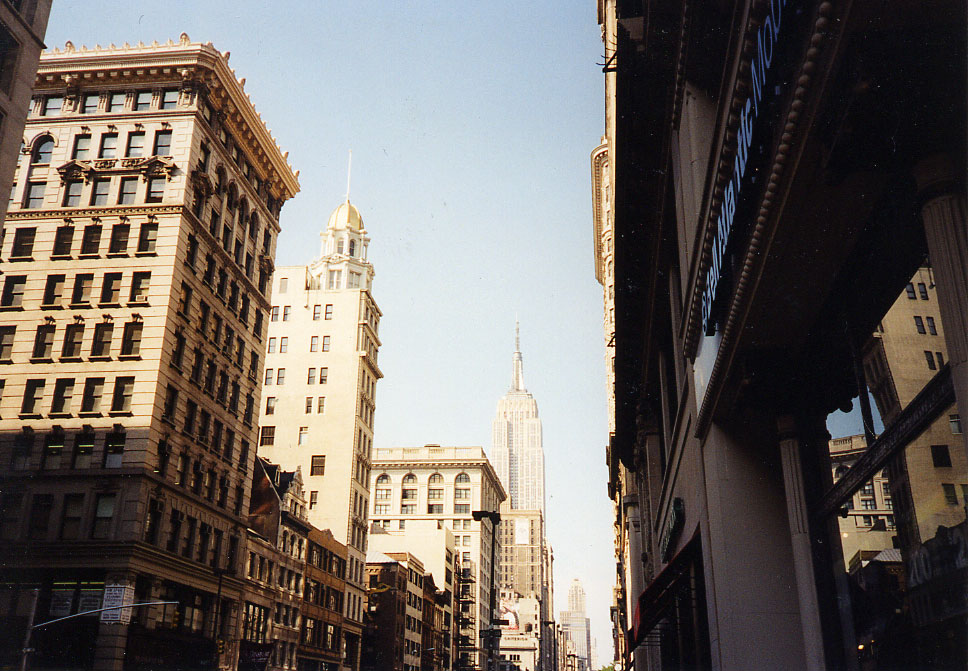
The money that filled these floors was raised a few blocks away and named for the same ground. Flatiron Partners, the venture firm that backed a long list of the district’s companies, was founded in 1996 by Fred Wilson and Jerry Colonna and took its name directly from the neighborhood; its initial fund of some hundred fifty million dollars was capitalized by SOFTBANK Technology Ventures and the private-equity arm of Chase.6 A firm that named itself for a Manhattan district rather than for a founder or an abstraction was making a claim about where the new economy lived, and the claim was accurate: unlike the California model scattered across a suburban valley, the New York version was packed into a walkable stretch of old commercial real estate, its offices, its money, and its parties all within a short walk of one another.
What happened to the apartments above and around these offices was harder to measure than what happened to the offices themselves, and the connection was assumed more often than it was proved. Manhattan apartment prices had been climbing through the second half of the decade, before the district had a name and faster once it acquired one. The new equity was widely believed to be bidding up the loft market of exactly the neighborhoods where its holders worked, and the belief was reasonable, but the effect of the paper wealth on any given sale price was never cleanly separable from the longer climb that had begun before the founders arrived and continued after they were gone. What could be said plainly was narrower: the loft, the converted warehouse floor, and the open-plan raw space that the district’s companies had made the emblem of their offices became, in the same years, the emblem of its housing, and the two markets rose together whether or not one was driving the other.
The Money Had No Manners
The city’s older money watched the new arrivals with a mixture of fascination and condescension, and admitted them to some rooms and not others. A founder worth tens of millions on paper could be seated at a party, profiled in a magazine, and added to the annual lists of the newly important — Vanity Fair began folding internet figures into its “New Establishment” ranking of the powerful from about 1998 — and could still be turned away by a cooperative board that screened, as such boards had screened for generations, for something a balance sheet did not show.3 The screen was the same one the city’s oldest addresses had always used: not the size of the fortune but its manner, its age, its legibility to people who had grown up inside the code. A twenty-eight-year-old whose money was two years old and might be gone by the closing was, to a board on Park Avenue or Fifth, precisely the applicant the interview existed to catch.
Where the two kinds of money met was at the party, and the party was a form the district had made its own. The scene ran on a circuit of loft openings, launch celebrations in converted warehouses, and recurring mixers — the monthly gathering called First Tuesday among them — that drew founders and the venture partners courting them into the same room by the hundreds; the Silicon Alley Reporter, the scene’s house journal, ran dinners that served as its social register.3 An editor or an heiress could attend one, be photographed, and go home having shaken the hand of a man worth more on paper than anyone else in the room and worth less than nothing within a year or two — and the handshake committed the older money to nothing beyond the evening.
The writer David Brooks gave the emerging type a name at the boom’s height. His 2000 book Bobos in Paradise described a new upper class that fused the counterculture of the 1960s with the material ambition of the 1980s — the bourgeois bohemian, affluent and anti-establishment at once, spending freely on the appearance of not caring about spending.7 The founders fit the description and extended it: they had the money to buy into the neighborhoods the artists had opened, and they bought the aesthetic the artists had made — the exposed brick, the raw floor, the loft with its industrial past left visibly in place — as a finished product, at a price the artists themselves could no longer pay. The look that had signified poverty and improvisation in the mid-1980s signified wealth by the end of the decade, and the people who had invented it were, in most cases, no longer in the buildings.
What the new money bought, then, was space and visibility, and what it did not buy was standing. It could rent the wired floor and purchase the loft above it; it could appear on the lists and at the parties and in the profiles; it could not, on the strength of two years of stock appreciation, seat itself on the boards and in the clubs where the city’s inherited class kept its own company. Some of the old families’ own children were among the founders, and their ventures were, as a rule, kept close to the family’s existing money and counsel rather than treated as a new thing under the sun. The arriving fortune was large, sudden, and real while it lasted, and it changed the map of who lived where; it did not change, in the years it had, the older map of who belonged to what.
The Paper Burned
The equity proved to be paper, and when the companies behind it closed or contracted the paper was worth nothing. The NASDAQ composite index, which had absorbed most of the district’s public wealth, peaked in March 2000 and gave back over the following year nearly everything the preceding stretch had added; the companies that had filled the wired floors closed or contracted in a sequence that could be dated almost building by building, and the recruiters, term sheets, and paper millions that had defined the district went with them.8 The office market registered the collapse first and most visibly: sublease space piled onto the market along Park Avenue South and lower Fifth Avenue, and the hand-lettered notice in the ground-floor window returned to blocks that had not seen one since the recession at the decade’s start.
The apartments told a different story, and the difference was the point. The residential market that the boom had been assumed to inflate did not give its gains back when the boom ended. Asking rents in the loft districts softened as the companies failed and the pace of new sales slowed, but the prices the boom years had already established did not fall back toward where they had begun. The paper wealth had evaporated, but the transfers it had helped accelerate did not reverse: the loft that had passed from a manufacturer to a painter to a founder did not pass back down the chain when the founder’s stock went to nothing. The money had come and gone inside three years; the map it had helped redraw stayed redrawn. A district could lose the fortune that had arrived to occupy it and keep every dollar that fortune had added to the ground underneath.
The Frontier Ran Out of Island
By 2001 the cheapest place a person starting out could still take a floor was no longer in Manhattan at all. The tenant who at the decade’s start had rented a run-down East Village apartment for a few hundred dollars a month had, over twelve years, been priced first out of that apartment, then out of the neighborhoods that had absorbed the East Village’s overflow, and finally across the river to Williamsburg — which had itself, over the same years, turned from an industrial frontier into a destination and begun pricing out the artists who had crossed the river ahead of the rest.3 The loft districts of Manhattan — SoHo, TriBeCa with its warehouse floors converted to residence, Chelsea, the Lower East Side and the East Village — had more than doubled in value across the longer arc that ran through and past the period, and the doubling had not asked whether the money paying for it was old or new, finance or media, lasting or paper.
The frontier that had advanced block by block through the 1980s and jumped the East River in the middle of the 1990s had, by the period’s end, run out of cheap Manhattan to cross. The dot-com money had been the last new kind of wealth to enter the market before the map hardened — a fortune that arrived fast, spent freely, learned none of the older code, and vanished nearly as fast as it had come — and it left behind neighborhoods it had helped make expensive and could no longer itself afford. What remained when the paper burned was the ground, priced now beyond the reach of a great many of the district’s own founders, who had joined, in the end, the ranks of those their own arrival had helped to price out.
The last new money to reach New York before the century turned was fast, young, and briefly enormous. It bought the lofts the artists had opened and the aesthetic the artists had made, appeared on every list the city kept of the people who mattered, and could not be seated on the boards that had watched fortunes arrive and leave for a hundred years. Then it evaporated, over a single year. The prices it had helped raise went on rising; the people it had helped displace did not come back; the ground it had bid up stayed bid up, now under buyers who had never heard of the companies whose stock had done the bidding. A neighborhood could be changed for good by money that lasted almost no time at all, and the change outlasted the money that had accelerated it — and went on into a city still rearranging itself faster than the people in it could take its measure.
A features editor would once have raised, at a scheduling meeting sometime in 1999, the possibility that the district’s paper wealth would not survive to see a piece through to its own close. The room would have voted the argument down before it finished: the dot-com pages still filling the well that quarter would have kept coming whether or not the piece ran, and no one on the floor would have wanted to be the name remembered for chasing an advertiser off a year ahead of the market. The counterargument would have owed nothing to the story’s merits and everything to the calendar it would have threatened, and the piece would have gone back into the drawer to wait for a peg that never would have needed inventing.
The scene itself would have been the easier assignment, and would have gone forward without the argument the bubble piece had lost. The loft offices, the foosball table standing in for half a department’s furniture budget, founders not yet thirty running companies younger than the leases they had signed, the launch parties filling a converted warehouse west of Tenth Avenue on a Thursday — The City would have carried it in June of 1999, aimed at readers who in a great many cases would have lived within blocks of the buildings the piece described.
The other half of the same subject would have reached the well only after the market had already written it. By the time the NASDAQ’s March collapse had given back what five years of trading had added, the paper fortunes the City piece had toured would have gone to nothing building by building, and The Feature Well of January 2001 would have carried the retrospective the scheduling meeting had once refused to run — the same district, the same money, no advertiser left in the district to withhold pages over it.
Footnotes
-
Dot-com bubble — general chronology; standard underwriting practice of the period fixed post-IPO lock-up periods at 180 days, with a four-year vesting schedule and one-year cliff governing pre-IPO grants. ↩
-
theglobe.com — Wikipedia; Stephan Paternot — Wikipedia. IPO priced at $9 on November 13, 1998 (Bear Stearns underwriting), opened at $87, closed its first day at $63.50 — a 606 percent first-day gain that held the record for an American IPO for more than fifteen years. ↩
-
Michael Indergaard, Silicon Alley: The Rise and Fall of a New Media District (Routledge, 2004). ↩ ↩2 ↩3 ↩4 ↩5 ↩6 ↩7
-
Rudin Management Company, “Timeline,” rudin.com (corporate history). The company marketed 55 Broad Street’s 1996 reopening as the first fully wired office building in the city; the “fully wired” superlative is the developer’s own. ↩
-
“Irwin Cohen, Who Turned a Factory Into Chelsea Market,” Texarkana Gazette, December 22, 2023. ↩ ↩2
-
Fred Wilson, “Sixteen Years Ago,” AVC (avc.com), 2012. Wilson names SOFTBANK Technology Ventures, Chase Capital Partners, Jerry Colonna, and himself as the firm’s founding parties, and dates its 1996 launch and 2001 wind-down. ↩ ↩2
-
David Brooks, Bobos in Paradise: The New Upper Class and How They Got There (Simon & Schuster, 2000). ↩
-
John Cassidy, Dot.Con: The Greatest Story Ever Sold (HarperCollins, 2002). ↩