Bodies, Sex, and the Logistics of Desire, 1989–2001
Subscribe
https://meridian-archive.com/feed.xmlOpen in your app, or paste the link above into any other:
The City as a Party to the Bed
A New York City employee with the job title disease-intervention specialist worked from a name a patient who had tested positive for syphilis or HIV had given at a clinic visit, and the call that followed — to that named partner, informing them that an infection had reached them through a specific, traceable person and naming a city clinic where they could be seen — was a routine piece of the Department of Health and Mental Hygiene’s caseload, not an exceptional one. A patient at the Chelsea clinic on Ninth Avenue or at a private doctor’s office who tested positive for either infection was, as a matter of standing protocol, asked for the names of recent partners; the patient could pass those names to the disease-intervention specialist to contact directly, or could handle the notification personally, but the call itself — a stranger from the city’s health department, working off a list, informing a New Yorker that an infection had reached them through a specific, traceable person — was administered as unremarkably as a jury summons.1 The system existed because meeting a partner in New York in these years ran through channels dense enough, and impersonal enough, that a name given once, in a clinic, at the far end of an evening that had started somewhere else, was sometimes the only thread the city’s own disease-tracking apparatus had to pull.
A New Yorker looking for sex or a date in the early 1990s worked one of four channels, and a person who worked more than one of them usually worked all four inside the same month. There was the bar or club circuit, concentrated for gay and bisexual men in Chelsea and the West Village and organized for straight singles around the friend-of-a-friend introduction — the dinner-party setup, the phone call that began with the sentence “you have to meet,” already a fixed phrase by these years, understood on both ends as half favor and half obligation. There was the print personal, a paid advertisement running in the back pages of a weekly newspaper. There was a 900-number voice-mailbox system layered onto the print personal from around 1989 forward, letting a stranger record a voice instead of a photograph. And for anyone who skipped the 900 line, there was the older method the personals trade had run on for over a decade already: a sealed letter mailed to the newspaper care of a box number, gathered once a week into a bundle, and forwarded to the advertiser. Cruising in Central Park’s Ramble, the gay bookstores Oscar Wilde and A Different Light, and the gym floor at a place like the Chelsea Y did the same job by more informal means, at the channels’ margins rather than inside them.
Of the four, the printed personal and its attached mailbox carried the strangest piece of arithmetic, and it is the one the record keeps most precisely. A woman who wanted to browse the men answering her ad dialed a newspaper’s 900 line at no charge; a man doing the identical thing to reach a woman’s mailbox paid for the call himself, by the minute, at a rate that ran from roughly $1.99 to $3.99 depending on the year and the carrier.2 The search was priced by sex before either party spoke a word to the other, and the asymmetry shaped what happened next: women left messages freely, and men, burning a meter with every minute of listening, learned to be more selective about which box they called back.
The Personals as Institution
The Village Voice published every Wednesday, and its back pages had run personal advertisements on a paid, per-word basis for well over a decade before the period this account covers — the reply-by-mail system already a fixture of alternative-weekly publishing when New Times papers formalized a print “Romance” category in 1983 and the Boston Phoenix, the same year the Voice adopted the practice, added a 900-number voice layer to it.2 Congress required the whole industry to disclose its per-minute charge up front, effective November 1, 1993, under the Telephone Disclosure and Dispute Resolution Act’s 900-Number Rule — a regulation written with services exactly like this one in view.3
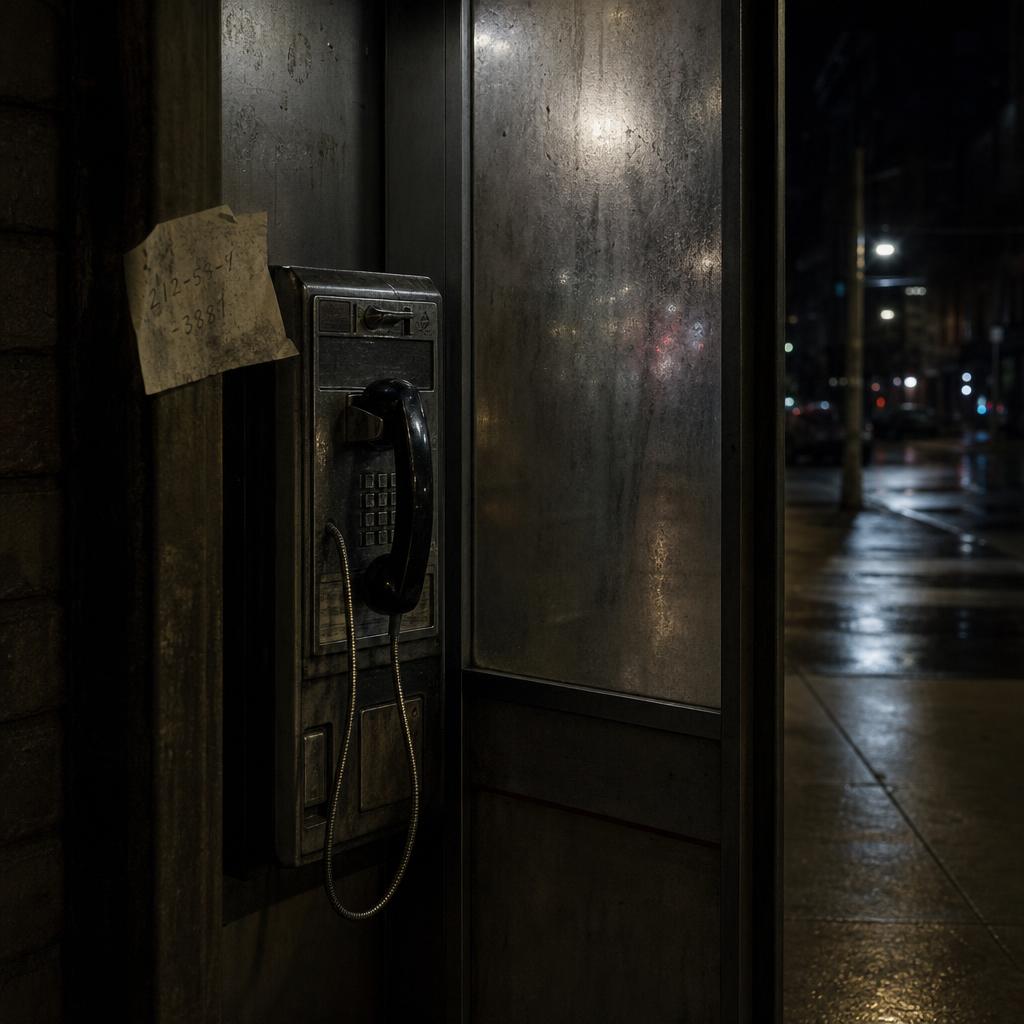
Getting from a recorded greeting to a face across a table followed a near-universal order, regardless of which paper or which box carried the ad. Enough exchanged voicemail, or enough letters, produced a phone number; the phone number produced a scheduled call, twenty to forty-five minutes, understood on both ends as an audition in miniature — “phone chemistry” was a recognized term for what either party was listening for, and a flat voice or a wrong laugh ended more courtships at that stage than at any later one. Only after the phone screen did a meeting get set, and it was always public: coffee at a diner, a glass of wine at a neighborhood bar. Nothing about the arrangement survived a no-show gracefully in an era before the cellphone. A stood-up date sat with a cooling cup and a pay phone across the room, with no way to know from where either party sat whether the other was ten minutes off or not coming at all.
More than one paper ran this trade at once, each pitched at a different reader. The Voice held downtown writers, freelancers, and queer New Yorkers of every description; New York magazine and The New York Review of Books skewed toward an older, more marriage-minded professional; the New York Observer ran a society-inflected “Strictly Personals” column; the New York Press, a libertarian-leaning downtown weekly founded in 1988, competed directly against the Voice’s own back pages. Time Out New York, launched in 1995, added a fifth outlet and drew a younger, more explicitly downtown-professional readership onto the format over the back half of the decade.4 Among educated New Yorkers who used any of these papers, placing or answering an ad carried a light social charge — teased, mentioned at a party, occasionally the punch line of a story about oneself — without the heavier stigma the same act might have carried elsewhere in the country. Among gay men navigating the epidemic, the personal carried a more deliberate value than a bar introduction: the format let two strangers screen for HIV status, temperament, and intent before either one occupied the same room.
The system that produced all of this was already narrowing by the time it reached its own peak. The 900-number personals industry crested in the early 1990s and lost ground steadily afterward — first to Match.com, which launched in 1995, then to America Online’s chat rooms, and by the decade’s last years to Craigslist’s New York personals, active in the city by 2000 and 2001.2 The asymmetry that had always shaped the format persisted to the end of it: for a straight woman, answering someone else’s ad still carried more of a whiff of risk than placing her own, and a woman who ran her own ad kept the choosing.
Testing as Routine
For a sexually active gay or bisexual man in New York, an HIV test was, by the middle of the 1990s, a recurring piece of maintenance rather than a single crisis event — public-health messaging out of Gay Men’s Health Crisis and Callen-Lorde pushed a norm of testing every three to six months for anyone regularly sexually active outside one relationship, though practice in fact varied: some men tested annually, some after a specific scare, some mainly before starting something serious. New York State law required pre-test counseling, and a counselor’s questions about recent risk behavior were often more searching than the blood draw that followed. At public testing sites, roughly a third of the people tested never came back to collect a result at all, a documented public-health problem across the period.1 Testing could be anonymous, with no name attached to the sample, or confidential, entered in a medical chart; many gay men chose anonymous testing specifically to keep a result out of an insurance record.
Gay Men’s Health Crisis, founded in Larry Kramer’s Greenwich Village apartment in January 1982, anchored much of this infrastructure for the city. After renting space at 318 West 22nd Street through the mid-1980s and then consolidating in a headquarters on West 20th Street, the organization moved in 1997 into the Tisch Building at 119 West 24th Street — a nine-story, 150,000-square-foot renovation partly funded by Preston Robert and Joan Tisch, housing the David Geffen Center for HIV Prevention and Education alongside co-located medical services from New York-Presbyterian.1 The building opened the same year a moral argument was breaking out in the gay press over what a negative or positive result was coming to mean.
The result itself had stopped meaning the same thing it meant at the decade’s start. At the XI International AIDS Conference in Vancouver, July 7 to 12, 1996, David Ho and other researchers presented data on combination protease-inhibitor regimens driving patients to undetectable viral loads, and The New York Times ran the story on its front page under the headline “From AIDS Conference, Talk of Life, Not Death.”5 The new regimens were toxic, complicated, and demanded dozens of pills on a rigid schedule, and their visible physical signature — a wasting and redistribution of body fat sometimes called lipodystrophy, or, inside the gay community, “AIDS face” — became a recognizable marker of a man on early treatment by the back half of the decade. A negative result, for a man who had lost lovers and friends to the years before Vancouver, produced a relief that public-health workers heard described, again and again, as tinged with guilt. “I’m negative, as of—” followed by a date became a standard formulation in personals and on dates alike, precise about the one thing a test could actually certify.
Testing was not confined to a single address. Callen-Lorde, an LGBT-specific health center that took its modern form in 1997 on West 18th Street, offered the same counseling and blood work alongside general primary care, and a gay man who wanted an office visit rather than a public program went to an internist such as Howard Grossman, Frank Spinelli, or Stephen Dillon, whose Chelsea and West Village practices were known within the community as reliably discreet. For a hospital admission or a specialist referral, St. Vincent’s in the West Village, together with Beth Israel, Bellevue, and NYU, ran the infectious-disease services that saw the same patients when a case moved past routine testing.
HIV Testing Technology Through the Period
The machinery a patient actually sat through changed only twice inside the period, and the faster answer arrived only after it had closed.
| Year | Development | What it meant for a patient |
|---|---|---|
| 1985–2001 | ELISA screen, confirmed by Western Blot | Blood draw, lab processing, one- to two-week wait, a return visit for the result1 |
| Early 1990s | A single-use rapid test approved for clinical and occupational settings | A roughly ten-minute result, but not used for routine patient testing |
| 1996 | Home Access HIV-1 Test System approved | A mail-in finger-stick kit; results delivered by phone against an anonymous code7 |
| July 1996 | HAART data presented, Vancouver conference | Marked the shift from a death sentence to a manageable, if punishing, chronic condition5 |
| After 2001 | The first rapid oral-swab test approved | Fell after the period ends; every test given within it required a blood draw6 |
Negotiating Risk
The years after Vancouver produced their own, quieter reversal. Multiple studies tracking HIV-positive men on the new protease-inhibitor regimens found more inconsistent condom use and more unprotected sex than the same men had reported before combination therapy, and researchers and the gay press alike gave the shift a name: “condom fatigue,” boredom and fatigue after more than a decade of consistent use, compounded by a sense — “AIDS optimism” — that the disease itself had become survivable.8 Alongside fatigue, a set of more deliberate risk-management practices spread through the same population. “Negotiated safety,” a term the Australian researchers Susan Kippax and colleagues coined in a 1993 paper, described a couple’s explicit agreement to drop condoms with each other under stated conditions.8 “Serosorting” — choosing partners who shared one’s own HIV status — was practiced before it had a name, and “strategic positioning,” a positive partner bottoming with a negative partner topping, or a negative partner insisting on topping only, entered the same informal vocabulary by the decade’s end; none of these terms had existed in the earlier years of the epidemic, when a shared status was rarely even knowable in time to act on it.
A harder-edged term entered the gay press by the mid-1990s: “barebacking,” condomless anal sex, sometimes between two men of the same known status and sometimes, in its more contested usage, as a deliberate identity regardless of status.8 By 1997 the word had become the center of an open argument conducted in print — writers including Michelangelo Signorile, Gabriel Rotello, and Larry Kramer warning that gay culture was discarding hard-won lessons, and a group called Sex Panic!, founded that year in New York by gay men including the critic Michael Warner, Eric Rofes, and Christopher Murray, arguing in return that the moralizing itself endangered gay men by lending cover to the city’s closure of sex venues under zoning enforcement that had begun in 1995.9 Both arguments were being made about the same rooms, in the same years, by people who had both buried friends and wanted, in the plainest sense, to keep having sex.
An established couple deciding to drop condoms with each other, by the late-1990s norm, followed a fairly fixed script: both partners tested, both waited three months to clear the window period, both tested again, and only then negotiated an explicit rule for any sex outside the relationship — condoms always with an outside partner, no outside sex at all, or full monogamy going forward.8 The conversation these steps produced could run tender and clinical in the same breath, weighing what the new treatment had changed against what it had not. A harsher version of the same argument — over gay men who sought out infection on purpose, a practice the press that took it up called “bug-chasing” or “gift-giving” — was being argued by name in the years just after this account closes, though the practices it described were already being discussed inside the Sex Panic era.
What Women Used
The 1995 National Survey of Family Growth measured what women aged fifteen to forty-four were actually using, and the picture it produced ran against the assumption that the pill dominated the era outright. Female sterilization, skewed toward women past their childbearing years, was the single most common method at roughly 28 percent; the oral contraceptive pill followed close behind at roughly 27 percent, down from 31 percent in 1988 as the male condom rose over the same years from 15 percent to roughly 20 percent, a shift researchers attributed directly to AIDS-era messaging.10 Vasectomy accounted for roughly 7 percent, the hormonal implant Norplant — approved in 1990 — for roughly 4 percent by mid-decade, and the injectable Depo-Provera, approved in 1992, for a rising share through the back half of the period.
Two older methods had nearly vanished from the mainstream by 1995. The diaphragm, requiring a fitting, a prescription, and spermicide applied before every use, had fallen to roughly 2 percent of contracepting women — a method that, by the mid-1990s, read as a deliberate, slightly old-fashioned choice rather than a default one. The intrauterine device had fallen further still, to roughly 0.5 percent, a historic low left by the Dalkon Shield’s collapse of the American IUD market two decades earlier; only two IUDs were sold in the United States across these years, the hormonal Progestasert and the copper Paragard, and a woman who chose one in 1995 New York was choosing something unusual enough to prompt comment from a doctor or a friend.10 A scatter of smaller methods rounded out the survey: withdrawal, at roughly 3 percent, functioned mainly as a backup rather than a primary method; fertility-awareness or rhythm methods accounted for perhaps 1 to 2 percent; and the cervical cap, approved in 1988, and the female condom, approved in 1993, each drew a following too small to register as more than a percentage point. For a professional woman in Manhattan the realistic default was the pill, the condom, or both together — the second an AIDS-era habit encouraged regardless of pregnancy risk.
Contraception Method Share, c. 1995
The National Survey of Family Growth counted every method in active use; sterilization and the pill led by a narrow margin, and the older barrier methods had nearly disappeared.10
| Method | Share of contracepting women, 1995 |
|---|---|
| Female sterilization | ~28% |
| Oral contraceptive pill | ~27% |
| Male condom | ~20% |
| Male sterilization (vasectomy) | ~7% |
| Norplant implant | ~4% |
| Diaphragm | ~2% |
| IUD (Progestasert or Paragard) | ~0.5% |
The Morning After, Before Plan B
Before Plan B existed, emergency contraception in New York meant a phone call rather than a product. The FDA did not approve Plan B, a dedicated levonorgestrel pill, until July 28, 1999, and the shorter-lived Preven kit — four pills packaged with a home pregnancy test, built directly on the Yuzpe protocol — only the September before that.11 For nearly the whole period this account covers, a woman who had unprotected sex called her gynecologist, a college health service, or Planned Parenthood, described what had happened, and was told, over the phone, how many ordinary birth-control pills to take and when — a protocol built entirely from combination pills already on the market, formally declared safe and effective by the FDA in February 1997 but practiced quietly, off-label, for two decades before that declaration.12 Providers known in Manhattan to write the prescription matter-of-factly included Planned Parenthood’s Margaret Sanger Center, Callen-Lorde, the health services at NYU, Columbia, and Barnard, and most progressive-leaning private gynecologists. The friction was almost never the doctor’s willingness; it was the seventy-two-hour clock, and whether a pharmacy and a physician could both be reached before it ran out.
Abortion as Ordinary Procedure
Abortion had been legal in New York State since 1970, three years before Roe v. Wade nationalized the right, and the earlier state law left New York City with a supply of providers unmatched almost anywhere else in the country across the years this account covers.13 A woman with insurance and a regular gynecologist on the Upper East Side or in Midtown could often simply call that doctor’s office; freestanding clinics including Choices Women’s Medical Center, founded by Merle Hoffman in 1971, and Parkmed offered the same first-trimester procedure at lower cost; Beth Israel, Mount Sinai, NYU, and Bellevue performed abortions through their obstetrics departments; and Planned Parenthood’s Margaret Sanger Center, which occupied 26 Bleecker Street from 1991 onward, added medication abortion to its services in 2000, shortly after the FDA approved mifepristone.13 A first-trimester procedure in a clinic ran, across the decade, somewhere in the range of $300 to $500 out of pocket, with private-office pricing often higher and many New York-issued insurance plans, along with Medicaid, covering some or all of the cost.
The day itself followed a fixed sequence: an appointment within about a week of the call; intake paperwork, a urine test, and an ultrasound to date the pregnancy; a counseling conversation required by state law; a local anesthetic, dilation, and a suction procedure lasting five to ten minutes; a recovery period of thirty minutes to an hour with cramping and a heating pad; and a discharge with painkiller instructions and a follow-up date. A sedated patient could not drive or ride the subway alone, so a friend or partner commonly waited in the lobby and a cab took her home afterward, to two weeks of light bleeding and a doctor’s instruction against tampons, sex, and swimming. At the Bleecker Street location specifically, a woman arriving in the later 1990s could plausibly pass one or two sidewalk counselors on her way in, a periodic rather than constant presence at that corner across the decade. The federal Freedom of Access to Clinic Entrances Act, effective May 1994, gave authorities new power to protect clinic entrances against blockades, a response to the organized protest campaigns of the years just before it.14 In Manhattan media and professional circles, having had an abortion was, by the accounts of the period, discussed candidly within a woman’s own friendships and almost never outside them — a fact of the kind processed quietly rather than either confessed or concealed.
The Clinic and the Private Doctor
Sexually transmitted infections in 1990s New York carried a stigma that varied sharply by diagnosis. Chlamydia, the most common bacterial infection and often symptomless in women, drew about as much embarrassment as a urinary tract infection; gonorrhea somewhat more; syphilis, rare enough to carry historical weight, more again; and herpes, incurable, carried the heaviest stigma short of HIV itself. An insured Manhattan professional with a regular gynecologist or a “gay-friendly” primary-care doctor overwhelmingly used that private relationship for testing and treatment, valuing the speed, the continuity, and above all the absence of any record an employer or an insurer might eventually see. Beyond the four infections carrying the sharpest social weight, the same clinics treated the broader roster any general gynecology or urology practice saw: HPV and genital warts, addressed topically or by cryotherapy; trichomoniasis, bacterial vaginosis, and pelvic inflammatory disease among women; hepatitis B, vaccinated and treated; and pubic lice and scabies, resolved in a single visit. None of these carried anything like HIV’s weight, and most of them closed out in one appointment.
The city’s own public health infrastructure served a different, and in places overlapping, population. The waiting room at Chelsea told its own story about who actually used the clinic: men traveled in specifically from the Bronx, Queens, and Brooklyn because the staff’s reputation for treating gay patients without judgment outweighed the trip, and alongside them sat Chelsea residents, sex workers, people who used intravenous drugs, working-class New Yorkers without a private doctor, the occasional college student, and, now and again, a Wall Street employee visibly uncomfortable to be there at all. A wait of one to three hours was ordinary, and a line often formed on the sidewalk before the doors opened for the day. Patients gave a first name and a number rather than full identification, and the intake desk rarely pushed back on a name that sounded invented, an arrangement the clinic maintained by design rather than oversight. Chlamydia and gonorrhea, when symptomatic, were treated on the spot with an injection or a course of antibiotics; syphilis, with a single shot of benzathine penicillin G or a short series; and a positive result for either syphilis or HIV set the same partner-notification protocol in motion.1 Two things kept the public clinic from being purely a working-class or uninsured resource. First, its total anonymity was a draw in its own right: a married executive, a married woman having an affair, or a young adult on a parent’s insurance had reasons of their own to generate no bill and no chart entry. Second, within the gay community specifically, “going to the clinic” carried a wry, in-group familiarity rather than shame — a routine and often joked-about part of being sexually active in Chelsea, discussed between friends without much lowering of the voice. For straight women, the equivalent destigmatized destination tended to be Planned Parenthood rather than the city’s STD clinics — a single welcoming-by-design location that handled contraception, abortion, and infection screening under one roof.
A city that metered its personals by the minute ran its medical logistics on the same unglamorous premise: for a price, or for nothing, or on a walk-in basis with a first name and no questions asked, the apparatus existed and mostly worked. What changed across these years was not that New Yorkers went on meeting each other and managing what followed; it was how fast an answer could be gotten, how the vocabulary for negotiating risk kept being renamed as the risk itself changed shape, and how visibly a doctor’s office, a clinic waiting room, and a torn phone number in a coat pocket sat inside the same ordinary week. The city kept every door open the whole time, and a person’s life was mostly a matter of which one they happened to use.
Gay Men’s Health Crisis’s move into the Tisch Building, on West 24th Street, would have run in The City section, in the issue that would have closed that November. The David Geffen Center for HIV Prevention would have named itself into the copy, and the building’s budget and its co-located services would have supplied exactly the institutional fact The City existed to carry.
The Front, in its close that September, would have carried the FDA’s approval of Plan B — the first dedicated pill, arriving after two decades in which a doctor would simply have phoned in a double dose of ordinary birth control. The item would have run two paragraphs rather than a feature, timed so tightly to the approval date that anything longer would have missed its own news.
A front-of-book editor would have logged Time Out New York’s 1995 launch as a welcoming note for The Front rather than any account of the personals economy Meridian’s own writers would themselves have used to meet people. Professional courtesy toward a new weekly would have stood in for anything closer to the truth of how the classifieds actually worked — the kind of debt a masthead pays without ever entering it as one.
Sex Panic!‘s founding in 1997, and the argument it would have been having in print with Michelangelo Signorile and Larry Kramer over the city’s closing of gay sex venues, would have reached the floor as talk rather than as a pitch. It would have read as a daily’s story, or an alternative weekly’s, already being argued out in real time in the gay press, with no monthly feature left in it by the time Meridian could have closed on anything.
Footnotes
-
“History,” GMHC.org, accessed 2026 — Gay Men’s Health Crisis founded January 1982; the Tisch Building at 119 West 24th Street and the David Geffen Center for HIV Prevention opened in 1997. ↩ ↩2 ↩3 ↩4 ↩5 ↩6
-
“Village Voice Media,” Wikipedia, accessed 2026 — the New Times print “Romance” category (1983) and the Boston Phoenix 900-number voice-mailbox layer adopted by alternative weeklies including the Village Voice from 1989; also on the New York Press’s 1988 founding as a competing personals paper, and Bob Bentz’s account of typical exchange volume before a meeting. ↩ ↩2 ↩3 ↩4
-
Federal Trade Commission, “Complying with the 900-Number Rule,” on the Telephone Disclosure and Dispute Resolution Act of 1992, effective November 1, 1993. ↩
-
“Time Out (magazine),” Wikipedia, accessed 2026 — Time Out New York’s 1995 launch. ↩
-
“XI International AIDS Conference, 1996,” Wikipedia, accessed 2026, on the July 7–12, 1996 Vancouver conference and the presentation of HAART data; The New York Times, “From AIDS Conference, Talk of Life, Not Death,” July 15, 1996. ↩ ↩2
-
Centers for Disease Control and Prevention, MMWR 51(46), “Notice to Readers: Approval of a New Rapid Test for HIV Antibody,” on OraQuick’s FDA approval November 7, 2002, as the first rapid point-of-care HIV test. ↩ ↩2
-
U.S. Food and Drug Administration, “Information Regarding the Home Access HIV-1 Test System,” on the mail-in kit’s 1996 FDA approval. ↩
-
S. Kippax, J. Crawford, M. Davis, P. Rodden, and G. Dowsett, “Sustaining Safe Sex: A Longitudinal Study of a Sample of Homosexual Men,” AIDS 7(2), February 1993, coining “negotiated safety”; also on condom fatigue among men on protease-inhibitor regimens and the mid-1990s emergence of “barebacking” in the gay press. ↩ ↩2 ↩3 ↩4 ↩5
-
“Sex Panic!,” Wikipedia, accessed 2026 — the direct-action group founded in New York in 1997 by HIV-positive gay men including Michael Warner, opposing the city’s closures of gay sex venues under zoning enforcement beginning in 1995. ↩
-
Centers for Disease Control and Prevention/National Center for Health Statistics, “New Data From the 1995 National Survey of Family Growth”; Guttmacher Institute, “Trends in Contraceptive Use in the United States: 1982–1995.” ↩ ↩2 ↩3
-
Drugs.com, “Plan B One-Step (levonorgestrel) FDA Approval History,” on Plan B’s original approval July 28, 1999, and the Preven kit’s approval the preceding September. ↩
-
Federal Register Vol. 62, No. 37 (February 25, 1997), FDA notice declaring the Yuzpe regimen of combined oral contraceptives safe and effective for emergency contraception. ↩ ↩2
-
“Abortion in New York,” Wikipedia, accessed 2026, on abortion’s legality under New York State law since 1970; FDA approval of mifepristone, September 2000. ↩ ↩2
-
“Freedom of Access to Clinic Entrances Act,” Wikipedia, accessed 2026, on the federal law’s effective date of May 1994. ↩
-
“The Roots of the Chelsea Health Center,” Chelsea News (chelseanewsny.com), on the district health center at 303 Ninth Avenue, dedicated July 14, 1937. ↩
-
“Renovated Chelsea STD Clinic to Reopen…,” DNAinfo, 2017, confirming the NYC Department of Health and Mental Hygiene STD clinic operating at 303 Ninth Avenue. ↩