
The Treatment Revolution, 1995–1996
Subscribe
https://meridian-archive.com/feed.xmlOpen in your app, or paste the link above into any other:
The Viatical Trade
By the middle of the decade, a segment of the life insurance business existed for one purpose: buying, for cash, the remaining life of people dying of AIDS. The transaction had a name in the trade — viatical settlement — and a mechanism as ordinary as any other financial product: a company bought a dying policyholder’s life insurance policy for a fraction of its face value, paid the cash at once, and collected the policy’s full value when the client died on schedule, as the pricing assumed he would. Bob Doyle, an HIV-positive New Yorker, later described the year in the plain terms the transaction gave him: “It was the year I sold my life insurance policy, the year I was supposed to die, and the year that too many declared the end of AIDS.”1 The industry did not treat the trade as remarkable. It was a product, priced against a set of mortality assumptions that, in New York in 1995, still held.
They held because the drugs that existed against HIV were few, and they worked only briefly. AZT had been approved in 1987, and after it came a handful of chemical cousins in the same class — the nucleoside analogues, ddI in 1991, ddC in 1992, d4T in 1994, 3TC in 1995. Taken alone or in pairs, they slowed the virus for a while, and then the virus, mutating faster than the chemistry could hold it, learned its way around them, sometimes within weeks. The side effects were severe: a neuropathy that made the soles of the feet burn, pancreatitis, anemia, a nausea that did not lift. Patients often felt worse on the drugs than off them, and knew that the reprieve, when there was one, was measured in months.
In a New York practice, the deaths came steadily. One Manhattan physician, Howard Grossman, later set down his own count: thirty-seven of his patients died in 1995 alone.2 Across the city that year, 7,046 people died of AIDS — the highest annual toll the epidemic had yet produced, and by then the cumulative dead in New York alone had passed fifty thousand.3 Nationally, AIDS had become the leading cause of death for Americans between twenty-five and forty-four. That March, Eazy-E, a founder of the rap group N.W.A, had died of the disease in Los Angeles at thirty; the epidemic the coverage had framed as a downtown and a Chelsea story was killing people far beyond those neighborhoods. The ward at St. Vincent’s, on Seventh Avenue at Eleventh Street, ran at capacity. The people dying were not only patients; they were the artists, the caretakers, and the activists who had spent eight years forcing a slow federal drug system to move faster for the dying. For a doctor treating the disease in the city, the year had become a calendar of funerals.
Fifteen Months
The change, when it came, came fast and in a narrow window. In the first week of December 1995, the Food and Drug Administration approved saquinavir, sold as Invirase by Hoffmann-La Roche — the first of a new class, the protease inhibitors, which attacked the virus at a different stage of its replication than the older drugs did.4 The approval came in record time, fewer than a hundred days after the application was filed; the accelerated-review machinery that made such speed possible had been built over the preceding years by AIDS treatment activists — the Treatment Action Group chief among them — who had pressed the agency to remake how it tested and cleared drugs for people with no time to wait.5
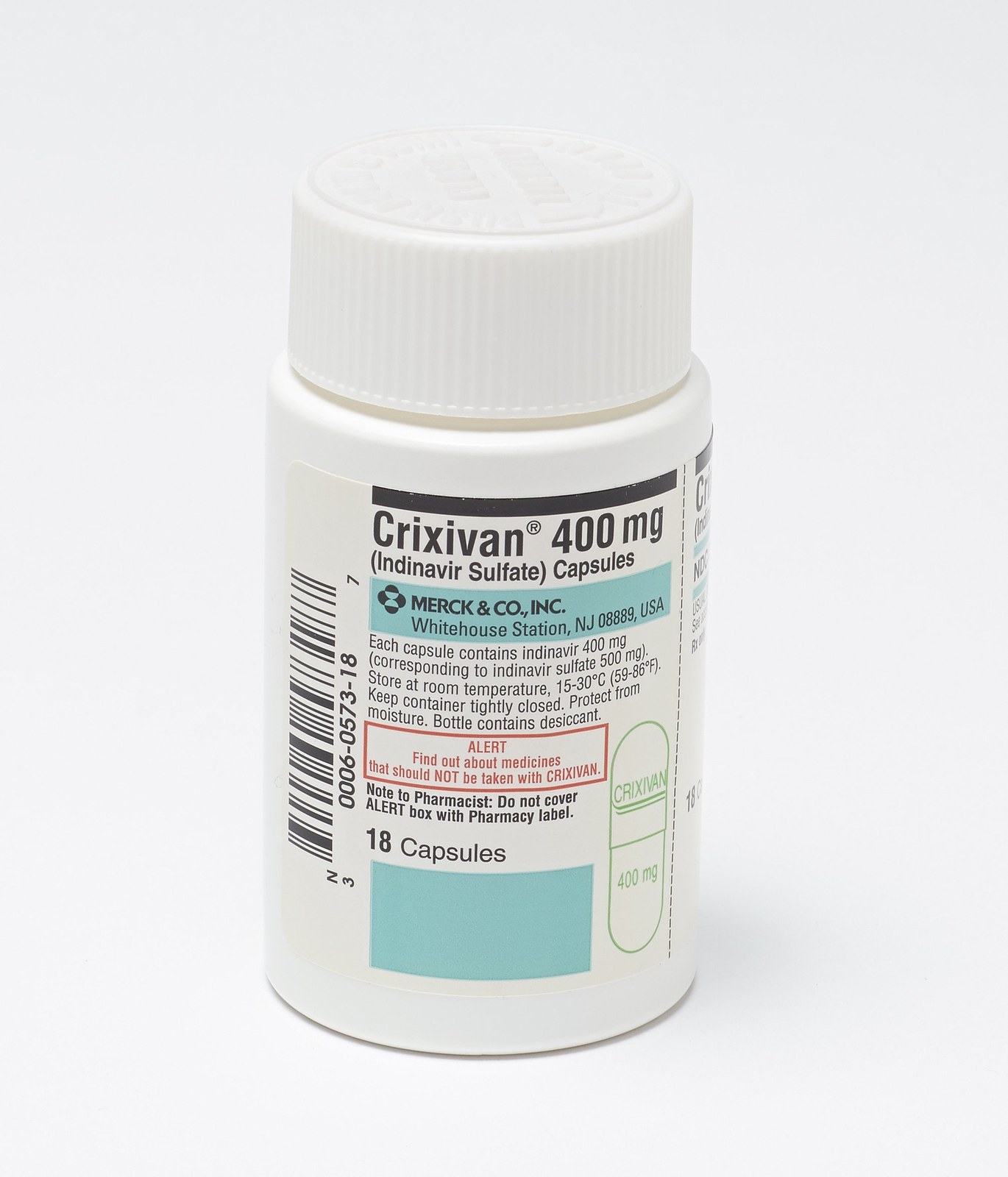
Then came the data. In January 1996, at the Third Conference on Retroviruses and Opportunistic Infections in Washington, the drug company Abbott reported that its protease inhibitor, ritonavir, taken together with two of the older nucleoside drugs, had cut deaths roughly in half — “the first such results ever,” as Grossman later wrote of the moment.2 Doctors in the room described a kind of disorientation; no one had seen mortality numbers like these. Ritonavir was approved on the first of March, and Merck’s indinavir — sold as Crixivan — twelve days after that.
The shorthand that emerged was the cocktail: two of the older drugs plus one of the new protease inhibitors, taken together. On the combination, the amount of virus in the blood fell until the tests could no longer detect it, and the immune system, measured by its CD4 cells, began to rebuild. The opportunistic infections that had been doing the killing — the pneumonia, the wasting, the blindness — stopped arriving.
By the summer, the long-term evidence arrived. At the Eleventh International AIDS Conference in Vancouver in July 1996, researchers presented follow-up on patients who had been on combination therapy for a year: the viral suppression held, and the immune recovery held with it. Vancouver was the public turning point, the moment the news crossed from the clinics into the general press. That December, Time named the AIDS researcher David Ho — director of the Aaron Diamond center in New York, whose group had argued for hitting the virus early and hard with the combinations — its Man of the Year.6
The Lazarus Effect
What the drugs did next had a name from Scripture before it had one from medicine. Patients who had been visibly dying — gaunt, marked with the purple lesions of Kaposi’s sarcoma, on supplemental oxygen, in hospice, their affairs in order — began to recover, and the recovery was neither gradual nor subtle. Within weeks they were eating. Within months they were back at their desks. The medical literature called it the Lazarus syndrome, after the man raised from the dead; the people living it called it the second life.
The recovery created a cruel financial problem for the viatical trade. Its pricing had assumed clients who died on schedule; now they did not. People who had sold their futures to survive their last year found that the last year had not come.
The texture of that year in gay New York was not, at first, relief. It was disorientation. People who had spent a decade ordering their lives around the near fact of their own deaths had to find a new order for lives that now ran past the horizon they had planned to. People who had buried twenty friends found themselves, that summer, going to fewer funerals; the calendar of memorial services that had structured the middle of the decade began to thin, and with the dying slowed, the network of buddies and caretakers that had grown up around it slowed too. People who had never once thought about growing old, because they had not expected to, had to begin thinking about savings, about retirement, about the shape of decades they had written off. The gift was real, it was vertiginous, and it arrived with no instructions.
AIDS Deaths in New York City, 1995–1997
The reversal registered first in the death counts.3
| Year | Deaths | Change from prior year |
|---|---|---|
| 1995 | 7,046 | epidemic peak |
| 1996 | 4,998 | −29% |
| 1997 | 2,625 | −47% |
In New York, after peaking in 1995, AIDS deaths fell by 29 percent in 1996 and by a further 47 percent in 1997 — a decline across every demographic group and every route of transmission.3 Nationally, 1996 brought the first drop in AIDS deaths in the history of the epidemic. The wards that had run full for a decade began, for the first time, to hold empty beds.
The Cost of the Cure
The triumph was real and it was unequally distributed, and the two facts did not cancel. The drugs were expensive — roughly twelve to fifteen thousand dollars a year, beyond the reach of most uninsured Americans and of nearly everyone with HIV outside the wealthy countries.7 In New York, Medicaid covered them and the federal Ryan White program helped the underinsured; but the state assistance programs that were the safety net elsewhere were uneven, and as late as the fall of 1996 thirty-five of them did not cover the protease inhibitors at all.7
And the cocktail exacted a toll from the bodies it saved. The early regimens meant swallowing more than a dozen pills a day on a schedule keyed to the hour — some with food, some without, some at intervals through the night. Ritonavir’s side effects — relentless nausea, diarrhea, a metallic taste that fouled everything eaten — were severe enough that many patients could not stay on it. Indinavir gave a significant share of its users kidney stones. And the drugs, over months, redrew the body: fat drained from the arms, the legs, and the face and gathered at the belly and the back of the neck, hollowing the cheeks into a gauntness that became, through the late 1990s, the recognizable mark of long-term survival.
The drawn face the public had learned to read as AIDS was, increasingly, not the work of the disease. It was the work of the cure.
Survival also turned on timing that no one could control. The drugs worked best for those who reached them with their immune systems still substantially intact; for people already deep in late-stage disease in 1995, the cocktail sometimes arrived too late to reverse the damage the infections had already done. Pedro Zamora, whose season on MTV’s The Real World had put a young, HIV-positive Cuban-American face into millions of living rooms, died at twenty-two in November 1994 — a year before saquinavir. He had missed the window by less than a year, and he was one of many who did.
By the time the recovery was undeniable, the story had begun to change shape in print. In November 1996, the writer Andrew Sullivan published a New York Times Magazine cover essay, “When Plagues End,” arguing from his own newly undetectable viral load that the epidemic, as plague, was over.8 The claim was bitterly contested. Its critics — chief among them the journalist Michelangelo Signorile — answered that Sullivan was generalizing from the position of an insured, well-connected white man in the city with the best clinicians in the country to an epidemic that — for the poor, the uninsured, the incarcerated, and the Black and Latino New Yorkers among whom it kept spreading — was ending for no one. Both halves of the argument held, which was why it did not resolve.
For the people who reached the new drugs in time, 1996 did something that had not happened in the fifteen years the epidemic had been counted in New York: it turned a death into a life. Not a cure — the pills had to be taken every day, without end, and they took their own price from the body, and they reached only those who could pay or whose city paid for them. What the cocktail ended was not the virus but the certainty, the ordering of a life around a near date that had suddenly begun to recede. People who had learned to live as though they were already leaving had to learn, without much guidance, how to stay. It was the strangest of gifts, and the decade was only beginning to learn what it had been handed.
The Essay would have carried the reporting a story this large earned: a piece anchored to the December approvals and the lead researcher’s own data, weighed against the July dispatches out of Vancouver and what they would mean for a magazine that would have covered the epidemic since its first years. The Back, that same winter, would have carried a shorter note on the death of Felix Gonzalez-Torres, in January — a paragraph, not a profile, in the section built for such accounts.
The piece on what the cure would cost — the pill burden, the states that would not pay for it, the hollowed face becoming its own diagnosis — would have gone the other way. It would have come up seriously across two lunches that spring, argued each time and left each time for the next meeting; the second lunch would have stood in, without anyone quite deciding it, for a decision never made, and the piece would have died of nothing sharper than that. A Bronx ward’s night nurse that year would have known, patient by patient, which of them the state’s assistance would cover and which it would not, and would have gone on reading every issue anyway, proud of it, unaware the piece it should have run would have come and gone over somebody’s lunch.
Pedro Zamora’s death, in November 1994, would not have reached the room at all: a cable documentary subject, not a monthly’s story.
Footnotes
-
Bob Doyle, quoted in “Oral HIV History: Remembering the 1996 Antiretroviral Revolution,” TheBody, December 31, 2021. ↩
-
Howard Grossman, “AIDS at 25: A Quarter Century of Medical Miracles,” MedGenMed (2006). Grossman, a New York HIV physician, records his own practice’s deaths falling from thirty-seven in 1995 to ten in 1996, four in 1997, and none in 1998. ↩ ↩2
-
M. A. Chiasson, L. Berenson, W. Li, et al., “Declining HIV/AIDS Mortality in New York City,” Journal of Acquired Immune Deficiency Syndromes 21, no. 1 (1999): 59–64. ↩ ↩2 ↩3
-
“FDA Approves First in New Family of AIDS Drugs,” Washington Post, December 8, 1995. ↩
-
David France, How to Survive a Plague: The Inside Story of How Citizens and Science Tamed AIDS (Alfred A. Knopf, 2016). ↩
-
Howard Chua-Eoan, “The Tao of Ho,” Time, December 30, 1996. ↩
-
Andrew Sullivan, “When Plagues End: Notes on the Twilight of an Epidemic,” New York Times Magazine, November 10, 1996. ↩