The Peak Years, 1989–1992
Subscribe
https://meridian-archive.com/feed.xmlOpen in your app, or paste the link above into any other:
Two Floors
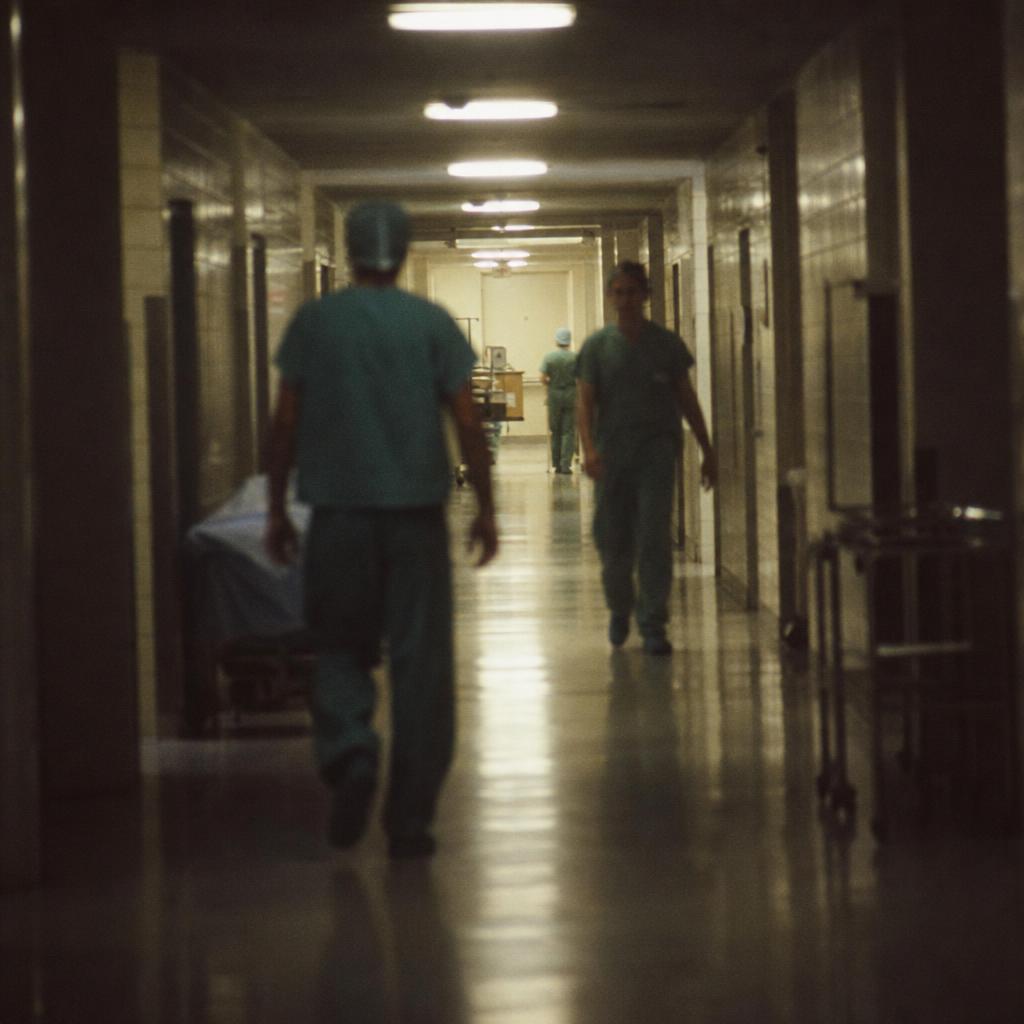
At St. Vincent’s Hospital, on the AIDS ward that had by the late 1980s spread across the entire seventh floor of the Cronin building, staff had stopped enforcing the hospital’s own rules for that floor alone: lovers were permitted to stay through the night without exception, medical staff flexed hospital policy to allow sex between patients and their partners, and unsanctioned parties on the ward went unreported rather than written up.1 No administrator put the accommodation in writing; the seventh floor had simply become a floor the rest of the hospital ran by different rules, the way a beat officer learns which doors on a given block he does not knock on. The same instinct — treat what could not be stopped as a matter for quiet local accommodation rather than for policy — also governed how the city’s other institutions absorbed the epidemic’s demands on them, including the ones that answered not with a flexed rule but with a chained body.
The Wall Street protest of March 1987 — two hundred and fifty demonstrators, seventeen arrests, a picket against a ten-thousand-dollar-a-year drug price — had been a crowd outside a building. The Exchange floor action of September 14, 1989, was seven people inside one, in costume, with forged credentials that had taken weeks to assemble and rehearse. The distance between the two events measured how far the tactic had traveled in two and a half years: from demonstration to infiltration, from the sidewalk to the balcony.2 Among the seven was Peter Staley, who three years later helped found the Treatment Action Group out of the same appetite for leverage over the drug’s price and its testing.3
The Exchange action was closer to a zap in its brevity and closer to an action in its planning, and it worked by the measure that mattered: within days, Burroughs Wellcome announced a price cut from roughly ten thousand dollars a year to sixty-four hundred — more than a third off.2 It remained, for years afterward, the only drug the pharmacy had.
The choice of target marked a departure from what had come before it. GMHC’s hotline, the 1987 Wall Street picket, the action at the federal drug agency’s Maryland headquarters the previous October — the movement’s largest actions to that point had aimed at institutions understood to control treatment directly: the hospital, the regulator, the manufacturer. The Exchange controlled none of these. It set the manufacturer’s own valuation, one step further removed from the disease and one step closer to the abstraction that actually decided who could afford to survive it.
By the close of 1989, the city’s health department counted roughly twenty-two thousand cumulative AIDS cases and some fourteen thousand cumulative deaths since the epidemic’s first diagnosis eight years before.4 David Dinkins had just been elected. The seven who chained themselves to the Exchange balcony had done so in a city where the disease had already killed more people than the crowd their action drew that morning.
The Losses of Early 1990
Keith Haring died in Manhattan on February 16, 1990, at thirty-one. He had spent the preceding decade drawing on blank subway advertising panels in white chalk, illegally, sometimes with a transit police officer watching and occasionally arresting him for it; by the time of his death, museums were removing the drawings from the walls to preserve them as objects rather than let them be painted over. The foundation he had set up the year before his death — anticipating it, arranging for it — became, in the years that followed, one of the larger private funders of AIDS organizations in the country. The Pop Shop on Lafayette Street, which sold inexpensive versions of his images to a public that had never needed a gallery’s permission to like his work, stayed open.

Six weeks later, on March 26, the designer Halston died in San Francisco of complications from Kaposi’s sarcoma — a second loss from the world Studio 54 had made famous, following the club’s own co-founder, Steve Rubell, who had died the previous July. Neither man’s death touched off the kind of public reckoning Haring’s had; a designer’s and a nightclub owner’s deaths, however covered in the trade press, stayed inside a world the culture already understood as glamorous, embattled, and dying, and the coverage of both stayed inside that same understanding. The reckoning that reached readers who had never opened a fashion page arrived from an unrelated direction less than two weeks later.
Ryan White died in Indiana on April 8, 1990, at eighteen — a hemophiliac who had contracted the virus through a blood-clotting treatment years before and been barred, at thirteen, from his Kokomo middle school by parents afraid of a contagion no one on the school board could explain to a hallway. The national press settled on a vocabulary for him that it had never settled on for the men dying in New York: he was the epidemic’s innocent victim, a phrase the activists at the Center despised for the shadow it threw across everyone the word did not cover. That August, President Bush signed the Ryan White Comprehensive AIDS Resources Emergency Act, the first significant federal AIDS-care funding bill — passed under the name of a boy no one could accuse of having brought the disease on himself, rather than under any name attached to the population ACT UP had spent three years insisting deserved the funding regardless.
Between Haring’s death, White’s, and the Exchange floor action seven months earlier, the year-end count for 1990 came to thirty-seven thousand four hundred thirty-six cumulative AIDS cases diagnosed in New York City since 1981 — nearly a fifth of every case diagnosed in the United States.5 The number described a city, not a subculture. It did not distinguish between a Lafayette Street gallery, a hospital floor in the Bronx, or a schoolroom in Indiana, and by 1990 it did not need to; all three were counted in it.
The Famous Body
For most of the epidemic’s first decade, the country beyond the affected neighborhoods had been permitted an experience of AIDS mediated entirely by choice — whose obituary to read, which benefit to attend, which magazine profile to skip. Across five months spanning the turn of 1991 into 1992, that mediation narrowed to four public figures whose diagnoses became known on four different terms, and the terms themselves were the story.
Magic Johnson chose his. On November 7, 1991, he stood at a podium in Los Angeles and told reporters he had tested positive for HIV and was retiring from professional basketball; the disclosure was staged, scheduled, and delivered on his own authority, and it reached a national television audience that ACT UP’s four years of actions, covered mostly by the papers that already covered ACT UP, had not. Seventeen days later, on November 24, Freddie Mercury died of AIDS-related bronchopneumonia, having confirmed his diagnosis in a written statement the day before — disclosure not as strategy but as a closing account, offered only once concealment no longer served any purpose it had served for years.
Two months after that, on January 24, 1992, the death of Tina Chow in Los Angeles complicated the story rather than extending it. Chow had spent the 1980s as one of downtown New York’s most photographed faces — a model, a jewelry designer, a fixture of the pages the fashion monthlies built entire issues around — and she had contracted the virus not through the routes the country had been taught to expect but through a heterosexual partner, at forty-one. The fashion press covered her death at the length it covered its own, and the coverage was itself an admission: the disease had never limited itself to the population glossy magazines had spent a decade treating as the whole of the story.
Arthur Ashe had no choice at all. On April 8, 1992, he called his own press conference to confirm what he had contracted from a blood transfusion during 1983 heart surgery, because a national newspaper had learned of his diagnosis and was prepared to publish it with or without his consent; he spoke first only to keep the fact from arriving in someone else’s words. Later that year he founded the Arthur Ashe Foundation for the Defeat of AIDS, converting a disclosure he had not chosen into a program he could still direct on his own terms.
None of the four had spent the preceding decade inside the movement that had spent it fighting for exactly this kind of recognition — that the disease belonged to more than the population the country had already decided to stop watching. The recognition, when it came, arrived through channels ACT UP had never controlled: a retirement announcement, a rock band’s publicist, a fashion magazine’s obituary page, a newspaper about to run a story with or without its subject’s cooperation. It reached people the four years of actions on the Exchange floor had not, and it did so on terms the activists downtown had spent those same four years trying, and mostly failing, to set for themselves.
The Political Funeral
By 1992 the movement staging these arguments was itself dying at a faster rate than it had been three years earlier, when seven of its members chained themselves to the Exchange balcony. The funerals it organized for public effect were, with increasing frequency, funerals for people who had sat in the same Monday-night room the year before.
David Wojnarowicz died in his East Village loft on July 22, 1992, at thirty-seven — the same loft on Second Avenue where he had photographed his mentor Peter Hujar on his own deathbed five years before. On July 29, mourners marched through the neighborhood behind a banner reading DAVID WOJNAROWICZ, 1954–1992, DIED OF AIDS DUE TO GOVERNMENT NEGLECT — the movement’s first political funeral, a form that turned a name and a stated cause of death into a public accusation.6
Eleven weeks later, on October 11, the movement staged its furthest reach yet. The Quilt, first spread in Washington five years before, was back in the capital for the final weekend of that year’s display on the National Mall. On the last of those days, mourners marched from the Capitol to the White House and threw the cremated ashes of people they had loved over the fence and onto the lawn. David Robinson, who organized what came to be called the Ashes Action, said afterward that the Quilt was “very useful — but it’s very beautiful,” and that the country needed a reminder of what was not being done for the people it commemorated.7 A political funeral had turned a single name into a public accusation; the Ashes Action turned grief itself into the argument, dozens of unseen dead reduced to what a hand could carry and a fence could not stop. James Wentzy filmed it on Hi-8 tape, and the cassette circulated through the same activist networks that had, three years earlier, planned seven forged badges and a shower of counterfeit bills.
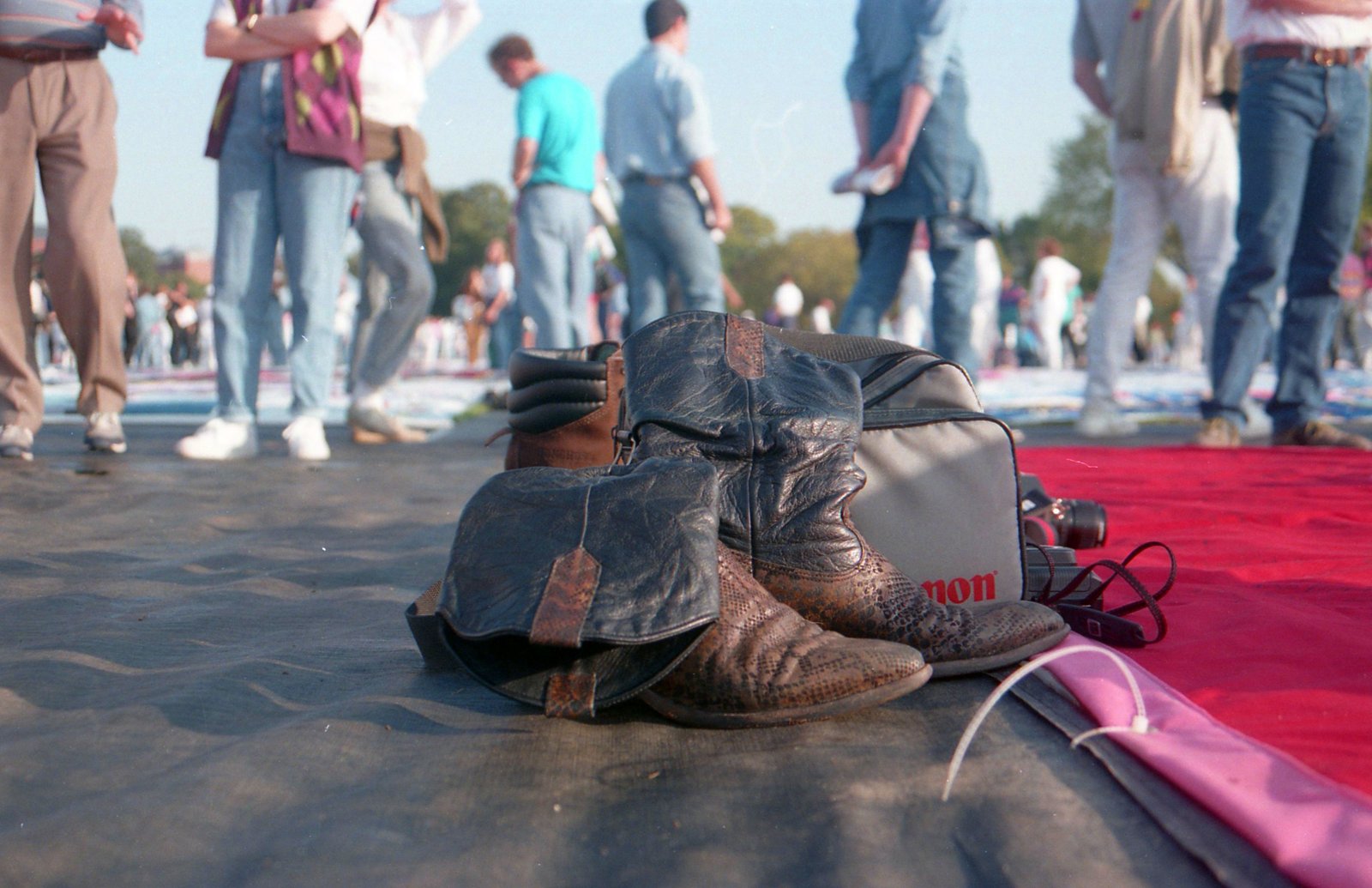
The four years traced a single line of escalation, not only in death toll but in method: from an institution occupied for an afternoon, to a name carried through the streets that had known it living, to a fistful of ashes thrown at the one fence built expressly to keep the public and the government apart. Each stage cost the demonstrators more of themselves — money and preparation at the Exchange, a friend’s name turned into a public accusation, a grief so literal it had to be carried in an urn — for a public attention span that had to be re-earned every time, because none of the earlier stages had bought a permanent hold on it.
The Count
The Toll, 1989–1992
| Year-end | Figure |
|---|---|
| 1989 | ~22,000 cumulative AIDS cases diagnosed in New York City; ~14,000 cumulative deaths4 |
| 1990 | 37,436 cumulative cases diagnosed in New York City since 1981 — nearly a fifth of the national total5 |
| 1992 | ~200,000 cumulative AIDS deaths nationally; ~6,500 deaths in New York City in that year alone4 |
The number moved every year and had moved every year since 1981. What had changed across these four years was not the arithmetic but its visibility — a trading floor forced open late, a chalk artist’s foundation funding the next decade of care, a schoolboy in Indiana barred from his own classroom, a tennis champion’s press conference, a banner carried through the East Village, a fistful of ashes on a lawn built for entirely different ceremonies. Each was a single fact inside a count that had long since stopped requiring any single fact to be true, and none of them, added together, came anywhere close to accounting for all sixty-five hundred names the year had produced in this city alone.
The four names that drew the widest coverage in these years — a basketball star, a rock singer, a fashion-world face, a tennis champion — were four among many thousands, and not one of them lived in the neighborhoods carrying the largest share of the count. The gap between who made the front page and who made the mortality table did not close across these four years. It only became, for the first time, a gap the country could not entirely pretend not to notice.
Nothing about the biology changed between 1989 and 1992. What changed was who the country could no longer avoid recognizing as the disease’s subject: a schoolboy in Indiana barred from his classroom, a basketball player at a podium of his own choosing, a fashion-world face who had never touched a needle, a tennis champion who had to speak before a newspaper spoke for him. None of it reached the neighborhoods where the disease had always run hardest, and none of it happened on those neighborhoods’ terms; the recognition moved through the country’s existing hierarchy of who got to be a face rather than a number, and it moved unevenly, arriving at some doors years before it reached others, if it arrived at all. But it moved. A city that had spent eight years treating this as private grief spent these four learning, in fits and against its own preferences, that it could not keep the accounting to itself.
Keith Haring’s death that February would have gone into The Back for the April issue as a short notice, the obituary length a monthly would have kept for a name the dailies would already have covered from every angle; five weeks on, Halston’s death would have taken the same space in The Back for May, a second name from an overlapping downtown world that would have been handled at the same brevity and for the same reason.
Ryan White’s death that April would have asked for more room than an obituary gave, and The Essay would have carried it for June — built on the vocabulary the national papers had already settled on for him, and on what that vocabulary left out. That August’s Ryan White CARE Act, the funding bill signed under his name rather than any name ACT UP had spent three years putting forward, would have belonged instead to The Front, a policy item built from a bill number and a signature rather than a deathbed.
The turn of 1991 into 1992 would have supplied the busiest run in the stretch. Magic Johnson’s disclosure that November, staged on his own schedule, would have been proposed for The Essay before the month was out; Freddie Mercury’s death seventeen days later, confirmed only the day before it happened, would have gone instead into The Back, a shorter notice for a disclosure that had been a closing account rather than an argument. By April, when Arthur Ashe called the press conference a newspaper had forced on him, the piece would again have gone to The Essay.
Footnotes
-
NYC LGBTQ Historic Sites Project, “St. Vincent’s Hospital,” nyclgbtsites.org. ↩
-
Sarah Schulman, Let the Record Show: A Political History of ACT UP New York, 1987–1993 (Farrar, Straus and Giroux, 2021). ↩
-
“Your Local Epidemiologist: HIV Rising, Funding Cuts,” Healthbeat, December 12, 2025 — citing historical New York City AIDS case and mortality figures for 1989 and 1992. ↩ ↩2 ↩3
-
Thomas et al., American Journal of Epidemiology 137, no. 2 (1993): 121–130. ↩ ↩2
-
ACT UP Oral History Project, “Political Funerals,” actuporalhistory.org. ↩
-
“Ashes Action, 1992: FIGHT BACK, FIGHT AIDS — ACT UP Documentary,” Stonewall Forever, stonewallforever.org. ↩