The Cultural Casualties, 1989–1995
Subscribe
https://meridian-archive.com/feed.xmlOpen in your app, or paste the link above into any other:
The Observance
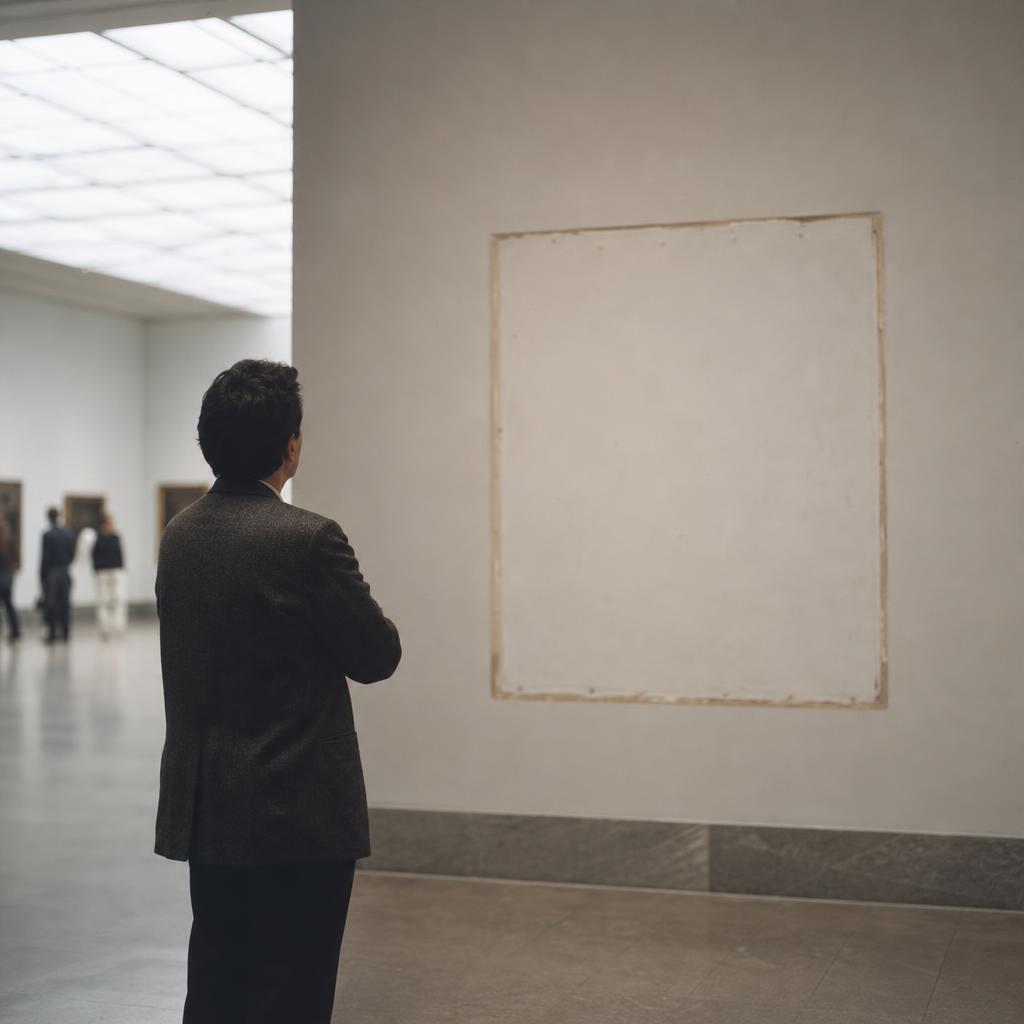
Beginning December 1, 1989, participating museums and galleries across New York took part in an annual administered response to the losses accumulating on their own walls: a coordinated observance, organized by the advocacy group Visual AIDS and titled, with the deadpan literalism of a program memo, Day With(out) Art. Institutions signed up in advance and chose their own gesture — a single work covered in cloth, a piece removed from a gallery wall and the space left conspicuously blank, a museum’s regular programming replaced for the day — and the withholding was processed as routine institutional business, an item on the same December calendar as openings and benefit auctions, repeated every year through the peak of the deaths.1
Visual art absorbed the earliest and, for years, the most visible share of the loss, in a milieu where gallery openings, benefit auctions, and museum retrospectives had already made death and celebration into adjacent events on the same calendar. Keith Haring’s death closed a decade of unauthorized subway drawings that the Transit Authority itself had spent years trying to scrape off the same walls he used; the foundation he had established the year before his death, built specifically to fund AIDS organizations, became one of the era’s more consequential arts patrons of the epidemic response.2 Tseng Kwong Chi, who had followed Haring into stations and construction sites through the early 1980s to photograph the drawings before they were removed, died of AIDS-related complications on March 10, 1990, twenty-two days after his collaborator — his own archive becoming, within the year, one of the only complete records of work the city itself had erased.3
Ray Navarro, a younger artist and ACT UP member, had appeared at the December 1989 St. Patrick’s protest dressed as a television reporter, microphone in hand, interviewing demonstrators for a station he called the Fire and Brimstone Network; he died on November 9, 1990, at twenty-six. David Wojnarowicz, the painter, photographer, and writer who had photographed his mentor Peter Hujar on his deathbed in 1987, tested positive himself the following spring. His catalog essay for a 1989 exhibition titled Witnesses Against Our Vanishing named bishops, senators, and a sitting president as complicit in the dying, in language none of the show’s other contributors matched; the National Endowment for the Arts, which had funded the host gallery, spent the better part of a year answering for the essay in Congress, a second and separate front in a culture-war argument the Corcoran’s canceled Mapplethorpe retrospective had already opened that same year. Wojnarowicz died in his loft on Second Avenue on July 22, 1992, at thirty-seven. His funeral, seven days later, took the form ACT UP called the political funeral: a procession through the East Village behind a banner giving his name, his dates, and the words DIED OF AIDS DUE TO GOVERNMENT NEGLECT.4
The formal language of the loss outlasted the particular deaths that produced it. Felix Gonzalez-Torres, whose partner had died of the disease, began in the early 1990s building installations from things a museum visitor was permitted to remove: stacked sheets of paper printed with a single image, cellophane-wrapped candies piled to a specified ideal weight, restocked overnight and depleted again by closing, so that accumulation and disappearance ran on the exhibition’s own daily schedule.5 He died on January 9, 1996, at thirty-eight — the losses did not stop merely because 1995 made for a convenient year to stop counting them.
The Ateliers
Halston, whose draped jersey had defined Studio 54’s particular sense of undress-as-dress through the 1970s, died in San Francisco on March 26, 1990, at fifty-seven, years after a corporate sale had already stripped him of the right to design under his own name.7 Patrick Kelly, the Mississippi-born designer working in Paris, had become in 1988 the first American voted into the Chambre Syndicale du Prêt-à-Porter, the body that governed French ready-to-wear; he died in Paris on New Year’s Day, 1990, at thirty-five, the honor barely a year old.8 Bill Robinson, who had trained under Halston, died in 1993 at forty-five. The Italian designer Franco Moschino, whose irreverent house had been a New York editorial favorite through the late 1980s, died in September 1994 at forty-four. None of the three had a Wojnarowicz’s procession or a Gonzalez-Torres’s museum retrospective waiting; the fashion trade mourned in showrooms and trade papers, and the mourning did not travel the way an artist’s did.
The concentration was structural as much as social. A fashion house of this period ran on a small number of people working in close physical proximity across many seasons — the designer, the patternmakers, the fitting models, the photographer, the makeup artist, the handful of editors invited to see the collection before anyone outside the room did. A disease that moved through sustained physical intimacy moved efficiently through a workplace built on fittings, backstage dressing, and shared apartments between shows, and fashion was among the densest such workplaces the creative economy had. A magazine’s own fashion department, closer to that network than any other desk in the building, absorbed losses the rest of the masthead only read about in the trade papers.
The death that most complicated the magazine world’s settled account of who the epidemic killed was not, strictly, a designer’s. Tina Chow, the model and jewelry designer whose face had defined a decade of downtown New York photography, died in Los Angeles on January 24, 1992, at forty-one, having contracted the virus years earlier from a heterosexual partner. The fashion press covered her death at length, and the coverage sat uneasily against an assumption the industry rarely examined and never stated outright — that the disease moved through gay men and drug users and largely spared the women who modeled the clothes and wrote about them. Chow’s death did not overturn the assumption. It complicated it in the specific, personal way a famous case complicates a general one: everyone in the room had met her, and the room could not hold both facts about her at once.
The Companies
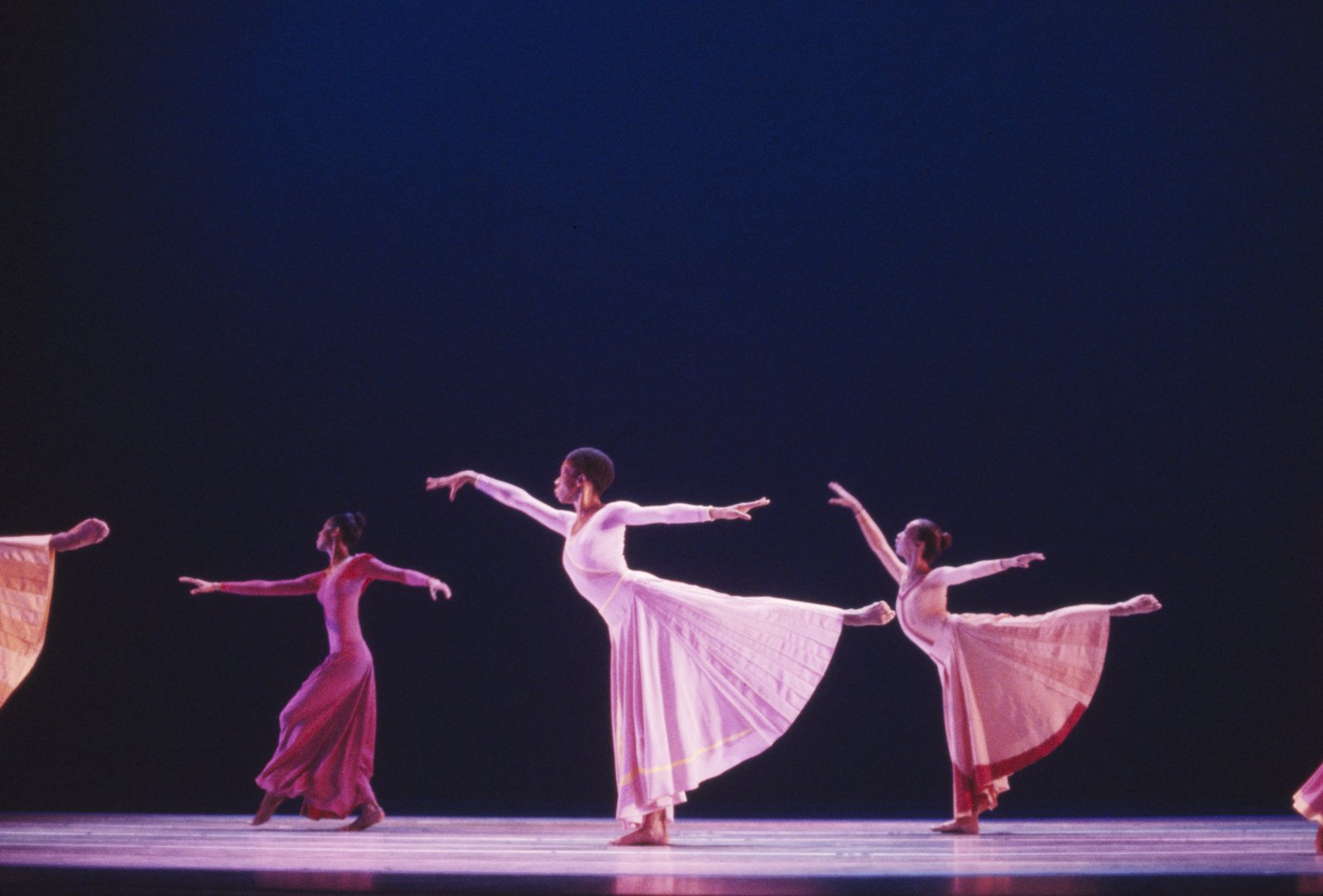
Dance’s losses ran across companies and generations at once. Alvin Ailey, who had built the modern-dance company carrying his name into a permanent place in American repertory, died in New York on December 1, 1989, at fifty-eight; his company announced the cause as a blood disorder, and dancers and audiences did not learn otherwise for years.9 Rudolf Nureyev, the Soviet-trained dancer whose 1961 defection had made him famous a generation before the epidemic began, died in Paris on January 6, 1993, at fifty-four, having continued performing and conducting through the final years of his declining health. Edward Stierle, a young Joffrey Ballet principal, died in 1991. Between the principals, smaller companies lost corps members and soloists whose deaths were marked in a program note rather than an obituary page — names that did not carry past their own repertory seasons. Dance shared fashion’s structural vulnerability without sharing its economics: companies were small, touring seasons kept dancers in extended close quarters, and a company’s repertory for an entire year could be reorganized by the loss of two or three principals in a single season in a way a Broadway production, cast from a far larger labor pool, rarely was.
Downtown music lost its most important experimentalist in the same years. Arthur Russell, a classically trained cellist who moved between disco production, minimalist composition, and folk-inflected songwriting without settling into one identity a record label could market, died on April 4, 1992, at forty, with most of his recorded work still unreleased.10
Broadway’s account ran on its own ledger. Howard Ashman, the lyricist rewriting the American musical’s songbook for a run of animated features aimed at children too young to have seen one on a stage, won the Academy Award for a song from The Little Mermaid and told his composer, once they were back in New York, that he had the disease; he died on March 14, 1991, at forty.11 Larry Kert, who had originated the role of Tony in the first Broadway production of West Side Story in 1957, died on June 5, 1991, at sixty. The two deaths bracketed a single Broadway season and closed two very different careers: one man who had opened the modern American musical, the other who spent his last working years three thousand miles away, in an animation studio, teaching the same songbook to a generation of children who knew Broadway only from a screen.
The Bibliography
The literary account of the epidemic was, from early on, written by people who were themselves dying while they wrote it, which gave the genre a compression no other body of American writing from the period could claim. Paul Monette published Borrowed Time in 1988, an unsparing account of his partner’s decline and death; his own diagnosis followed, and he died on February 10, 1995, at forty-nine, three years after his second memoir, Becoming a Man,12 had reconstructed a closeted childhood for readers who assumed, wrongly, that his adult candor meant he had always had it. Vito Russo, whose 1981 study The Celluloid Closet had catalogued a century of the American film industry’s coded and cowardly treatment of homosexuality, was diagnosed in 1985, remained an ACT UP fixture through the years that followed, and died on November 7, 1990, at forty-four.13 Randy Shilts, whose 1987 history of the epidemic’s first years14 had given the American press its narrative frame, died of the disease himself on February 17, 1994, at forty-two.
The Cuban novelist Reinaldo Arenas, who had reached New York in the 1980 Mariel boatlift after years of imprisonment and censorship in Cuba, completed his autobiography in the final months of his illness and ended his own life on December 7, 1990, at forty-seven, leaving a letter that blamed both the disease and the government that had persecuted him for most of his adult life for what he was about to do.15 Cookie Mueller, whose column in a downtown magazine had chronicled the East Village’s nightlife under a doctor’s pseudonym she never bothered to disguise, died on November 10, 1989, at forty, months before an essay collection appeared under her name, drawn from a sentence in her own writing.16
The compression showed in the publishing timeline itself. A memoir begun as a healthy man’s project routinely reached print as a dying man’s testament, and more than one of the writers named above did not live to read a review of the book that made the case for reading him.
Not everyone who mattered to the record died of it. A working population of survivors kept the record itself — writing it, arguing over it, organizing the actions that helped produce the drugs that eventually slowed the dying down. Larry Kramer learned his own diagnosis in 1988 and spent the years that followed outliving nearly everyone he had recruited to the two movements he had started. Tony Kushner’s two-part play reached Broadway in 1993 under the collective title Angels in America, its subtitle — A Gay Fantasia on National Themes — announcing an ambition no earlier American play about the epidemic had claimed, and it moved the subject into a mainstream theatergoing audience’s evening more effectively than a decade of magazine coverage had managed.17 Susan Sontag, who had reorganized the metaphors around cancer a decade earlier, published AIDS and Its Metaphors in 1989, and had already, in 1986, written the short story that fixed the crisis for a generation of magazine readers who had not yet lost anyone: a man dying in a hospital bed, described entirely through the talk of the friends circling him, never once granted his own point of view.1819
Sarah Schulman, a novelist and ACT UP member since its first year, wrote the movement’s most-read lesbian-perspective novel of the period and spent three decades afterward collecting the oral histories that eventually became the standard account of the organization’s interior life.20 Michelangelo Signorile turned an insider’s fury at the closet into a journalism practice built on naming names — most notoriously the late financier Malcolm Forbes’s — and gathered the method into a 1993 book arguing that outing was honesty forced on people who had spent careers demanding the opposite.21 Sean Strub, close to Wojnarowicz and to the movement’s inner rooms for a decade, founded a magazine in 1994 built entirely around and for people who were HIV-positive — the first general-readership title of its kind — and staffed it, edited it, and read its mail with the specific authority of someone the subject was not abstract to.22 David France, a journalist who had covered the movement from its earliest years, spent decades afterward compiling the fullest documentary record of the treatment-activism story he had first reported as it happened.23 Andrew Sullivan, who took over the editorship of The New Republic in 1991, learned his own diagnosis in 1993 and kept it out of his public writing for the remainder of these years. Edmund White survived the crisis’s worst decade in reasonably good health and spent the years afterward writing a body of autobiographical fiction — including, by the decade’s end, The Married Man — built from the deaths of people he had actually known.24
None of these survivors experienced the years as triumph. They experienced them as work — the specific, unglamorous labor of writing, editing, organizing, and burying, repeated on a schedule no one had chosen and no one could resign from.
The Arithmetic
By 1993 the hollowing could be added up, though no institution added it up at the time. Dance had lost a generation of principals and choreographers before it lost Nureyev. Fashion had lost its most bankable names before the decade reached its middle. The visual-art world had lost a photographer and the friend he documented within five years of each other. Broadway had lost a man writing for children the same season it lost the man who had originated the role that helped define a certain kind of musical thirty-four years earlier. The people left standing moved into the empty offices before they were ready for them: a twenty-eight-year-old running a department a forty-two-year-old had run the season before, a magazine section handed to an assistant because the editor had died in the spring, the institutional memory of a masthead or a company or a gallery narrowing into fewer heads with each year that passed. A share of the people doing the moving-up were themselves already positive, and knew it, and kept working anyway.
A working editor in any of the four trades read the others’ trade papers as a matter of course — Women’s Wear Daily, Dance Magazine, Variety, Publishers Weekly — and by the early 1990s the obituary columns of all four had begun to rhyme with each other in a way their subject matter otherwise rarely did. The same arithmetic ran, in miniature, inside any magazine that covered these four trades as beats: a fashion desk, an art desk, a theater desk, and a books desk were, in effect, the same four industries taking the same losses on staff that they were reporting on the page.
The Account, 1986–1996
| Discipline | Losses |
|---|---|
| Visual art | Peter Hujar (1987), Robert Mapplethorpe (1989), Keith Haring (1990), Tseng Kwong Chi (1990), David Wojnarowicz (1992), Felix Gonzalez-Torres (1996) |
| Fashion | Perry Ellis (1986), Willi Smith (1987), Antonio Lopez (1987), Patrick Kelly (1990), Halston (1990), Bill Robinson (1993), Franco Moschino (1994) |
| Dance | Robert Joffrey (1988), Alvin Ailey (1989), Demian Acquavella (1990), Edward Stierle (1991), Christopher Gillis (1993), Rudolf Nureyev (1993) |
| Theater | Charles Ludlam (1987), Michael Bennett (1987), Howard Ashman (1991), Larry Kert (1991) |
| Letters | Cookie Mueller (1989), Reinaldo Arenas (1990), Vito Russo (1990), Hervé Guibert (1991), Randy Shilts (1994), Paul Monette (1995) |
| Music | Klaus Nomi (1983), Sylvester (1988), Arthur Russell (1992) |
Fran Lebowitz put a number on the feeling rather than the fact, in a 1987 New York Times essay that became, among the people who read it, a kind of shorthand: a thirty-six-year-old writer opens her appointment book and says she has a funeral on Tuesday, lunch with her editor on Wednesday, a memorial service on Thursday — so she supposes she could make it on Friday, unless, of course, Robert dies.25 The bookkeeping is what survives the killing when nothing more analytical does: an appointment book kept in the middle of it, arithmetic before anyone could add the losses up in whole numbers.
No single institution in New York kept a count, in real time, of how many working artists, designers, dancers, writers, and editors the city’s creative trades lost between 1989 and 1995. The obituaries ran in separate sections under separate desks, as if a photographer’s death and a choreographer’s death and a novelist’s death belonged to different stories rather than one. They did not. A single cause moved through four industries that shared little beyond a few blocks of downtown real estate and a habit of hiring each other, and it emptied chairs faster than anyone in those industries could train the people meant to fill them. What replaced the dead was rarely a comparable talent arriving on schedule; more often it was whoever happened to be nearest the empty desk when it emptied, promoted years ahead of the normal pace, sometimes carrying the same diagnosis as the person just carried out. A city’s creative culture is, in ordinary times, a slow accumulation of people who have spent long enough at something to be good at it. New York spent the first half of the 1990s losing that accumulation faster than it could be replaced, and made, out of the scramble to cover the gap, some of the decade’s most urgent work.
Meridian’s obituary page, in The Back, would have carried Alvin Ailey’s death in December 1989 on its own terms: the cause the company gave — a blood disorder — would have run as given, a desk with no reason yet to question it. Reinaldo Arenas’s death, a year later, would have gone into the same pages, the final letter and the exile named plainly where the man himself had named them. Tina Chow’s death in January 1992 would have run there too, though the piece would have needed the room to sit with something no earlier item on that page had asked of it — that the person dying would have been a woman photographed for a decade of downtown fashion coverage, not the figure six years of other obituaries would have trained the page’s readers to expect.
Wojnarowicz’s death that July would have moved through the room differently. The piece would have gone into The Back as an appreciation built from the photographs and the deathbed pictures of Peter Hujar; the artist’s own catalog language toward bishops, senators, and a sitting president would have stayed out of it entirely, would have been folded instead into a separate policy piece on the NEA fight, so that neither would have read as endorsing the other. The house voice would not have carried a private citizen’s naming of officials inside an obituary; the piece that would have run would have kept the elegy and let the indictment go to the other desk.
Footnotes
-
Visual AIDS, organizational history, visualaids.org. ↩
-
John Gruen, Keith Haring: The Authorized Biography (Prentice Hall, 1991). ↩
-
Amy Brandt, ed., Tseng Kwong Chi: Performing for the Camera (Grey Art Gallery, New York University, and the Chrysler Museum of Art, 2015). ↩
-
Cynthia Carr, Fire in the Belly: The Life and Times of David Wojnarowicz (Bloomsbury, 2012). ↩
-
Nancy Spector, Felix Gonzalez-Torres (Solomon R. Guggenheim Museum, 1995). ↩
-
Douglas Crimp with Adam Rolston, AIDS Demo Graphics (Bay Press, 1990). ↩
-
Steven Gaines, Simply Halston: The Untold Story (G.P. Putnam’s Sons, 1991). ↩
-
Laura L. Camerlengo with Dilys E. Blum, Patrick Kelly: Runway of Love (Yale University Press, in association with the Fine Arts Museums of San Francisco, 2021). ↩
-
Jennifer Dunning, Alvin Ailey: A Life in Dance (Addison-Wesley, 1996). ↩
-
Tim Lawrence, Hold On to Your Dreams: Arthur Russell and the Downtown Music Scene, 1973–1992 (Duke University Press, 2009). ↩
-
Don Hahn, dir., Howard, documentary film (2018; streaming release, Disney+, 2020). ↩
-
Paul Monette, Becoming a Man: Half a Life Story (Harcourt Brace, 1992). ↩
-
Michael Schiavi, Celluloid Activist: The Life and Times of Vito Russo (University of Wisconsin Press, 2011). ↩
-
Randy Shilts, And the Band Played On: Politics, People, and the AIDS Epidemic (St. Martin’s Press, 1987). ↩
-
Reinaldo Arenas, Before Night Falls, trans. Dolores M. Koch (Viking, 1993). ↩
-
Cookie Mueller, Walking Through Clear Water in a Pool Painted Black (Semiotext(e), 1990). ↩
-
Tony Kushner, Angels in America, Part One: Millennium Approaches (Theatre Communications Group, 1993). ↩
-
Susan Sontag, “The Way We Live Now,” The New Yorker, November 24, 1986. ↩
-
Susan Sontag, AIDS and Its Metaphors (Farrar, Straus and Giroux, 1989). ↩
-
Sarah Schulman, Let the Record Show: A Political History of ACT UP New York, 1987–1993 (Farrar, Straus and Giroux, 2021). ↩
-
Michelangelo Signorile, Queer in America: Sex, the Media, and the Closet (Random House, 1993). ↩
-
Sean Strub, Body Counts: A Memoir of Politics, Sex, AIDS, and Survival (Scribner, 2014). ↩
-
David France, How to Survive a Plague: The Inside Story of How Citizens and Science Tamed AIDS (Knopf, 2016). ↩
-
Edmund White, The Married Man (Alfred A. Knopf, 2000). ↩
-
Fran Lebowitz, “The Impact of AIDS on the Artistic Community,” The New York Times, 1987. In a later conversation with the painter Francesco Clemente for Interview magazine, Lebowitz returned to the same accounting from a longer distance, comparing the losses to “a war in a minute country” and naming the artists among the first to go, “the most interesting people” she had known. ↩