Drugs in the Office: Cocaine as Deadline Fuel, 1985–1995
Subscribe
https://meridian-archive.com/feed.xmlOpen in your app, or paste the link above into any other:
The Vocabulary
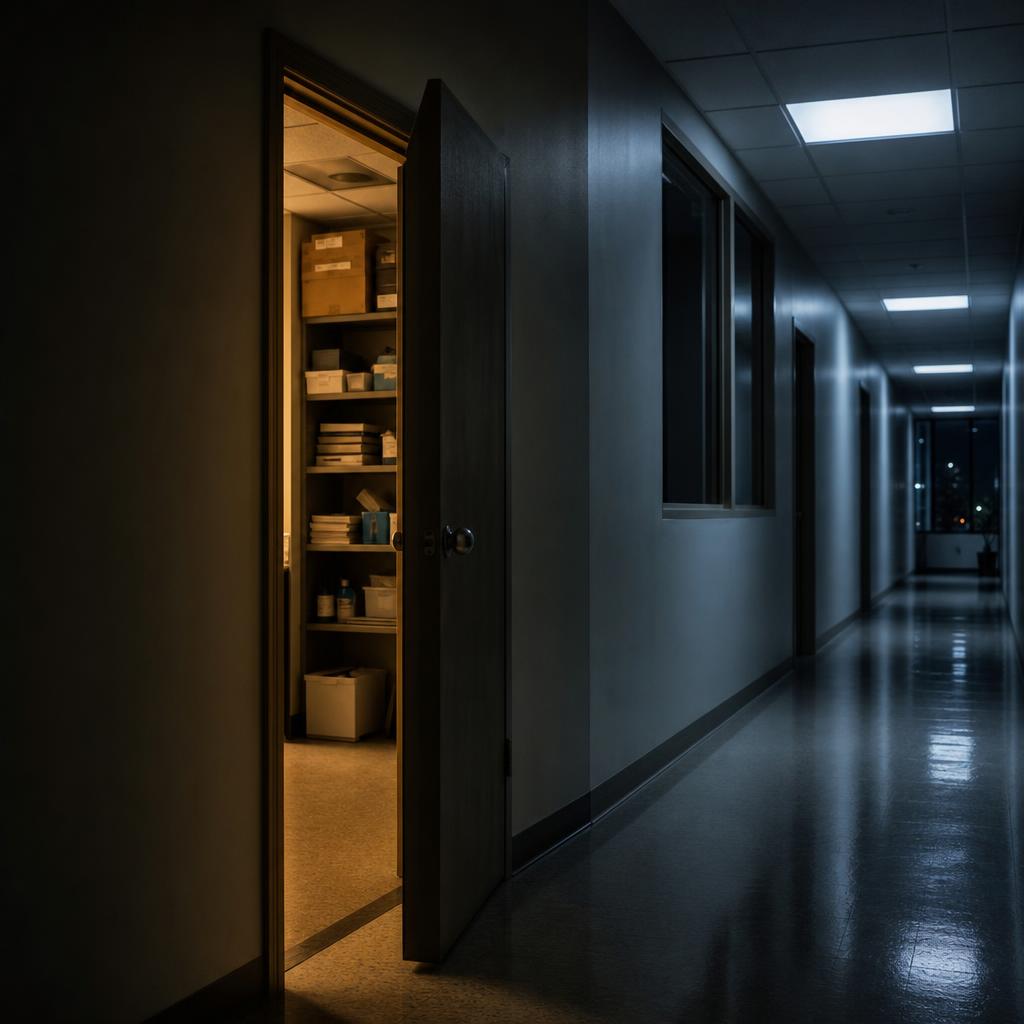
No personnel file at a magazine of this tier ever carried the word cocaine, and none needed to, because the floor ran an entirely separate vocabulary that did the same administrative work without it. A colleague back from a supply closet down the hall, a stairwell landing, or the bathroom of a bar within walking distance of the building — sharper, faster, and talking more than he had been twenty minutes earlier — was, in the language every editor and writer on the floor used without irony, wired, on fire, or in the zone: three descriptions precise enough that nobody on the floor misunderstood the cause, and vague enough that nobody had to write anything down, file anything, or explain it to anyone above them. A features editor’s copy sharpened, reliably, somewhere after ten o’clock on a closing night, and a colleague reading the same draft cold the next morning could not always say why: tighter sentences, a transition that had eluded the four o’clock version, a joke that finally landed where it hadn’t before. The improvement had a mundane, non-editorial cause. A small group of editors and writers working a magazine’s production cycle toward its monthly deadline — laying out pages, editing copy against a closing hour, wrangling a photograph that would not crop to size — would duck out for a few minutes at a stretch, take a bump, and return to the layout table sharper, more talkative, and, for an hour or two, more focused than before. Nobody filed a report on it, because the vocabulary had already done the necessary work of naming an effect without naming a cause anyone would have had to answer for.
A monthly magazine’s production calendar made the ritual a recurring, dated event rather than a standing condition. The single evening each month when every page had to be locked, proofed, and sent to the printer mattered to the operation in a way an ordinary Tuesday did not, and a stimulant whose effect lasted roughly as long as the crisis that called for it fit the shape of that one evening more precisely than it fit the shape of an ordinary week. The same drug that would have been a liability spread across five working days functioned, confined to a single long night a month, as something closer to a tool — used the way a tool is used, for the duration of the job and then set down.
Knowledge of who on a given floor had a connection circulated without ever being formally shared. No memo announced it; a new hire absorbed the fact within a few months the same way she absorbed which conference room ran cold and which senior editor took calls before nine. A junior staffer trusted to make the actual errand — a walk to a nearby building, a wait in a lobby, a return without incident or delay — earned a specific kind of trust from senior colleagues that careful fact-checking alone rarely earned as quickly. The trust was narrow and functional. It said nothing about a person’s editorial judgment and everything about discretion, and on a floor where discretion mattered more than almost anything else, that distinction outweighed most of what a junior person had to offer.
The Second Bar
The floor’s more visible drug required no connection and no discretion at all, because an expense account paid for it in the open. A career in magazines in this period was made as much at the dinner table as at the desk: an editor took a writer, a photographer, or a source to dinner, wine arrived by the bottle rather than the glass, and when the plates were cleared the evening did not end so much as relocate. A second stop — nominally a nightcap, functionally where the evening’s real business got conducted — carried the same table into digestifs and gossip long after the restaurant’s check had already gone onto the corporate account. A story got confirmed there, or a hire got discussed, or a grievance got aired in a register no one would have used inside the building.
What got ordered at that second stop mattered nearly as much as what got said over it. A serious single malt, a champagne, a bottle of the kind of French wine no working writer could have afforded against a magazine’s own pay scale — the willingness to underwrite it functioned as a form of editorial confidence that no assignment letter ever stated outright. A writer taken back to the same table understood, without being told, that an editor’s patience for the piece in progress had not run out yet. A writer who stopped being taken understood the opposite just as clearly, and just as wordlessly.
The accumulated cost of the arrangement showed up less on any ledger than in the floor’s baseline condition on an average morning. A meaningful share of the staff carried a low-grade hangover into the building most days — a headache that had not quite cleared, a short temper before the second cup of coffee, a day propped up on caffeine and a cigarette rather than the sleep that had not happened. Nobody apologized for it, and nobody asked. Affairs and office romances took shape across the same tables the professional alliances did, in the same rooms, over the same bottles, and the two kinds of attachment were not always easy for the people living through them to keep separate from each other.
No Memo, No Form
No hotline, no anonymous form, no compliance office existed on a floor of this era to receive a complaint about a colleague’s drinking or a colleague’s habit, and the absence was not an oversight so much as the assumption the whole arrangement rested on. A senior editor’s private judgment, exercised case by case, was the entire enforcement mechanism available; a personnel file existed for raises and for terminations, rarely for anything between the two. The newsroom’s own gossip network did the actual work instead — circulating warnings, calibrating tolerance, deciding collectively and without a vote which behavior had crossed from private to disqualifying — and it did this quickly, because it ran on direct observation rather than on a complaint that had to be written down and routed somewhere.
Loyalty inside that system ran in specific directions: upward, from junior staff shielding a senior editor’s reputation, and sideways, among peers who had each, at one point, needed the same discretion extended to themselves. A senior editor who protected a favored writer’s habit was rarely acting out of simple indulgence. The arrangement was reciprocal, and every person on the floor understood, without discussing it, that the discretion currently being spent on someone else was discretion they themselves might need to draw on later. What looked, from outside the building, like an institution declining to police itself was, from inside it, a system running exactly as its participants understood it to run: informally, unevenly, and almost entirely on trust.
There was no appeal built into the system, in either direction. A whisper campaign against a rumored crack user could end a career on suspicion alone, with no hearing and no chance to contest the account once it had circulated past a certain number of desks; a well-liked writer with a genuine drinking or cocaine problem could just as easily be protected well past the point an outside observer would have called it dangerous, because the same informal network that punished one kind of rumor shielded a different kind of colleague. The system carried no due process because it had never been built to need one. It ran on relationships, and a relationship, unlike a policy, could not be appealed.
What the Floor Would Tolerate
The line between an acceptable habit and a disqualifying one was never written down anywhere on the floor, and every person working under it could nonetheless have recited it without hesitation. Showing up visibly drunk at a launch party was an embarrassment a career survived; missing a deadline, or missing one more than once, was not. An occasional bump of cocaine on a closing night drew no formal notice from anyone as long as it never touched production and never grew loud enough to become a personnel problem a senior editor had to act on. The boundary was about output, not virtue, and it was enforced that way.
Crack occupied an entirely separate category, and the difference was one of kind rather than degree. A staff member rumored to be using it became, almost at once, the subject of a whisper campaign no office memo could suppress, and not long afterward, a quiet departure whose official explanation rarely matched what the floor already believed. A masthead’s fear of a tabloid item naming one of its own editors as a crack user outweighed whatever institutional loyalty an individual case might otherwise have earned; a publication willing to run pages of sober, sympathetic reporting on a crack epidemic a subway ride from its own lobby wanted nothing to do with the same drug once it had a name and a desk inside the building.
Prescription medication sat in a middle zone with its own logic. It was acceptable, even sympathetic, once it had a medical story attached to it — a diagnosed depression, a documented anxiety — and became a source of quiet concern only when the medication itself turned visible: in slurred speech, a missed morning, an editor who could not quite track a conversation before lunch. The floor’s own folklore, more than any single case, sorted its heaviest users into recognizable types rather than individual biographies. There was the editor-in-chief whose glass never seemed to empty at an evening event and who arrived at the nine o’clock meeting sharper than anyone else in the room, the two facts sitting beside each other without anyone needing to connect them aloud. There was the features writer known equally for cocaine binges and for copy that turned up, against every reasonable expectation, an hour before the absolute deadline — an editor who had long since stopped asking how the piece got written and asked only whether it existed yet. There was the managing editor, unglamorous and entirely reliable, quietly medicated on Prozac and Valium, holding the operation’s daily mechanics together in a way nobody thanked her for, because nobody was meant to notice she was doing it. And there was the editorial assistant who arrived a few years out of college a casual marijuana smoker and left, a couple of years later, a regular at Limelight and Tunnel on ecstasy, bringing back on Monday mornings a version of the weekend that the rest of the floor absorbed without many follow-up questions. None of these were the same person twice, and none needed to be; every one of them was instantly recognizable to anyone who had worked a floor like this one. The memoirs later published by editors who ran magazines at this altitude — Graydon Carter’s account of his years at Condé Nast, Tina Brown’s diaries from the same run of years — describe the surrounding culture of dinners, deadlines, and discretion in which types like these took their shape, without needing a single name attached to any one of them.12
The Swap, 1995–2001
By the middle of the 1990s, cocaine at a magazine of this tier had largely stopped happening inside the building. It had not stopped happening. It had moved off the desk and into the second stall of a bathroom at Bowery Bar, at Indochine, at Pastis after the restaurant’s 1999 opening in the meatpacking district — becoming something a senior editor did at a launch dinner rather than something a fact-checker did in a supply closet at six o’clock on a closing night.3 Two separate forces pushed the change at the same time.
The decade’s AIDS-sharpened caution about shared blood-to-blood contact made a ritual built on a rolled bill and a shared razor blade harder to treat as casual than it had been in 1989; a habit that had once passed between colleagues without a second thought now carried a hesitation nobody needed to explain aloud. At the same time, a legitimate pharmaceutical alternative had arrived to occupy the same drawer the cocaine once had. Prozac reached the public with unusual speed for a prescription drug: New York magazine’s December 1989 cover story, “Bye-Bye Blues: A New Wonder Drug for Depression,” and Newsweek’s cover four months later, on March 26, 1990, showed a pale yellow-and-green capsule and framed the drug as a breakthrough treatment for depression; the issue’s lead article, “The Promise of Prozac,” treated the medication as a cultural event rather than a specialist footnote.45 By 1994, Peter Kramer’s Listening to Prozac, published the year before, had made the pill a legitimate subject of dinner-party conversation rather than a private admission, and an editor’s Prozac prescription by the middle of the decade carried none of the shame cocaine’s presence in the same drawer once had.6
Klonopin, and the lower-status Xanax, entered the same drawer for a different reason — sleep, panic, the accumulated toll of a decade spent working the way this one worked — and by 1998 the water cooler on a senior editorial floor carried its own small, unremarked ritual: someone refilling a Poland Spring bottle with tap water to swallow a Klonopin before the four o’clock closing meeting. The prescription broke unevenly across the floor. Most women on staff over thirty-five held one by then, and plenty of men did too, but the two groups wore the fact differently. A woman was more likely to mention the pill in company, often with a performed modesty about the dose — “the lowest possible dose,” as the line usually went; a man on an identical prescription was more likely to treat the fact of taking it at all as the thing to hide, medicating in silence rather than naming what he was on.
What had been, in 1989, a stimulant culture keyed to getting an issue out the door — cocaine, cigarettes, black coffee — had become, by the end of the following decade, an anxiolytic culture keyed to surviving having gotten it out the door one more time. The one substance that crossed cleanly between both eras, tolerated at the start of the period and simply ambient by the end of it, was marijuana.
The Office Drug Cabinet, 1989–1999
| Year | Substance | Where it lived | Who it belonged to |
|---|---|---|---|
| 1989 | Cocaine | A folded bindle, a supply closet, a bar bathroom down the block | The closing-night ritual, quietly shared |
| 1989 | Single malt, champagne | The second bar, after the expense-account dinner | Editors, writers, sources, on the corporate account |
| 1993 | Prozac | A desk drawer, discussed at dinner parties | Senior editors, increasingly openly |
| mid-1990s | Klonopin, Xanax | A desk drawer, a purse | Mostly women over thirty-five, quietly many men |
| 1998 | Klonopin, decanted into a water bottle | The office water cooler, before the four o’clock meeting | Whoever needed to get through the close |
| 1999 | Marijuana | Ambient — a rooftop, a share house, a Friday night | Nearly everyone, by this point |
| 1999 | Cocaine | The second stall, Bowery Bar or Pastis | Senior staff, at the launch dinner rather than the desk |
None of this ran on any single drug. It ran on a floor that needed a small number of people to work through a fixed number of hours at a level of output the ordinary human body does not sustain on its own, and it reached, without much internal debate, for whatever was available and discreet enough to close the gap — cocaine when cocaine was what circulated, a prescription pad when a prescription pad became the more respectable route to the same hour. The unwritten rule that separated a tolerated habit from a disqualifying one was never about the substance in the drawer. It was about whether the page still closed on time, and whether the person closing it could still be trusted not to become a story instead of writing one.
Meridian in this period would have kept the identical arrangement in place: the same supply-closet bump on a closing night, the same second bar after an expense-account dinner, the same folklore sorting its heaviest users into types rather than case files. A junior editor would have pitched, at some point across the decade, a piece on the society doctors and quiet stimulant culture running through Manhattan’s professional class; the pitch would have been debated once, at length, and declined, on the grounds that a story like that one would have implicated too many people currently filing copy for the magazine itself. The reasoning would have been sound and would have gone unspoken past the room where it would have been made.
The bartender at the second place — the one where a party from the magazine would have landed after the expense-account dinners let out — would have kept the floor’s real case files behind his own composure. He would have known which senior editor’s third drink would have arrived before it was asked for, which writer would have gone to the men’s room twice in an hour and come back talking faster, which two colleagues would have stopped drinking entirely one winter and started ordering club soda in glasses built to pass for gin. He would have made none of the distinctions the folklore upstairs would have made; from his side of the wood there would have been no romantics and no cautionary tales, only tabs. He would have called the cars, palmed the keys he would have judged better kept, and said good night by name to men whose names would have run above stories about every appetite in the city except the one he would have watched them feed, night after night, three feet away.
Footnotes
-
Graydon Carter, with James Fox, When the Going Was Good: An Editor’s Adventures During the Last Golden Age of Magazines (Penguin Press, 2025). ↩
-
Tina Brown, The Vanity Fair Diaries: 1983–1992 (Henry Holt, 2017). ↩
-
Hal Rubenstein, “Restaurant Pastis: Lovelier the Second Time Around,” Forbes, July 24, 2019. ↩
-
“Bye-Bye Blues: A New Wonder Drug for Depression,” New York, December 1989. ↩
-
Geoffrey Cowley, with Karen Springen, Elisa Ann Leonard, Karen Robins, and Jeanne Gordon, “The Promise of Prozac,” Newsweek, March 26, 1990. ↩
-
Peter D. Kramer, Listening to Prozac (Viking, 1993). ↩