The New Pharmacology
Subscribe
https://meridian-archive.com/feed.xmlOpen in your app, or paste the link above into any other:
The Med-Check
By the middle of the 1990s, the appointment an American psychiatrist held most often was not therapy. It was the “med-check”: a scheduled unit of fifteen to thirty minutes, recognized by insurers as its own billing category and taught in residency as its own skill, in which a prescriber reviewed dosage and side effects and did nothing else — no exploration of a patient’s history, no inquiry into what had produced the depression, none of the associative work that had organized psychiatric practice for the preceding four decades. Managed-care insurers reimbursed it in a way they did not reimburse the fifty-minute analytic hour; cognitive behavioral therapy, delivered in twelve to twenty measurable sessions, was funded on the same logic. Medication and psychotherapy, coupled in every psychiatric visit since the profession’s founding, had been split into two billable events, and the split held: by the second half of the decade a patient could see a psychiatrist for medication and a separate therapist, or no therapist at all, and neither insurer nor prescriber treated the arrangement as incomplete.
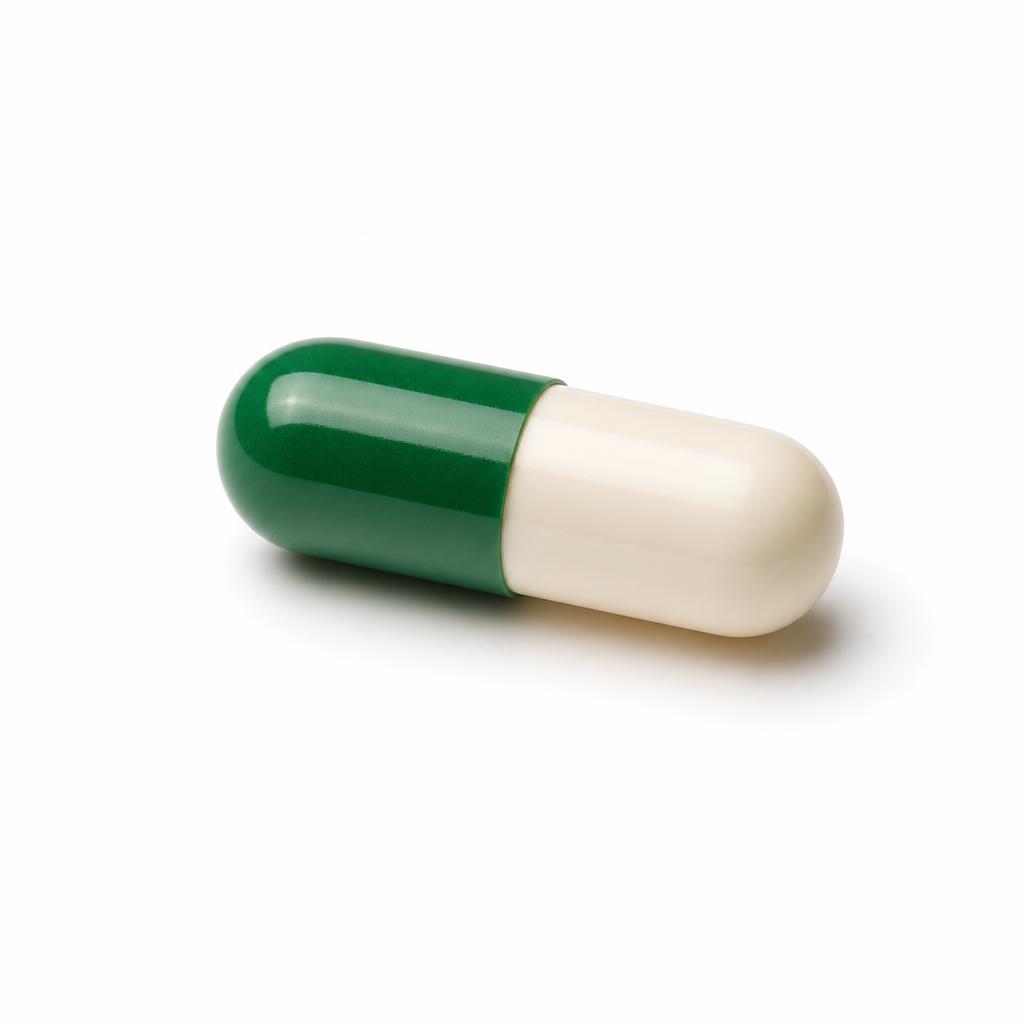
A hard gelatin capsule the color of a hospital corridor — green at one end, ivory at the other — was what most of those fifteen-minute appointments existed to renew. It had appeared on the cover of New York magazine in December 1989, floating against white space under the headline “Bye-Bye Blues: A New Wonder Drug for Depression.”1 No pharmaceutical had been given magazine-cover treatment before. The drug was fluoxetine hydrochloride, sold since January 1988 under the trade name Prozac, and by the time its capsule reached that cover it had already begun displacing two generations of antidepressant and, with them, the appointment built around administering one.
Eli Lilly chemists David T. Wong, Ray W. Fuller, Bryan B. Molloy, and Klaus K. Schmiegel had synthesized the compound in Indianapolis in 1972, working toward a compound that blocked serotonin reuptake and nothing else.2 The tricyclic antidepressants that had defined treatment since the 1950s — imipramine, amitriptyline, nortriptyline — blocked serotonin and norepinephrine reuptake simultaneously, along with acetylcholine and histamine receptors; the dry mouth, blurred vision, constipation, weight gain, and cardiac risk at overdose that followed were not side effects incidental to the drug’s action but direct consequences of how broadly it acted on the body. A tricyclic prescription required a physician’s confidence that a month’s supply, saved up, posed no risk of suicide. Fluoxetine left norepinephrine, acetylcholine, and histamine mostly alone. The “S” in what became known as a selective serotonin reuptake inhibitor was the entire commercial proposition: a drug a general practitioner could prescribe in a fifteen-minute appointment, without the monitoring a tricyclic demanded, at a dose that already worked.
The Food and Drug Administration approved fluoxetine on December 29, 1987, after a four-year review; it reached the American market the following January, under conditions the chemists who had filed the first patent thirteen years earlier could not have anticipated. Sales in the first year reached $350 million. By the end of 1989, the year the capsule made its magazine debut, Prozac was the most-prescribed antidepressant in the world.
The Cover Story
Newsweek’s issue of March 26, 1990 put a much larger capsule on its cover, floating above a desert landscape among clouds, under the headline “Prozac: A Breakthrough Drug for Depression.”3 The story inside, by Geoffrey Cowley and four co-bylined researchers, became the canonical account of the drug for readers who had missed the New York piece four months earlier: a medication as effective as the tricyclics it was replacing, with a side-effect profile mild enough that patients who had abandoned the older drugs were staying on this one.
The praise did not go unchallenged. In February 1990, three psychiatrists at Harvard’s McLean Hospital — Martin Teicher, Carol Glod, and Jonathan Cole — published six case reports in the American Journal of Psychiatry describing patients who had developed intense, violent suicidal preoccupation two to seven weeks into fluoxetine treatment, preoccupation absent from their psychiatric histories and, in every case, absent again once the drug was stopped.4 Litigation and press coverage followed through 1990 and into 1991. The Food and Drug Administration’s psychopharmacologic drugs advisory committee took up the question in 1991; five of the ten panel members held financial ties to companies whose products the committee was reviewing, and the committee voted against requiring a warning label.5 The label did not change. The controversy did not slow the prescribing. It did establish, permanently, that the drug’s behavioral effects were not fully mapped by the trials that had approved it — a caveat prescribers absorbed without much altering their practice.
Better Than Well
Peter Kramer, a psychiatrist practicing in Providence, Rhode Island, published Listening to Prozac: A Psychiatrist Explores Antidepressant Drugs and the Remaking of the Self with Viking in 1993, built from observations he had been recording since 1989.6 His argument moved past the drug’s safety and into its philosophy. Some patients on fluoxetine, he wrote, did not simply recover from depression — they reported becoming people they had never been: more confident, more socially fluent, less inhibited at work. One patient supplied the phrase that carried the book: she felt “better than well.” Kramer coined a term for the phenomenon her case represented, and did not so much resolve the question it raised — if a capsule could produce a more confident person, which version of that person was the real one — as insist that psychiatry now had to hold it.
The book spent four months on the New York Times bestseller list; Kramer appeared on Oprah, NPR’s Fresh Air, and Good Morning America.6 Reception among his peers ran skeptical more than hostile. Sherwin Nuland, reviewing the book in The New York Review of Books under the headline “The Pill of Pills,” charged that Kramer had “played fast and loose with the most basic principles by which physicians evaluate clinical experience.”7 Neither the review nor its skepticism slowed the book’s sales or its entry into ordinary conversation; within a year, the phrase “better than well” needed no citation to be understood at a dinner table on the Upper West Side.
The jokes arrived on the same schedule as the reviews. Woody Allen’s Larry Lipton, dismissing a suggestion that his wife see her psychiatrist in Manhattan Murder Mystery, told her: “There’s nothing wrong with you that a little Prozac and a polo mallet can’t cure.”8 David Letterman, on his CBS broadcast on September 1, 1994, told viewers a New York December had arrived “when the drug dealers are selling more Prozac than crack.”9 A joke works only if the audience already has the referent; by 1993 and 1994, Prozac needed no setup.
The Different Frame
Elizabeth Wurtzel’s Prozac Nation: Young and Depressed in America, published by Houghton Mifflin in September 1994, arrived under Kramer’s cultural shadow and told a different story.10 Wurtzel was twenty-seven. Her subject was not personality enhancement but survival — a depression severe enough to have disrupted her years at Harvard, written as memoir rather than case study. Where Kramer had asked whether the drug turned a barely-suffering patient into someone better, Wurtzel wrote about a floor appearing under a patient who had had none.
Michiko Kakutani, reviewing the book in The New York Times, caught the ambivalence with which critics received it: the prose was “by turns wrenching and comical, self-indulgent and self-aware,” its candor set against “the irritating emotional exhibitionism of Sylvia Plath’s The Bell Jar.”11 The reviews across the press ran a similar seam — admiration for the writing paired with a specific, recurring irritation at the writer, an irritation less about prose than about form: a twenty-seven-year-old had published a book-length account of her own suffering and called it literature. Depression, in the frame most reviewers brought to the book, was assumed to be private; publishing it was treated as a category error the writing itself had to earn its way out of. The book’s commercial success did not resolve the argument so much as outlast it.
From the Couch to the Script Pad
The share of depression treatment delivered by psychiatrists fell across the period while the share delivered by primary-care physicians rose: psychiatrists saw 44 percent of depression visits in 1987 and 29 percent by 2001, while primary care rose from 50 percent to 64 percent over the same years.12 Fluoxetine enabled the shift directly. A drug that required no cardiac monitoring and came in a single daily dose could be prescribed by an internist in the same visit in which a patient first mentioned low mood — a transaction the tricyclics, with their overdose risk, had never let a generalist make alone.
The access route changed shape three times inside a decade. Through 1991, a patient who wanted fluoxetine still needed a referral into psychiatric care — a psychoanalyst’s suggestion, or a depression severe enough to reach a specialist on its own. After Kramer’s book, patients who were managing rather than suffering began arriving at appointments and naming the drug themselves, a pattern physicians who had trained in the 1970s did not recognize from their own practice. By the mid-1990s the third route had opened: a general practitioner, a fifteen-minute appointment, a prescription that required no specialist referral at all. Each route selected for a different patient, and by 1994 all three were running at once, stacked rather than sequential.
The older model’s geography concentrated on Park Avenue in the 70s and 80s, where analysts practiced in the Freudian and interpersonal traditions dominant since midcentury. President George H.W. Bush proclaimed the 1990s the “Decade of the Brain” on July 17, 1990, directing federal research money toward neuroscience and, implicitly, away from the psychoanalytic model of mind in which most practicing psychiatrists over fifty had trained.14 Managed-care insurers pushed from the other side: cognitive behavioral therapy, delivered in twelve to twenty sessions with measurable outcomes, was reimbursable in a way psychoanalysis, open-ended and resistant to outcome measurement, was not. The fifty-minute analytic hour, unthreatened for forty years, became economically precarious inside a single decade — replaced, for medication specifically, by the med-check appointment described above.
Not every patient who wanted fluoxetine reached it by the same route. A cash-only Park Avenue practice served whoever could pay whatever the market required; insurance coverage for outpatient mental health typically capped session counts and carried higher copays than medical coverage generally, when it existed at all. The patient who saw a psychiatrist who knew her case history in detail, and the patient who received thirty seconds of pharmacological consultation from a general practitioner seen twice a year, filled the same prescription. What differed was everything around it.
What the Drug Cost to Take
The trials that supported fluoxetine’s approval had not asked patients directly about sexual function, so the early efficacy data reported rates of two to five percent. When researchers began asking, the rate jumped. A 1992 study of 160 outpatients treated successfully with fluoxetine found that thirty-four percent — fifty-four patients — reported new sexual dysfunction: ten percent decreased libido, thirteen percent decreased sexual response, eleven percent both.15 Anorgasmia, the inability to reach orgasm despite normal desire, was the complaint most often named; cyproheptadine, an antihistamine, was already in use as an off-label workaround.
A second, quieter complaint accumulated more slowly: emotional blunting, an inability to cry at things that had reliably produced tears before, a narrowed range of feeling that lifted the worst of the depression and dimmed some of what remained. Brian Dillon, writing more than two decades later in Granta about opening his first Prozac package in 1997, recalled an “oddly energizing sense” of joining a cultural moment even while managing a private, clinical one — an awareness available to almost no patient on any earlier psychiatric drug, that one’s own treatment was also a subject of general interest.16 The vocabulary that developed to describe the drug’s effect was consistent across memoir and case report: evenness, a floor where there had been none, the static gone. And its opposite, less often said aloud: relief from the worst feelings at the cost of some of the rest.
Peter Breggin, a psychiatrist and the drug’s most persistent critic, argued in Talking Back to Prozac in 1994 that the entire model rested on an unproven premise — that depression was a serotonin deficiency the drug corrected — and that Eli Lilly’s own trial data on suicidality had been recoded to obscure adverse events.17 The claim did not slow prescriptions. By 1993, selective serotonin reuptake inhibitors accounted for forty-six percent of depression treatment nationally, Zoloft and Paxil having entered the market alongside Prozac.12
The Rest of the Cabinet
Prozac had the antidepressant market to itself for four years. Sertraline followed in December 1991 under the name Zoloft, tolerated slightly better and marketed as the gentler alternative; paroxetine followed a year later as Paxil, shorter-acting and harder to discontinue without withdrawal symptoms, and developed a specific reputation as the drug for anxiety disorders. Bupropion, approved in 1985 as Wellbutrin, had been withdrawn after a year over seizure risk in patients with bulimia and returned in 1989 at a lower maximum dose; its defining trait in the crowded field that followed was mechanical rather than reputational — it worked through norepinephrine and dopamine rather than serotonin, and it did not cause the sexual dysfunction that had become the field’s most common complaint. Venlafaxine, approved as Effexor in December 1993, was marketed toward the more severely depressed patients the SSRIs alone did not fully reach.18 No generic competitor reached any of the five before Prozac’s own patent expired in 2001; every pill in the roster was sold at full brand-name price throughout the 1990s.
The Antidepressant Roster, 1985–1993
| Drug | Generic name | FDA approval | Distinguishing trait |
|---|---|---|---|
| Wellbutrin | bupropion | 1985 (withdrawn 1986, reintroduced 1989) | No sexual dysfunction; not an SSRI |
| Prozac | fluoxetine | Dec. 29, 1987 | First SSRI; the cultural icon |
| Zoloft | sertraline | Dec. 30, 1991 | Milder activation; “gentler” reputation |
| Paxil | paroxetine | Dec. 29, 1992 | Anxiety-disorder reputation; hardest to discontinue |
| Effexor | venlafaxine | Dec. 1993 | First SNRI; marketed for severe depression |
None of this displaced the benzodiazepines already sitting in the same medicine cabinets. Alprazolam, approved as Xanax in October 1981, had become by the late 1980s the most prescribed psychiatric drug in the country, fast-acting and specific to panic disorder in a way that separated it, in prescribers’ minds and patients’ self-descriptions, from Valium’s older reputation as the sedating “mother’s little helper” of the 1960s and 1970s.19 The clinical model that emerged by the mid-1990s combined rather than replaced: an SSRI addressed baseline mood over weeks, a benzodiazepine addressed acute panic over minutes, and a patient on both was unremarkable. Xanax did not disappear when Prozac arrived. It moved into the desk drawer beside it.
The Benzodiazepine Lineage
| Drug | Brand | FDA approval | Note |
|---|---|---|---|
| Chlordiazepoxide | Librium | 1960 | First benzodiazepine |
| Diazepam | Valium | 1963 | 1970s peak; “mother’s little helper” |
| Alprazolam | Xanax | Oct. 1981 | Panic-specific; 1980s–90s dominant |
| Clonazepam | Klonopin | 1975 | 1990s “maintenance” reputation |
| Lorazepam | Ativan | 1977 | Hospital and outpatient acute use |
The way people asked about it changed with the diffusion. A guarded “are you on it?” exchanged among friends in certain West Side and downtown social circles after Kramer’s book had become, within a few years, an assumption rather than a question — the variable no longer whether but which. Naming a psychiatrist to someone who turned out to share him, or shared his building, carried its own charge, a specific kind of professional-class intimacy conducted in the passing mention of an address.
In August 1997, the Food and Drug Administration loosened its rules on broadcast drug advertising, letting a television spot abbreviate its list of risks if it pointed viewers to a toll-free number or a concurrent print ad for the rest.20 Antidepressant campaigns reached the airwaves within the following few years, moving the conversation from private disclosure to a paid, thirty-second, brand-named public one. The class line beneath the shift did not move with it. David Rothman, a Columbia historian, argued in The New Republic that the “authentic self” debate Kramer had opened was available only to people who already had everything except equanimity — a complaint aimed less at the drug than at who got to discuss it philosophically rather than simply need it.21 Sertraline was approved for post-traumatic stress disorder in 1999, the first drug to carry that indication; it arrived a full decade after the war correspondents, aid workers, and emergency responders of the Gulf War, Bosnia, and Rwanda had come home with symptoms no prescriber yet had a name for.22 Systematic research into PTSD among war journalists did not begin in earnest until the year of that approval; a later retrospective study found a lifetime prevalence near twenty-nine percent among journalists who had covered eighteen years of war and conflict, close to the rate among combat veterans.23 For most of the 1990s, what such a patient was offered — if he was offered anything — was a benzodiazepine for the sleep, and no diagnosis for the rest.
The capsule did not cure anything so much as it changed what could be said. A professional class that had managed anxiety and depression in silence, or in alcohol, or across years on an analyst’s couch that never used the word “cure,” spent the 1990s acquiring a new vocabulary for the same old weather: evenness, the static gone, better than well. The vocabulary spread faster than access to it did — a psychiatrist who knew a patient’s whole history was not the same thing as a prescription from a doctor seen twice a year, and the difference tracked income as exactly as it always had. What Prozac actually manufactured, in the years between the New York cover and the network television ad, was permission — to name a private trouble in a public sentence, at a dinner party, on a bestseller list, in a pitch meeting. That permission moved through the professional class faster than it moved beneath it, tracing the same line the decade kept drawing everywhere else between who got to feel modern and who did not.
Newsweek’s much larger capsule, floating over a desert three months after New York’s cover, would have arrived at Meridian as confirmation rather than news, and The Essay’s May close would have been where an articles editor would have staged the second telling — not the discovery of a wonder drug but the case that its reputation, three months on, was holding.
Bush’s July proclamation of a “Decade of the Brain” would have reached the floor thin and unglamorous, more executive-branch housekeeping than story, and it would have gone into The Front for October anyway — not on the strength of the material but because a senior editor, watching a competing weekly close a paragraph on it first, would have panicked and demanded a page nobody on the floor would have defended by November.
The Back would have taken Kramer’s book by November, but only the half of it that could be reviewed — the thesis, the case for patients who felt “better than well,” the argument over cosmetic psychopharmacology — because the stable would have held no one who combined the clinical fluency with the willingness to ask, in the magazine’s own pages, which editors upstairs would already have been taking it themselves; the harder piece, raised once over a working lunch, would have gone no further than that lunch.
Wurtzel’s memoir would have arrived under Kramer’s shadow that September, and an articles editor would have claimed it for The Back on a distinction rather than a vote: not personality enhancement but survival, a floor appearing under a patient who had had none.
Sertraline’s 1999 approval for post-traumatic stress disorder would have closed out the decade’s medicine coverage in The Essay’s November pages, the disorder itself still carrying no diagnosis a prescriber would have offered the war correspondents, aid workers, and emergency responders who had come home from the Gulf, Bosnia, and Rwanda with its symptoms.
Footnotes
-
New York, cover story, December 1989: “Bye-Bye Blues: A New Wonder Drug for Depression.” ↩
-
David T. Wong, Kenneth W. Perry, and Frank P. Bymaster, “The Discovery of Fluoxetine Hydrochloride (Prozac),” Nature Reviews Drug Discovery 4, no. 9 (September 2005): 764–774. U.S. Food and Drug Administration, Drugs@FDA: FDA-Approved Drugs, NDA 018936 (fluoxetine), approval date December 29, 1987. ↩
-
Geoffrey Cowley et al., “The Promise of Prozac,” Newsweek, March 26, 1990. ↩
-
Martin H. Teicher, Carol Glod, and Jonathan O. Cole, “Emergence of Intense Suicidal Preoccupation During Fluoxetine Treatment,” American Journal of Psychiatry 147, no. 2 (February 1990): 207–210. ↩
-
Alexander Cockburn, “Death, Depression and Prozac,” The Nation, April 18, 2005. ↩
-
Peter D. Kramer, Listening to Prozac: A Psychiatrist Explores Antidepressant Drugs and the Remaking of the Self (New York: Viking, 1993). ↩ ↩2
-
Sherwin B. Nuland, “The Pill of Pills,” The New York Review of Books, June 9, 1994. ↩
-
Woody Allen, dir., Manhattan Murder Mystery (TriStar Pictures, 1993). ↩
-
Late Show with David Letterman, CBS, September 1, 1994. ↩
-
Elizabeth Wurtzel, Prozac Nation: Young and Depressed in America (Boston: Houghton Mifflin, 1994). ↩
-
Michiko Kakutani, “Books of the Times; The Examined Life Is Not Worth Living Either,” The New York Times, September 20, 1994. ↩
-
Randall S. Stafford, Ellen A. MacDonald, and Stan N. Finkelstein, “National Patterns of Medication Treatment for Depression, 1987 to 2001,” Primary Care Companion to the Journal of Clinical Psychiatry 3, no. 6 (December 2001): 232–235. ↩ ↩2
-
New York Psychoanalytic Society & Institute, “History,” nypsi.org/history/; William Alanson White Institute, “About,” wawhite.org/about/. “The Fall of Psychoanalysis in American Psychiatry,” Psychology Today, December 2019. ↩
-
Proclamation 6158, “Decade of the Brain, 1990–1999,” The American Presidency Project, July 17, 1990. ↩
-
Frederic M. Jacobsen, “Fluoxetine-Induced Sexual Dysfunction and an Open Trial of Yohimbine,” Journal of Clinical Psychiatry 53 (1992). ↩
-
Brian Dillon, “Prozac Culture,” Granta, October 9, 2017. ↩
-
Peter R. Breggin and Ginger Ross Breggin, Talking Back to Prozac: What Doctors Won’t Tell You About Today’s Most Controversial Drug (New York: St. Martin’s Press, 1994). ↩
-
U.S. Food and Drug Administration, Drugs@FDA: FDA-Approved Drugs, New Drug Application histories for sertraline (NDA 019839), paroxetine (NDA 020031), bupropion (NDA 018644), and venlafaxine (NDA 020151). ↩
-
Andrea Tone, The Age of Anxiety: A History of America’s Turbulent Affair with Tranquilizers (New York: Basic Books, 2009). ↩
-
U.S. Food and Drug Administration, “Draft Guidance for Industry; Consumer-Directed Broadcast Advertisements; Availability,” Federal Register 62, no. 155 (August 12, 1997): 43171. ↩
-
David J. Rothman, “Shiny, Happy People: The Problem with ‘Cosmetic Psychopharmacology,’” The New Republic, February 14, 1994. ↩
-
T. Nordenberg, “Sertraline Approved for PTSD,” FDA Consumer 34, no. 3 (May–June 2000): 21–26. ↩
-
Anthony Feinstein, Jonas Osmann, and Viral Patel, “Symptoms of PTSD in Frontline Journalists: A Retrospective Examination of 18 Years of War and Conflict,” Canadian Journal of Psychiatry 63, no. 9 (2018): 629–635. ↩