Cocaine, 1995–2001
Subscribe
https://meridian-archive.com/feed.xmlOpen in your app, or paste the link above into any other:
The Prescription Gate
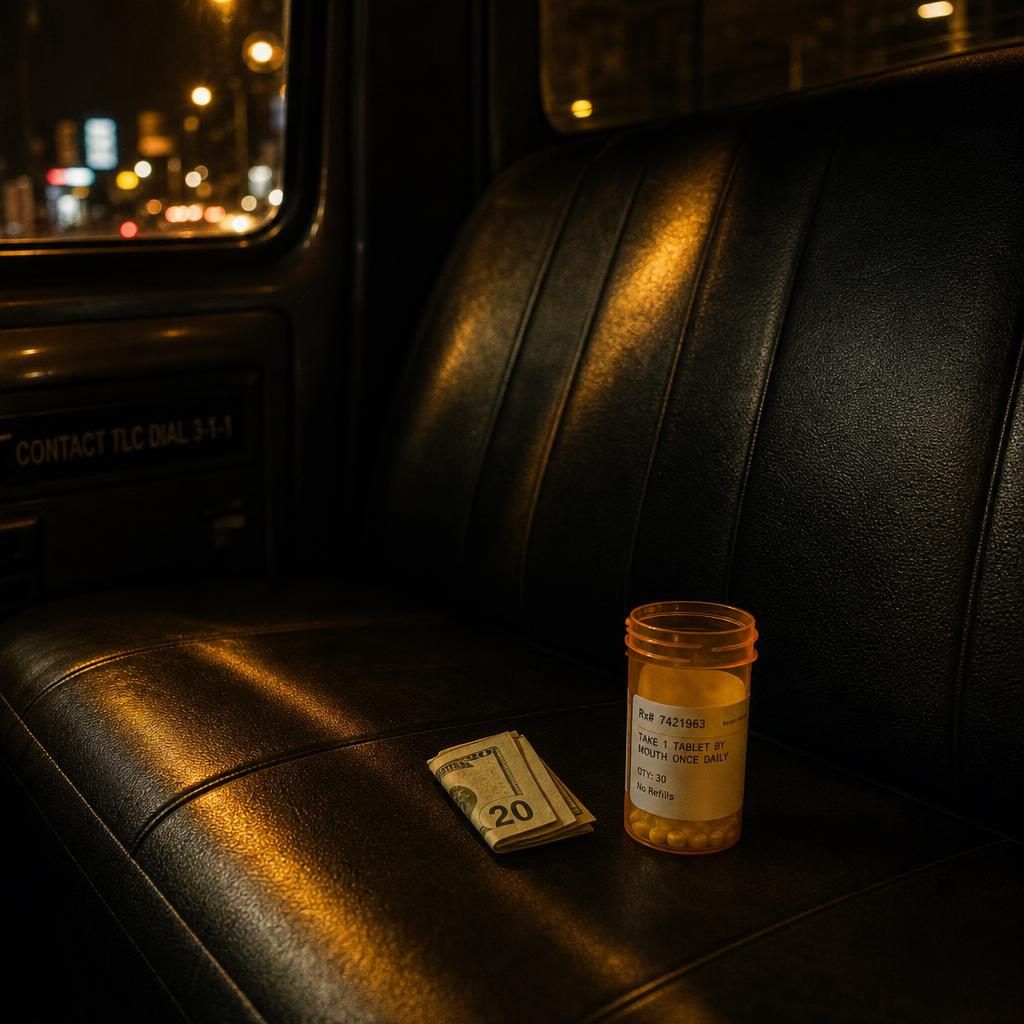
On February 13, 1996, the Food and Drug Administration approved Adderall, a mixed-amphetamine-salts stimulant, for attention-deficit disorder in adults as well as children.1 Inside the New York magazine world the approval opened a channel that a growing number of the professional class’s cocaine users walked through over the years that followed: a diagnosis from a cooperative internist, a prescription with a refill schedule, and a labeled bottle kept in a desk drawer, obtained by the same method any patient used to fill any other prescription. The chemistry was cousin to what had been cut on the backs of legal pads for a decade; the difference was a diagnosis, and it was a gate a willing physician opened routinely, as an ordinary matter of office practice, with a printed pad and a pharmacy on file. Nothing about the underlying want had changed. What had changed was that the same purchase on the body’s stamina could now clear a pharmacist’s counter instead of a dealer’s exposure, filed under a disorder’s name instead of a controlled substance’s.
Before that channel existed, and beside it after, the drug itself had not left the professional floor — it had gone private. The line went into the back of the cab now. A senior editor leaving Indochine after midnight cut it on the stiff cardboard back of a legal pad balanced across one knee, the driver’s partition raised, Lafayette Street sliding past the window — a private act in the last private room of the night. By the middle of the 1990s this was where cocaine in the magazine world had gone: out of the office and off the glass tabletop, into the cab, the single-occupancy restaurant washroom, the back bedroom of the dinner party. It had not become less common among the people who could afford it. It had become less visible, and the retreat into privacy was the whole of the change.
Two pressures pushed it there. One was social: the drug had lost the glamour that made it worth doing where colleagues could see it, and the open bump had begun to read less as stamina than as a problem the user had not noticed he was advertising. The other was physical. A decade into the AIDS epidemic, the shared straw and the passed razor blade had acquired a hygiene the professional class now thought about before it reached for them, and the solitary line — cut with one’s own card, snorted through one’s own rolled bill, in a room with a lock — removed the shared implement along with the audience. What had been a group ritual at the desk became a single-person transaction behind a door.
The national numbers were moving from a different cause. Cocaine use in the United States had fallen off its mid-1980s peak and reached a low in 1994; by the end of the decade consumption ran roughly seventy percent below the 1985 level.2 But the professional class that had made powder fashionable was not the whole of the market, and the two diverged. Even as editors and writers let the drug slip out of their social lives, past-year use nationally rose again from the mid-1990s onward, concentrated among the young: monthly use among Americans aged eighteen to twenty-five climbed from 1.2 percent in 1997 to 1.7 percent in 1999, and the average age of first use fell across the decade.3 The drug was not dying. It was moving away from the people who had once given it its meaning.
Among those people what survived was quieter and more instrumental. The bump taken at the desk late on a close night had been public, done where colleagues could see it and read it as deadline stamina. What replaced it was maintenance: the Tuesday-morning line that made the aftermath of a Monday all-nighter survivable, the weekend habit held to a schedule that a five-day workweek could absorb, the drug fitted to a routine rather than spent on an occasion. The register shifted from celebration to management. A features editor who had used openly in 1990 now used alone, on a weekday, to hold a workload that no longer felt optional; the habit the floor gossiped about belonged to the senior figure whose marriage was visibly failing and whose supply was the open secret nobody named in a meeting. A senior salary absorbed the price without strain, and discretionary cash smoothed the volatility that broke poorer users, so the maintenance habit left almost no trace an employer could read. The product still covered the practice — the copy was filed, the issue closed — and no one on the floor saw the rest.
The New First Tier
The party economy reorganized around it. By the late 1990s cocaine at a magazine-world party had become a second-tier drug, the thing done in the stall rather than the thing offered near the bar. The first tier was alcohol, and alcohol in these years meant vodka, in the middle of a boom. Grey Goose, created in 1997 by the spirits executive Sidney Frank, arrived at thirty dollars a bottle when Absolut sold for about fifteen, and it opened a super-premium category that had not existed before it.4 Vodka suited the moment for reasons the marketing did not have to spell out: colorless and odorless, carrying none of brown liquor’s associations with an older and heavier kind of drinking, it read as clean in a fitness-conscious decade. The cold clear pour — vodka on the rocks, the martini stripped to its temperature and its brand — became the status drink of the launch dinner and the terrace party, a way to signal money without signaling anything a razor blade signaled.
The other ascendant social drug came from the club edge of the same world. Ecstasy shared the first tier with vodka through roughly 1998; after it came GHB, a clear and slightly salty liquid dosed by the capful from a repurposed Visine bottle and sold for roughly twenty to thirty dollars a dose. The federal government moved it to Schedule I in March 2000, under a statute named for two young women who had died after taking it.5 None of this drove cocaine out of the room. The washroom of a major Manhattan restaurant on a Friday night still had someone in the second stall through 2001. The drug had been demoted from the center of the evening to its margins — present, unremarkable, no longer the occasion’s organizing fact.
The Exits and the Descent
The people who had used cocaine in 1989 had, by 1999, mostly gone one of three ways. Some had stopped — a cohort that got sober across the middle of the decade and found the rooms where recovery was organized, the folding chairs and bad coffee of the midtown church basements that ran meetings at lunch and after work, the vocabulary of days counted and one taken at a time. For a certain kind of editor the meeting became a fixture of the week, as regular as the parties had been, and the sobriety itself became visible at the lunch table — the sparkling water ordered without comment, the wine list waved off, the second drink that no longer arrived. Some kept using in private, on the maintenance schedule, and said nothing to anyone who could not already be trusted to know.
And some had made the lateral move through the prescription gate, onto Adderall, that the era’s pharmacology newly permitted after February 1996. This was the underlying mechanic of the whole decade’s drift: the substance changed and the legality changed and the respectability changed, while the function — the chemical purchase on a workload the body could not otherwise meet — stayed exactly where it had been. One substance gave way to the next while the function held, and the drugs a professional cycled through were less a sequence of habits than a single habit wearing successive costumes.
The drug’s place in the status order inverted over the same years. Cocaine in 1989 had been the editor’s drug, expensive and glamorous and done at the top of the masthead in full view. By the end of the 1990s the editors who set the floor’s taste had largely left it — to sobriety, to secrecy, or to the pharmacy — and the drug had drifted down and sideways, toward the account side, the ad-sales world, the media buyers whose expense accounts and later hours had inherited the habit the editorial floor was shedding. At the launch dinner the person carrying the paper was now as likely to work in advertising as in editorial. The account side kept the hours the drug rewarded — the client dinners that ran past midnight, the after-parties an ad budget could absorb — while the editors who had once set the pace increasingly went home earlier. Cocaine had once conferred standing at the top of the masthead; by the end of the decade, at the level where standing was decided, it brought a faint embarrassment instead.
Between 1995 and 2001 cocaine in the magazine world was not a story of decline but of relocation. It moved off the desk and into the stall, out of the shared celebration and into the private routine, down the masthead from the editor who had made it fashionable toward the account executive who had not, and sideways into a pharmacy where the same stimulant need carried a diagnosis and a prescription label instead of a dealer’s pager number. The quantity consumed by the people who could afford it did not fall as far as its visibility did. What the decade rearranged was not how much of the drug was in the building but where in the building it was allowed to be seen, and by whom, and at what cost to the standing of the person seen. The substances a class chooses, and the ones it learns to hide, keep a running account of what that class believes about itself.
The vodka boom would have been the easier catch for an alert desk. Grey Goose’s 1997 launch, a thirty-dollar bottle set against Absolut’s roughly fifteen, opened a super-premium tier that had not existed before it, and a City piece would have found its subject there without needing to reach toward cocaine at all — the terrace pour, the provenance sold in place of taste, the boom itself the whole story. The City would have carried it that October, timed to a season already loud with the brand’s name.
GHB’s federal turn would have gone to a different desk entirely. The clear, faintly salty liquid dosed by the capful from a repurposed Visine bottle, sold for twenty or thirty dollars in the same rooms cocaine had been demoted to, moved onto Schedule I in March 2000 under a statute named for two young women who had died taking it. The Front would have logged it as a short, dated item: a law enacted, a substance reclassified, the capful and the Visine bottle named and nothing more.
Footnotes
-
Adderall (mixed amphetamine salts) was approved for attention-deficit/hyperactivity disorder under New Drug Application 11-522; U.S. Food and Drug Administration approval was granted February 13, 1996, to Richwood Pharmaceutical, which had reformulated the earlier diet drug Obetrol. ↩
-
United Nations Office for Drug Control and Crime Prevention, Global Illicit Drug Trends 2001 (United Nations, 2001), which records U.S. cocaine consumption in 1999 at roughly seventy percent below its 1985 level, drawing on the National Household Survey on Drug Abuse. ↩
-
Substance Abuse and Mental Health Services Administration, National Household Survey on Drug Abuse: Main Findings 1999 (U.S. Department of Health and Human Services, 2001). Past-year cocaine use nationally reached its low in 1994 and rose thereafter; past-month use among those aged 18–25 rose from 1.2 percent (1997) to 1.7 percent (1999), and the mean age of first use fell across the decade. ↩
-
David Wondrich and Noah Rothbaum, eds., The Oxford Companion to Spirits and Cocktails (Oxford University Press, 2021), entry “Grey Goose”: created by Sidney Frank in 1997, debuting at thirty dollars against Absolut’s roughly fifteen, and starting “the super-premium vodka craze that ushered in the twenty-first century.” ↩ ↩2
-
Hillory J. Farias and Samantha Reid Date-Rape Drug Prohibition Act of 2000, Pub. L. No. 106-172 (enacted Feb. 18, 2000); the Drug Enforcement Administration’s final rule adding gamma-hydroxybutyric acid to Schedule I followed on March 13, 2000. ↩ ↩2