Old Money Institutions: Clubs, Galas, and the Social Register, 1989–2001
Subscribe
https://meridian-archive.com/feed.xmlOpen in your app, or paste the link above into any other:
The Meal Billed Whether or Not It Was Eaten
Inside a Manhattan club, a member’s bill did not depend on his showing up. The Union League’s house rules set a monthly dining minimum, a fixed sum each member owed the club’s kitchen whether he ate there that month or not; a member who stayed away was billed anyway, charged for food he had never been served. No cash produced that bill: a member signed a charge ticket, a “chit,” for every drink and every meal, tipping was barred outright by house rule, and a statement arrived at month’s end totaling what he had spent against what he had merely owed. Membership itself ran through a comparable accounting: candidates were proposed and seconded by existing members and screened by an admissions committee empowered to reject an application by secret ballot, the blackball, without stating a reason. Theodore Roosevelt had been blackballed at the Union League in 1881, his mother a Confederate sympathizer, and admitted three years later; the mechanism that stopped him was the same one still in use in 1989.1
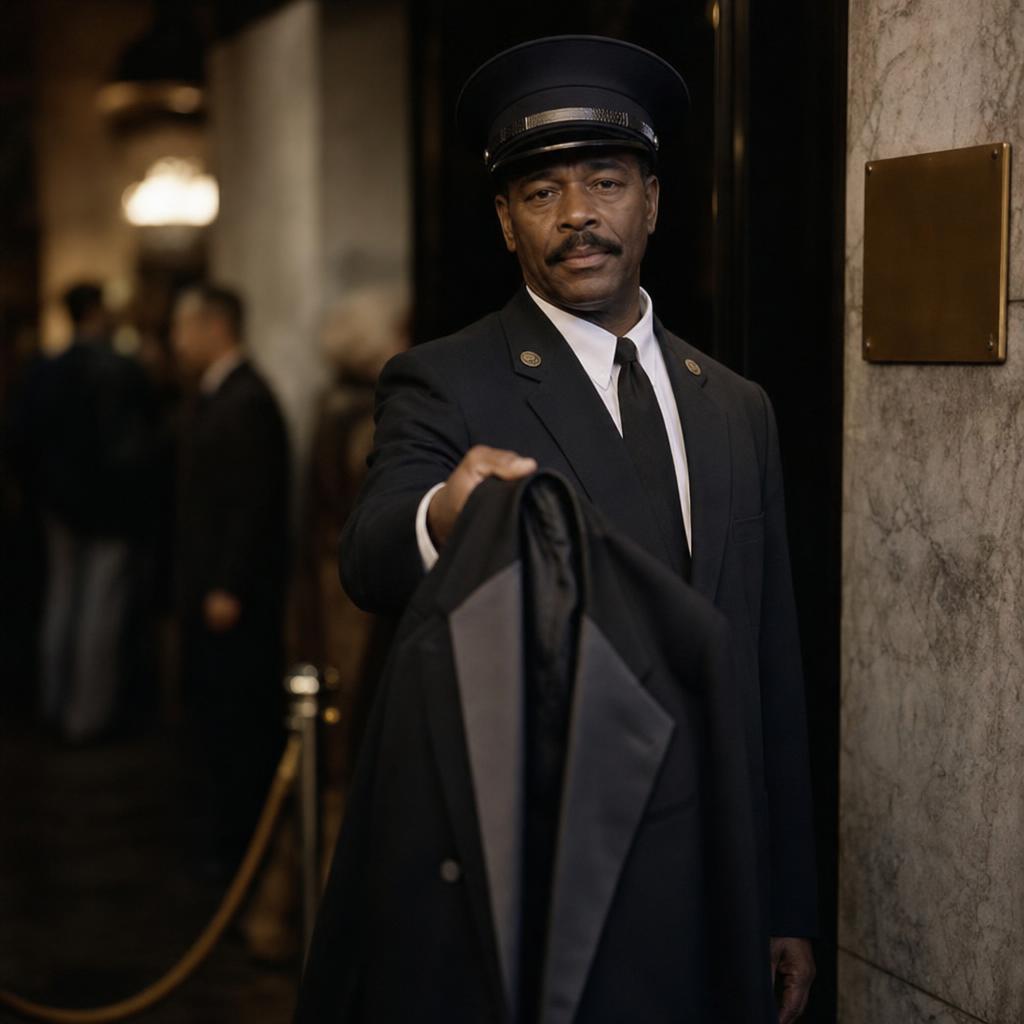
What that machinery could not do was keep a guest of honor at the door, and on the evening of December 7, 1989, it tried anyway. The sculptor Mark di Suvero arrived at the Union League Club on East Thirty-seventh Street to receive an award from the Sculpture Center, and a doorman stopped him at the threshold. Some two hundred and forty guests were already inside, waiting to honor him. Di Suvero had come in white high-top basketball shoes, trousers, a couple of shirts, and a sweater, without a jacket or a necktie, and the club’s dress code required both. The doorman offered to lend him a house jacket and tie. Di Suvero accepted the jacket and, in protest, put it on backwards. Neither man gave way. The guest of honor never entered his own dinner, and the two hundred and forty people ate without him.1
The rule that turned him away was the one part of the club’s regime that had survived every change forced on it. By 1989 the men’s social clubs of Manhattan had been compelled to admit women and to open their vetting to outside scrutiny, but the necktie-and-jacket rule at the Union League stood untouched, enforced at the door against a man the room had assembled to celebrate. Dress was the last boundary the club still controlled outright, and it controlled it absolutely, because a jacket could be checked at the threshold in a way that lineage, or a dining bill, no longer could.
What the door cost was harder to state than what it required. The clubs did not publish their membership fees, and the sums that circulated for initiation into a Manhattan club came from promotional sources of a later period that could not be trusted for these years. The firmest figures on record belonged to the previous century. Discretion about the price of entry was itself a feature: a fee announced was a fee that could be met by anyone who had the number, and the point of the vetting was that the number was never the whole of what was being asked.
The Law That Called Them Public
What forced the clubs open was not shame but a definition. New York City’s Local Law 63, enacted in October 1984 and effective a year later, declared that a club was not “distinctly private”—and so could not lawfully discriminate—if it had more than four hundred members, served meals regularly, and regularly took payment from nonmembers for business purposes. The finding written into the law was blunt: it targeted the clubs “where business deals are often made and personal contacts valuable for business purposes, employment, and professional advancement are formed.”2 The argument was that an institution where careers were made was a marketplace, not a parlor, and could be regulated as one.
A consortium of exactly one hundred and twenty-five clubs and associations challenged the law and lost at every level, the University Club represented by the white-shoe firm LeBoeuf, Lamb, Leiby & MacRae and the city defended by its corporation counsel, Frederick A. O. Schwarz, Jr. The University Club had voted in January 1987 to keep women out; a federal judge, Gerard Goettel, consolidated its suit with the Union League’s and dismissed both. Goettel appended a footnote the club’s opponents quoted for years afterward—that it was “ironic that University’s facade is decorated with college shields and mottos attesting to enlightenment through education”—and, weighing the clubs’ surviving theory that they deserved the exemption granted to benevolent and religious lodges, called that point “not frivolous” because a great deal of business was done at such clubs and they were “an important source of political patronage and influence.”3 The Supreme Court settled it on June 20, 1988, ruling nine to nothing that the city could apply its anti-discrimination law to the large clubs where business was done, the exemption the clubs urged notwithstanding.4
The admission of women, when it came, was staggered and undramatic—the opposite of a rupture. The Union League Club had already seated its first woman member, Faith Whittlesey, Ronald Reagan’s ambassador to Switzerland, in 1986, two years before the ruling everyone remembered as the turning point.1 The Century Association nominated a first class of twenty women in 1988; one of them, the lawyer Helene Kaplan, recalled being “one of the original class of 20 women nominated to the Century in 1988, alongside Brooke Astor and Jacqueline Kennedy Onassis.”5 The New York Athletic Club, its case sent back by the Court, chose not to relitigate alone and admitted its first women in 1989, a hundred and twenty-one years after its founding.6 Most clubs passed quiet by-law resolutions to make the litigation disappear. Mayor Ed Koch, watching them comply, said they now accepted the law “fully, with a certain amount of joy.”7 The capitulation was a shrug. What the clubs kept was the door, the chit, and the dress code, which no court had touched.
The Benefit Machine
The clubs sorted men. The benefit circuit sorted women, and it did so through offices that passed from hand to hand. The Metropolitan Museum’s Costume Institute gala—the single most valuable social credential in the city’s philanthropic calendar—ran on a co-chairmanship held, across two decades, by three women in succession: Jacqueline Kennedy Onassis in 1977 and 1978, Patricia Taylor Buckley from 1979 through 1995, and then Anna Wintour, the editor of Vogue, from 1995 onward.8 The line of succession was itself the event’s history in miniature—an old-money hostess handing the machine to a society wife, who handed it to fashion-media power. The ticket tracked the change. A gala seat that had cost fifty dollars at the first benefit in 1948 was reported at about a thousand dollars by the time Wintour took the event over in 1995.9
The women who ran these committees were not decoration, and by the 1990s they were not amateurs. New York Social Diary’s own history of the period described the shift plainly: the wives of the newly rich “raced each other toward publicity and social prominence, competing in the corridors of fund-raising,” turning what had once been volunteer duty into competitive, publicity-driven labor with measurable results.10 The structure they worked inside was fixed and legible: a benefit ticket split into a small “fair-market-value” portion covering the dinner and the performance, and a large charitable-gift portion that the buyer could deduct; seats were sold individually and by the table, with journal advertisements alongside. A committee chairmanship was a job with a budget and a target, and the woman who held it was measured against the woman who had held it last.
The Dispersal
The clearest documentary record of how old fortunes actually ended was written in auction catalogues, where provenance revealed itself as the only asset that mattered. Two Sotheby’s New York contents sales bracketed the period, and both showed the same strange gap between what an object was estimated to fetch and what a name attached to it made it worth.
The estate of Jacqueline Kennedy Onassis went to auction over four days in April 1996, nearly six thousand personal items across nine sessions.11 During the pre-sale viewing, by one wire-service count, some forty thousand people stood in line to see them. The total came to about $34.5 million, against Sotheby’s most optimistic pre-sale projection of $4.6 million. A set of John F. Kennedy’s MacGregor golf woods, estimated at roughly nine hundred dollars, sold for $772,500 to Arnold Schwarzenegger; an oak rocking chair from the Oval Office, estimated at about five thousand dollars, sold for $453,500; a forty-carat diamond ring went for $2,587,500 to the H. J. Heinz chairman Anthony O’Reilly, for his wife.12 A triple strand of simulated pearls that Jacqueline Kennedy had worn in the White House, estimated at five hundred to seven hundred dollars, sold for $211,500 to the Franklin Mint.13 The buyers came from nineteen countries, most of them American, and the pearls were fake and the price was the point: what the room bid on was not the object but the fact of whose neck it had been on. Sotheby’s took its buyer’s premium off the top of each lot—fifteen percent of the first fifty thousand dollars and ten percent of anything above.12
Two years later the possessions of the Duke and Duchess of Windsor came to the same house. Mohamed Al-Fayed dispersed some forty thousand objects from the Windsors’ Paris villa in a sale first set for September 1997 and postponed after the deaths that August of Diana, Princess of Wales, and Al-Fayed’s son Dodi; it was held instead in February 1998, and realized more than $23 million against an estimate of five to seven million, with the great majority of lots exceeding their high estimates. The mahogany desk on which Edward VIII had signed his abdication in 1936, estimated at twenty to twenty-five thousand dollars, sold for $415,000.14 The house took its premium off the top of every lot in both sales—the fortunes that had run short of cash paying, at the last, the concern that turned their objects back into money.
Estimate Against Realized
Two contents sales, two years apart, measured what a name added to an object, and in each the auction house’s own pre-sale estimates were wrong by orders of magnitude.
| Lot | Sale | Estimate | Realized |
|---|---|---|---|
| JFK’s MacGregor golf woods | Onassis, April 1996 | ~$900 | $772,500 |
| Simulated triple-strand pearls | Onassis, April 1996 | $500–$700 | $211,500 |
| Oval Office rocking chair | Onassis, April 1996 | ~$5,000 | $453,500 |
| Edward VIII’s abdication desk | Windsor, February 1998 | $20,000–$25,000 | $415,000 |
The Calendar as Procedure
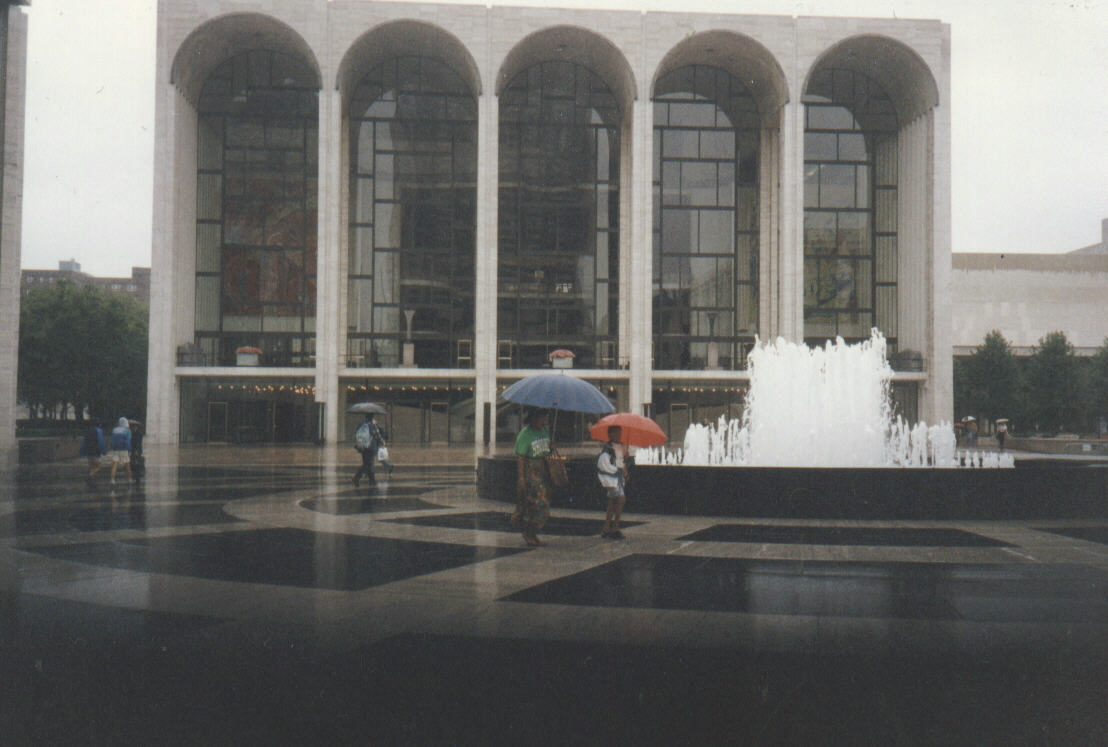
Belonging was also a schedule, and the schedule had its own architecture of separation. At the Metropolitan Opera, the parterre boxes on the mezzanine were entered through private anterooms fitted with a bench, a coat rack, and a bar; a box-holder was admitted by an usher and hung his coat in his own anteroom, never standing in the general coat-check line.15 The Metropolitan Opera Club, a private dining room reached by its own elevator beside the box office and open for roughly a hundred performances a season, served cocktails and dinner before the curtain and through the intermissions to members who never mixed with the ticket-buying crowd in the lobby. The repertoire the establishment came for was itself conservative—the Zeffirelli Traviata, the plush and familiar production.
Across the river, the Brooklyn Academy of Music ran the opposite proposition and paid the price of it in subscribers. Under Harvey Lichtenstein, its president from 1967 to 1999, BAM had launched the Next Wave Festival in 1983 and reopened its Majestic Theater in 1987 with Peter Brook’s nine-hour Mahabharata, programming the difficult and the new—Philip Glass, Steve Reich, Robert Wilson—to audiences that sometimes walked out. The critic Joseph Horowitz, whom Lichtenstein hired to help plan a chamber festival, recorded the cost from inside: after Lichtenstein made the Brooklyn Philharmonic BAM’s resident orchestra in 1990, it “had lost over two-thirds of its subscribers over two seasons,” and the 1993–94 season was rebuilt around interdisciplinary weekend festivals to stop the bleeding.16 Lichtenstein, in Horowitz’s account, was “a world-class gambler.” The one clearly datable institutional decline in this world during these years belonged not to a men’s club but to an orchestra that had programmed too far ahead of its room.
The boards that governed the museums were changing in a quieter register. ARTnews, surveying trustee culture, reported that “in the 1990s trustees from the corporate sector were urging directors to adopt a more corporate mind-set,” a pressure applied by the handful of trustees who supplied most of the money.17 Whether finance had displaced old family money on the rosters over the decade was not something the published lists would settle; what the trade press could document was the change in vocabulary, from stewardship to management, inside boardrooms that still met behind closed doors.
Beneath the trustees ran a tiered architecture for buying in. The Museum of Modern Art organized its patrons into affiliate councils—the Contemporary Arts Council, founded in 1949 by Mrs. John D. Rockefeller III, the Photography Council established in 1986—each with its own dues and its own access, a graded ladder by which a collector could purchase proximity to a department.18 The Metropolitan Opera tiered its dining the same way, the Grand Tier and the patron lounges apportioned by level of giving, so that a donor’s seat at dinner was set by the size of his gift before he reached the box.15 It was the club principle applied to the arts: not one wall but a graded series of thresholds, each with its own price and its own smaller room behind it.
The Book
The most exact instrument for reading this world was a book that listed it. The Social Register, published in a winter volume and a thinner summer supplement, recorded for each listed household its winter and summer addresses, the names of its members and their children, schools attended, women’s maiden names, club affiliations, and the names of country estates. The summer edition listed yachts, with their specifications and country of registration. Children were entered with their parents from birth. The late address changes that missed the winter book’s deadline were gathered into the summer supplement under a heading that had not changed in generations: “Dilatory Domiciles.”19
The book was a map of a caste, and its geography told on the group that kept it. In the 1988 edition, two-thirds of the listings lay along the seaboard from Maine to Virginia; New York and Pennsylvania together held roughly a third; California, with five times Massachusetts’s population, had fewer listed households than Massachusetts did.19 A listing could be lost as well as gained, and the losing was recorded in the same clerical register as the gaining—a used copy of the Register survives with a dealer’s marginal note beside one entry, a listee who “committed suicide… after his daughter married a Negro bandman. All out of the book now.”20 The note was undated and belonged to an earlier decade, but the mechanism it described—the quiet purge, the family struck from the next printing—was the one the book still ran on.
The institutions of old money in these years were not dying, whatever the standard account said; they were being reclassified. A law told the clubs they were marketplaces, and the courts agreed, and the clubs complied with a shrug and kept the parts that mattered—the door, the chit, the tie—which no statute had thought to name. The benefit committees professionalized and the offices passed woman to woman. The auctions proved that the one asset a fading fortune could still sell was its own name, at prices that made a mockery of the objects underneath. And the book that listed the whole caste went on recording maiden names and yacht registrations and the households quietly struck from the next edition, an accounting system for a group that preferred not to be accounted. What held all of it together was not money, which the new fortunes had in greater quantity, but a grammar of belonging that money alone could not read—a fluency taught early and never advertised, running quietly beneath a city that was busy, everywhere else, learning to put a price on everything and read it aloud.
A doorman turning away his own guest of honor would have made the kind of item The Front existed for, quick and self-explaining: two hundred and forty people seated for a sculptor who would never have gotten past his own jacket. The women’s-club fight would have wanted the longer runway of The City instead—the statute that had redefined a parlor as a marketplace, the unanimous Court, the New York Athletic Club giving up its case rather than relitigating alone after a hundred and twenty-one years of refusing women. It would have been the tidier of the two pieces to defend upstairs, since a court had already made the desk’s argument for it.
The Back would have carried both auctions in turn, roughly twenty-two months apart, and would have needed only the numbers to make its case: a set of golf clubs estimated at nine hundred dollars bringing back several hundred times that, a mahogany desk once estimated at twenty thousand dollars closing at more than twenty times its reserve. Nobody assigning either item would have had to argue for it twice. What would have carried the piece was the gap itself—the distance between what a thing was worth and what a name made it worth—legible in the estimate column before a writer would ever have opened a notebook. The Windsor sale would have been the smaller of the two stories to place, coming after the Onassis auction would already have run the argument once, but Edward VIII’s own abdication desk closing at more than four hundred thousand dollars would have been fact enough to close the item on its own.
Footnotes
-
Tom Miller, “The 1931 Union League Club—38 East 37th Street,” Daytonian in Manhattan, January 2025, on the club’s history and house rules—the 1881 Theodore Roosevelt blackball, the no-tipping rule, the 1986 admission of Faith Whittlesey, and the December 1989 di Suvero incident as reported by Newsday. ↩ ↩2 ↩3
-
New York City Local Law 63 of 1984 (effective October 1985); legislative findings quoted in New York State Club Assn. v. City of New York, 487 U.S. 1 (1988). ↩
-
University Club v. City of New York, 655 F. Supp. 1323 (S.D.N.Y. 1987), Goettel, J.—footnote 6 (the “college shields and mottos” observation, citing “University Club Votes to Keep Women Out,” New York Times, January 19, 1987) and footnote 10 (the benevolent-order exemption “not frivolous”). The consolidated challenge was brought by a consortium of exactly 125 clubs and associations. ↩
-
New York State Club Assn., Inc. v. City of New York, 487 U.S. 1 (June 20, 1988), White, J., for a unanimous Court. ↩
-
“The Century Association Elects First Woman as President,” Club + Resort Business, February 2016, quoting Helene L. Kaplan via the New York Times. ↩
-
Felicia R. Lee, “121 Years of Men Only Ends at Club,” New York Times, July 28, 1989. ↩
-
“Club doors pushed open a bit more for women,” Christian Science Monitor, June 21, 1988. ↩
-
“Benefit Events,” The Metropolitan Museum of Art, Costume Institute; co-chair succession Onassis (1977–78), Patricia Taylor Buckley (1979–95), Anna Wintour (1995–). ↩
-
“How Much Does a Met Gala Ticket Cost?” Newsweek, reporting the individual ticket at roughly $1,000 when Wintour assumed the event in 1995, up from $50 at the 1948 benefit. ↩
-
“The Rise and Fall of the Socialite,” New York Social Diary. ↩
-
“What Price Camelot?” TIME, 1996, on the four-day, nine-session sale of the estate of Jacqueline Kennedy Onassis, April 23–26, 1996. ↩
-
“Phew! Auction Total Is $34.5 Million,” Deseret News, April 27, 1996; pre-sale viewing line reported by UPI, April 26, 1996. ↩ ↩2
-
“Going, Going, Gone: A First Lady’s Faux Pearls,” Sotheby’s, on the $211,500 sale of Jacqueline Kennedy’s simulated pearls to the Franklin Mint against a $500–$700 estimate. ↩
-
Carol Vogel, “$415,000 for the Desk Where a King Quit,” New York Times, February 22, 1998; total, estimate, and desk price per the Sotheby’s sale of the Duke and Duchess of Windsor’s possessions, February 1998, and CNN, February 21, 1998. ↩
-
Metropolitan Opera, patron and box-holder materials; Metropolitan Opera Club membership description, operaclub.org. ↩ ↩2
-
Joseph Horowitz, “The BAM Experiment,” ArtsJournal, on Harvey Lichtenstein (president of BAM 1967–1999), the 1983 launch of the Next Wave Festival and the 1987 reopening of the Majestic Theater with Peter Brook’s Mahabharata, the Brooklyn Philharmonic’s subscriber losses after 1990, and the 1993–94 interdisciplinary season. ↩
-
“Are Museum Trustees Out of Step?” ARTnews. ↩
-
“Patron Program and Affiliate Groups,” The Museum of Modern Art, on the Contemporary Arts Council (founded 1949) and the Photography Council (established 1986). ↩
-
Stephen R. Higley, Privilege, Power, and Place: The Geography of the American Upper Class (Rowman & Littlefield, 1995), mapping the 1988 Social Register. ↩ ↩2
-
“How do you get listed in the Social Register?” The Straight Dope; the dealer’s marginal note recorded in an AbeBooks listing for a used Social Register volume. ↩