The 1990–91 Recession: What It Felt Like in Midtown
Subscribe
https://meridian-archive.com/feed.xmlOpen in your app, or paste the link above into any other:
The Claim Nobody Filed
The city’s unemployment insurance system, throughout the recession that followed, registered no claim for a restaurant server, a hotel banquet waiter, or a member of an office-cleaning crew who had never worked enough hours to cross the eligibility threshold — not a rare condition in the service trades that fed Midtown’s office economy, but the ordinary one, and state unemployment offices applied the exclusion as a routine line on the eligibility form, the same as any other. A shift lost below that floor produced no claim, no case number, and no entry in the monthly counts of the jobless that the city and state released for public record; the job ended and the system had no mechanism for knowing it had. The recession’s official toll, compiled from exactly those counts, measured only the fraction of the layoffs that had crossed a bureaucratic line before they happened.
The recession that flattened New York in 1990 and 1991 did not begin in 1990. Its terms were set two years earlier, when Manhattan real estate — residential co-ops, commercial office towers, both — peaked in 1987 and 1988 and then began, quietly, to soften while the city’s mood had not yet caught up. The stock market crash of October 19, 1987 — Black Monday — had briefly rattled Wall Street without derailing the broader city economy, which kept expanding through 1988 and into 1989; the real estate peak that same year proved the more consequential warning, because property, unlike a stock index, does not reprice in an afternoon. It reprices over years, in a market where a building under construction cannot be un-built once the letters of intent stop coming in. Buildings broken ground during the boom kept rising through 1989 and into 1990, adding new floors to a market that could no longer fill the floors it already had. Wall Street’s junk bond machine, which had financed much of the decade’s leveraged expansion, faced its own consequences first: on December 21, 1988, Drexel Burnham Lambert pleaded guilty to six felony counts of securities and mail fraud and agreed to pay a $650 million fine, the largest in the industry’s history — an admission that the firm which had underwritten the era’s boldest debt survived, for the moment, only on paper.1 The city’s unemployment rate stood at 6.7 percent in 1989, unremarkable, healthy by the standards of the decade.2 Donald Trump, at the same moment, was the most visible embodiment of what the boom had built: his name ran the length of buildings from Fifth Avenue to Atlantic City, financed by debt that had not yet come due.
The recession’s approach, that year, was legible only to people paid to read it. Real-estate brokers noted commercial vacancies inching upward in secondary Midtown corridors. A few retail storefronts on blocks that had been fully let a year earlier went dark. None of it interrupted the larger sensation of the moment — a city that had just elected its first Black mayor, watched a wall come down in Berlin, and believed, with the rest of the country, that history had settled decisively in its favor. The contraction was already underway beneath that mood. It simply had not yet reached anyone whose job was not to watch for it.
The supply problem was structural and slow-moving in a way the mood was not. A developer who broke ground in 1987 on the strength of letters of intent from tenants covering ninety percent of a planned tower had no mechanism to stop construction when the market turned under him;3 the building had to be finished, financed, and delivered, whatever the leasing climate looked like on the day the elevators started running. Some of those tenants renegotiated their terms once the building was ready. Others walked away from letters of intent that had never been binding leases in the first place. The new floor space kept arriving through 1990 and 1991 regardless, adding supply to a market that had already stopped generating the demand the supply had been built for.
The Turn
The recession arrived in two collapses within the same year, one financial and one personal, both instructive about what the 1980s had actually been financed with. Drexel’s guilty plea in December 1988 had bought the firm fourteen more months; it could not survive them. On February 13, 1990 — the newsroom called it the Valentine’s Day Massacre — Drexel Burnham Lambert, which had employed more than ten thousand people at its peak, filed for Chapter 11 bankruptcy.1 Michael Milken, the head of Drexel’s high-yield department, pleaded guilty that April to six felony counts and was sentenced to ten years.1 The firm itself went, within days of the filing, to nearly no one left on staff; the reorganization took two years, and in 1992 a much smaller operation — twenty employees against a former peak of more than ten thousand — re-emerged under strict restriction as New Street Capital.4 The junk bond market did not merely lose its dominant underwriter. It lost the firm that had been making markets in the bonds it issued, and without a buyer of last resort, a meaningful share of outstanding high-yield debt went effectively illiquid. Drexel’s high-yield department had operated out of Beverly Hills, not New York, but the firm’s broader operations were Midtown-based and had supported a specific lifestyle economy of their own — restaurants, apartment leases in the upper 50s and 60s, an entire tier of consumption calibrated to Drexel-sized bonuses. The December 1988 Predators’ Ball, the firm’s annual gathering of the junk-bond issuers it had financed into being, had been the apparatus’s high-water mark; fourteen months later it had no firm left to convene it.
Trump’s collapse unfolded on a separate and, for the tabloids, more entertaining timeline. By the start of 1990 he owed roughly $4 billion to more than seventy banks, with $800 million of it personally guaranteed against his own assets. The Trump Taj Mahal in Atlantic City, financed largely through $675 million in junk bonds at a 14 percent coupon, opened that April as his most expensive project and filed for its own Chapter 11 within the year.5 New Jersey gaming regulators, reviewing the Trump casino holdings that August, put the risk in writing: the state’s examiners found “the possibility of a complete financial collapse of the Trump Organization was not out of the question.”5 By his own later account he had told the banks he needed $65 million to keep the businesses running; in June, a consortium of them extended him a $20 million loan instead, on the condition — reported with evident tabloid relish — that Trump live on $450,000 a month.6 The Taj Mahal was not the only property in trouble. The Trump Plaza Hotel and the Trump Castle casino followed it into bankruptcy within the year, and the Plaza Hotel on Fifth Avenue — bought for $390 million in 1988, the acquisition itself a monument to the boom’s confidence — carried $550 million in debt by 1992.5 In a 1997 memoir, Trump described telling the banks’ representatives that he would declare personal bankruptcy and “tie you guys up for years” in litigation rather than be dismantled quietly; the bankers who sat across from him disputed how much leverage that threat actually gave him, but the account, once it circulated, became load-bearing to the persona that survived the decade that had nearly ended it.6 The Post and the Daily News covered the unraveling as they had covered the ascent — the yacht sold off (the Trump Princess), the plane, the specific dollar figures — with a mixture of contempt, awe, and something close to satisfaction. The most famous developer in New York was visibly a man who had borrowed a fortune to build monuments to his own scale, and the banks that had financed the monuments were now the ones explaining, in writing, how close to the edge the whole arrangement had run.
The rest of 1990 supplied confirmation rather than surprise. The Iraqi invasion of Kuwait that August, and the buildup toward the Gulf War that followed it, added a layer of macroeconomic uncertainty on top of a downturn that no longer needed help arriving. Closer to home, on October 25, 1990,7 the New York Daily News — the tabloid whose front pages had carried Trump’s rise and fall in equal detail — was struck by its production and delivery unions in a fight over job cuts and work rules that had its own long history but broke into the open in the same climate of contraction reshaping every other Midtown institution; the strike ran into 1991 and cost the paper a meaningful share of the circulation it never fully recovered. A newsroom covering the recession from the outside was, in that instance, also covering it from the inside.
Midtown, 1991
The national recession is dated, by convention, from July 1990 to March 1991. New York’s ran on its own clock — arriving earlier, in the real estate softness of 1989, and refusing to leave when the national numbers turned. The job losses concentrated in a single brutal year: the city shed 192,000 jobs in 1991 alone, and by January 1993 unemployment reached 13.4 percent, the highest rate the city had recorded since the Great Depression.2 Midtown Manhattan office vacancy, which had stood at 15.1 percent in 1989, reached 17 percent by the middle of 1991: one office floor in six standing empty. Asking rents on prime Park Avenue buildings fell 19 percent from their 1989 peaks, and secondary buildings fell further.3 The Federal Deposit Insurance Corporation’s later accounting of the era found New York “one of the two or three worst real estate disaster areas in the country,” noting that building owners were, in many cases, “taking in barely enough rent revenues to cover the mortgage and operating costs.”3 Overall office sales activity fell to its lowest level since the late 1970s.3 Manhattan co-op and condominium prices, meanwhile, fell by roughly a quarter on a per-room basis between 1989 and 1991 — the steepest residential correction the city had seen since the fiscal crisis of the 1970s. Co-op boards that had spent the 1980s rejecting buyers for insufficient wealth now had trouble finding any buyer at all.
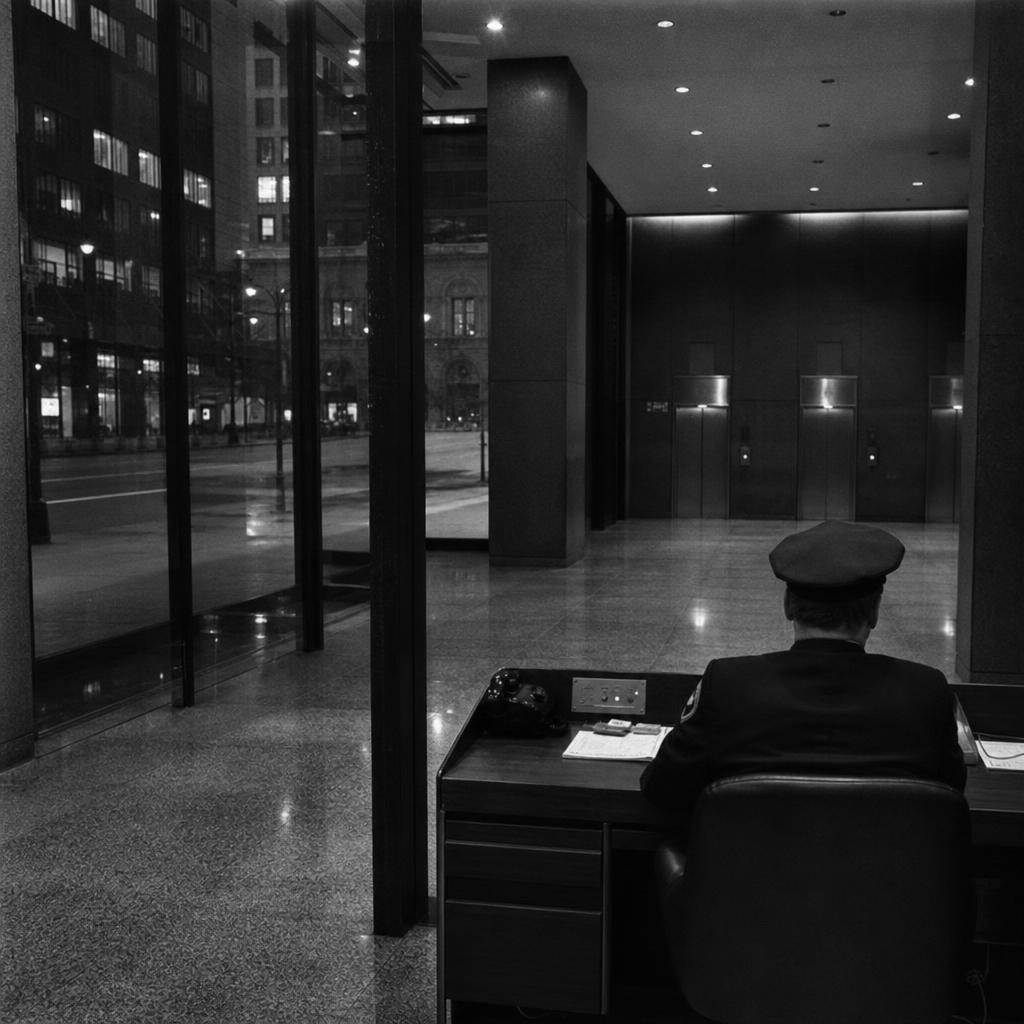
The physical evidence collected on the sidewalk. Buildings begun in 1987 and 1988, at the top of the market, were still under construction when the demand that might have absorbed them had already disappeared; some sites stood frozen mid-frame, steel rising to the third or fifth floor and then stopping, cranes motionless above empty lots for months at a time, plywood barriers around excavations that had gone no further since the ground was broken. Office lobbies that had been crowded between 8:30 and 9:30 in the morning through the late 1980s were, by 1991, places a person could cross without touching anyone; security desks kept the same staffing levels against half the foot traffic, because a building could not be run with fewer guards just because fewer people were coming through the door. The expense-account lunch — three courses, two drinks, an hour and a half, charged to the company — had been a reliable Midtown fixture through the boom; by 1991 tables were available at 12:30, and some restaurants that had expanded in 1988 cut staff and lowered prices to keep the covers moving. A few closed outright, leaving storefronts papered over from the inside.
Retail showed the same pattern along different blocks. Sixth Avenue’s corridor of postwar office towers — the Avenue of the Americas, built out through the 1960s and 1970s — carried some of the most visible vacancy in Midtown, entire lobbies quiet where insurance companies and banks had once filled every floor. National chains and local boutiques that had opened second and third Manhattan locations during the boom closed them; the storefronts that had been uniformly occupied in 1988 came back with gaps in them by 1991, and the businesses that eventually filled the gaps paid rents low enough to signal, on their own, what had happened to the block. Office-supply stores and messenger services that had staffed up for 1988 volumes carried the same overhead against a fraction of the calls.
What the Contraction Cost
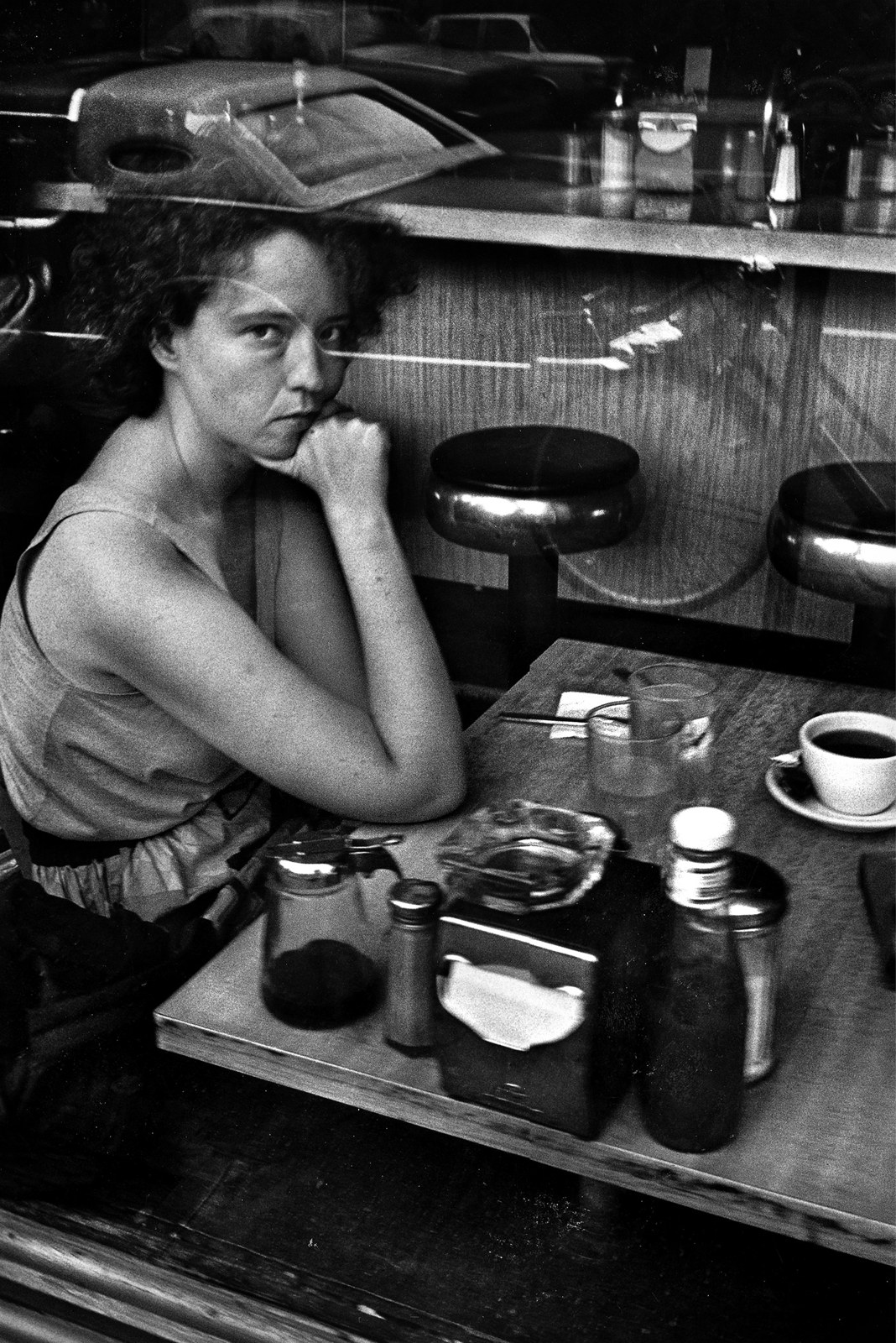
The recession reached the working city earlier, harder, and longer than it reached Midtown’s office towers, and it left less of a paper trail. Restaurant kitchens, office-cleaning crews, and hotel staff — the service employment that existed to support the white-collar economy — contracted as soon as that economy did, in jobs that carried no severance and, for many part-time workers, no unemployment insurance. The garment trade, concentrated around West 36th through 40th Streets and already declining for two decades as manufacturing moved to cheaper regions, lost ground faster; its workforce was disproportionately immigrant women, many without legal status and without institutional recourse when a shop simply closed. In the outer boroughs, where residents worked construction, manufacturing, and retail rather than finance and media, layoffs arrived before Manhattan’s and did not lift on the same schedule; the Bronx carried the city’s highest unemployment rate throughout the period, and Black and Latino unemployment ran well above the citywide figure.2 In immigrant neighborhoods like Washington Heights, where bodegas, service work, and street vending made up the main employer, the informal economy contracted along with the formal one, with no unemployment office to register the loss.
The city’s shelter system, built over the previous decade to house homeless families in what had already become a permanent feature of municipal life,8 absorbed a new wave of evictions and lost income through 1990 and 1991; the strain was general enough that advocates and city agencies alike described a system operating at capacity, sheltering something on the order of twenty thousand people on an average night by the fall of 1991; requests for emergency food assistance rose sharply across the same stretch. Much of the loss fell on people already excluded from unemployment insurance by the hours threshold, for whom a shift lost was a paycheck lost outright and no claim at all. For many working-class New Yorkers the recession registered less as a discrete event than as the sharpest phase yet of a decline that had been running since the 1970s — a fact visible in the outer boroughs well before Midtown’s office towers began advertising empty floors, and largely absent from the coverage that Midtown’s magazines produced about it.
The Bond Market’s Second Scandal
Wall Street’s self-image, already dented by Drexel and Milken, took a second hit in August 1991, when it became known that Salomon Brothers Treasury bond trader Paul Mozer had been submitting false bids at government auctions — at one point allowing the firm to control as much as 57 percent of a single Treasury issue, against a legal ceiling of 35 percent. The violation itself might have been contained to Mozer’s desk. What widened it into a firm-level crisis was the discovery that Chairman John Gutfreund, President Thomas Strauss, and Vice Chairman John Meriwether had known of the false bids for roughly five months and had not reported them.9 Gutfreund resigned within days. Warren Buffett, Salomon’s largest outside shareholder, stepped in as interim chairman to manage the firm through the crisis — an intervention that put the country’s most trusted investor’s name behind an institution that had just admitted to systematically defrauding the market for U.S. government debt. Salomon paid $290 million in federal civil settlements in May 1992; Mozer, prosecuted separately, was sentenced to four months in prison in late 1993.9 For a financial press that had spent much of the 1980s treating Wall Street as a heroic and occasionally reckless engine of national wealth, the sequence — Drexel’s guilty plea, Milken’s sentence, Salomon’s cover-up — required, within three years, an entirely different vocabulary. Wall Street’s broader employment base contracted through both episodes without collapsing outright: trading desks built out in the late 1980s were downsized, but the industry restructured rather than disappeared, and the private-equity business Drexel alumni carried into the 1990s continued in diminished form.
The Finance World, 1988–1992
| Date | Event |
|---|---|
| Dec. 21, 1988 | Drexel Burnham Lambert pleads guilty to six felony counts; agrees to a $650 million fine. |
| Feb. 13, 1990 | Drexel files for Chapter 11 bankruptcy. |
| Apr. 1990 | Michael Milken pleads guilty; the Trump Taj Mahal opens in Atlantic City. |
| Jun. 1990 | Trump’s banks extend a $20 million loan, conditioned on a $450,000-a-month personal living allowance. |
| Aug. 1991 | Salomon Brothers’ false Treasury bids become public; Gutfreund resigns. |
| May 1992 | Salomon pays $290 million in federal civil settlements. |
The View From a Magazine Office
Magazine advertising tracked the business cycle closely and moved before newspaper classified advertising did, because a magazine ad page was a discretionary purchase in a way a help-wanted listing was not: a corporation cutting its marketing budget dropped the glossy insert before it stopped posting jobs it still needed to fill. The categories that cut deepest and first in 1990 and 1991 were luxury goods, automotive, and financial services — precisely the advertisers a magazine at Meridian’s tier depended on to fill a well that, in flush years, ran toward the top of its normal range and, in lean ones, settled near the bottom. Precise industry-wide figures for the 1990–91 ad-page decline were not well preserved in the surviving trade record, but the mechanism itself was not in dispute: when the ad pages fell, a magazine’s physical weight fell with them, because advertising was what drove the page count a printer billed for, and editorial space was a fixed share of a shrinking total.
A shrinking book meant fewer features, shorter features, or features killed between assignment and publication. The contraction moved through a magazine staff in a predictable order — freelance budgets first, because a freelancer could simply not be assigned the next piece; staff writing assignments second; staff positions themselves last, and only when the first two measures had not been enough. At a magazine the size of Meridian’s editorial staff, fifty to sixty people on the masthead, that order meant the recession was felt, for most of the building, as a mood before it was a headcount: fewer dinners expensed, editorial trips scrutinized before they were approved, an assignment to a favorite freelancer held for a later issue that might not come. An editorial assistant hired in the boom years, earning toward the bottom of a pay band that ran from roughly nineteen to twenty-four thousand dollars a year, watched Manhattan rents hold steady while the raise she might have expected in 1988 did not arrive in 1991. No major prestige magazine closed because of the 1990–91 recession specifically; several underwent ownership changes, budget cuts, and quiet restaffing instead, absorbing the contraction the way an institution built for permanence generally did — by getting thinner without admitting, in print, that it had.
The Late Recovery
The national recession ended, by the standard dating, in March 1991; New York’s did not observe the boundary. The stock market recovered faster than anyone expected — the Dow crossed 3,000 for the first time that April — and financial-industry profits rebounded well ahead of financial-industry hiring. Everything else came back on its own schedule and roughly in this order: trading first, then financial employment, then commercial real estate, with office vacancy not beginning a sustained decline until 1994 and 1995; retail in the secondary corridors and service employment in the outer boroughs lagged furthest behind.
David Dinkins had taken office in January 1990 at what looked, from the vantage of November 1989, like the peak of the city’s fortunes; he governed through the entirety of the trough that followed, and his administration’s genuine successes — among them a 1992 package of roughly $40 million in state and city incentives that kept Morgan Stanley’s headquarters in Midtown rather than losing it to New Jersey — did not register against an unemployment rate that was still in double digits on Election Day 1993, compounded by a political climate the recession had not caused but had made harder to survive: the Crown Heights riots of August 1991, and a homicide count still climbing toward the decade’s peak.10 He lost that November to Rudolph Giuliani by a margin of roughly 53,000 votes out of 1.8 million cast — a margin narrow enough that a modest improvement in the city’s economic mood, had it arrived a season sooner, might plausibly have changed the outcome.2 By the time Giuliani was inaugurated in January 1994, the national economy had been recovering for nearly three years. New York’s had not yet caught up to it. The recovery that followed over the next two years rested on structural roots — the macroeconomic cycle turning, the Federal Reserve’s rate cuts finally reaching the local economy — that predated Giuliani’s taking office by several years, a point his administration did not stress once the numbers turned in its favor. The argument over how much of the recovery belonged to City Hall and how much had arrived on its own ran through the city’s press for the rest of the decade, unresolved by design: an incumbent had every reason to claim the credit, and no economist could hand it to him cleanly.
No single number closes the account of what New York lost between 1989 and 1993, because the recession did not visit the city as one event but as several, arriving on different clocks in different neighborhoods and industries, and leaving on different clocks again. A trading desk felt the sharpest edge of it and had recovered within a year or two. A Bronx household that had never worked in finance felt something closer to a continuation, the recession’s sharpest turn in a decline that had already been running for twenty years. What the office towers advertised in their windows — FOR LEASE, floor after floor — was real, and so was the fact that a magazine could run near the top of its normal page count in 1988 and near the bottom of it by 1991 and keep publishing without anyone outside the building noticing the difference. The decade that had opened in relief had not been cancelled — only shown, for the first time, to carry a bill — and the city underneath it was still finding out which parts of what it had believed in November 1989 were true regardless, and which had only ever been the weather of a very good year.
A senior editor would have meant to move on Trump’s collapse and would simply have missed it — not a judgment on the subject, which every desk in the city would have wanted, but a bad week on a full calendar, the kind of miss nobody would have defended the following Monday. By the time the oversight would have surfaced, the Post and half the mastheads in town would already have run their own versions of the Taj Mahal’s fall, the creditors’ committee, the $450,000-a-month allowance; the pitch that should have gone out in April would instead have sat unassigned in somebody’s basket until it was no longer worth assigning at all.
The recession’s harder landing on the Bronx and the other outer boroughs would have reached no pitch meeting, because no desk at Meridian would have been positioned to notice it arriving. A junior editor whose mother worked the floor at a Bronx hospital would have taken a call one afternoon that spring about overtime shifts drying up and the union watching what came next, and would have carried the rest of the day’s copy through the building without anyone on it thinking to ask what the call had been about. Nothing about a Local 1199 schedule change would have crossed a Manhattan editor’s desk on its own; it would have needed someone already inside the building to notice it, and no one there would have been positioned to.
Footnotes
-
James B. Stewart, Den of Thieves (Simon & Schuster, 1991). ↩ ↩2 ↩3
-
Fred Siegel with Harry Siegel, The Prince of the City: Giuliani, New York, and the Genius of American Life (Encounter Books, 2005). ↩ ↩2 ↩3 ↩4
-
Federal Deposit Insurance Corporation, “Commercial Real Estate and the Banking Crises of the 1980s and Early 1990s,” in History of the Eighties — Lessons for the Future, Vol. 1 (FDIC, 1997). ↩ ↩2 ↩3 ↩4
-
UPI, “Drexel Burnham Lambert Emerges From Bankruptcy,” April 30, 1992. ↩
-
Wayne Barrett, Trump: The Deals and the Downfall (HarperCollins, 1992). ↩ ↩2 ↩3
-
Donald J. Trump with Kate Bohner, Trump: The Art of the Comeback (Times Books, 1997). ↩ ↩2
-
UPI, “Second Day of Bitter Daily News Strike Erupts in Violence,” October 26, 1990. ↩
-
Jonathan Kozol, Rachel and Her Children: Homeless Families in America (Crown, 1988). ↩
-
Roger Lowenstein, Buffett: The Making of an American Capitalist (Random House, 1995). ↩ ↩2
-
David N. Dinkins, A Mayor’s Life: Governing New York’s Gorgeous Mosaic (PublicAffairs, 2013). ↩