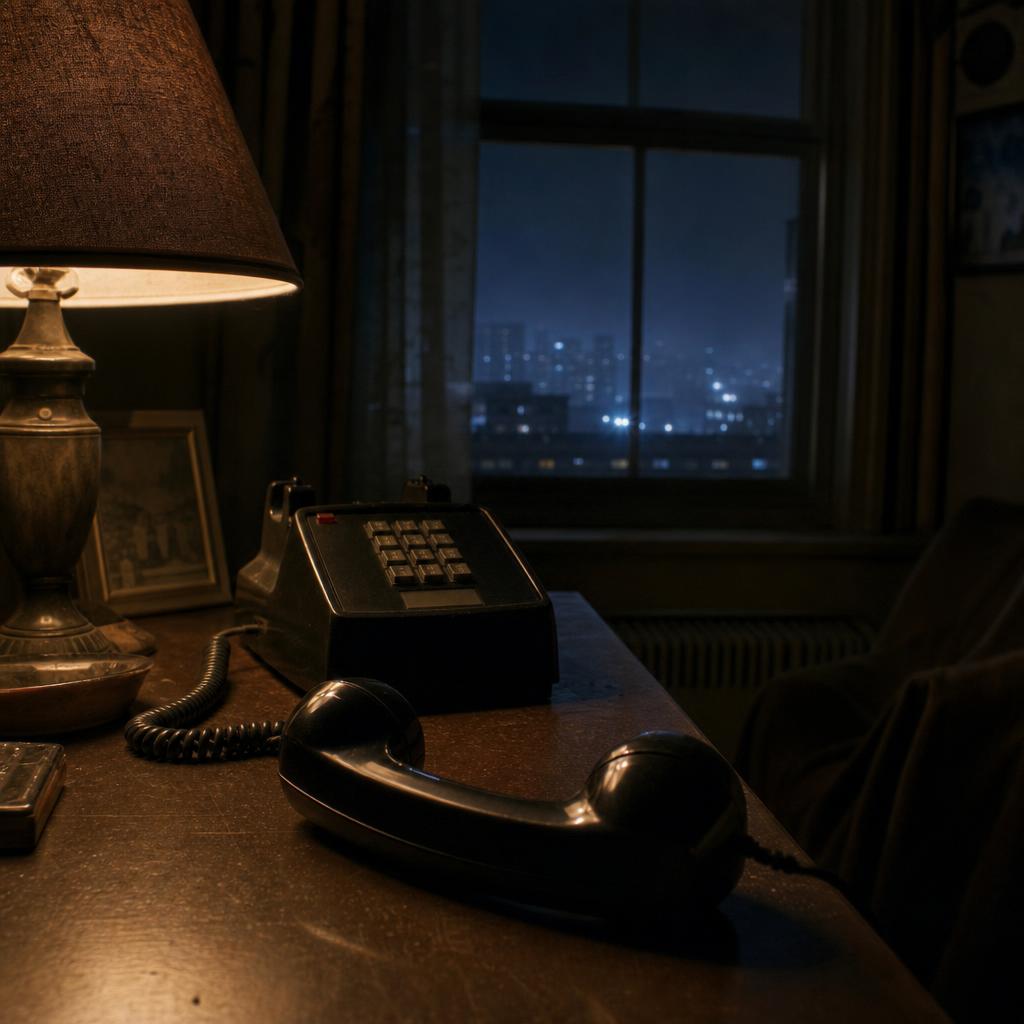
West Berlin on the Phone: The Transatlantic Call
Subscribe
https://meridian-archive.com/feed.xmlOpen in your app, or paste the link above into any other:
The Line
In November 1989 the two halves of Berlin sat in two different countries as far as the telephone was concerned. A call placed from a New York apartment to a West Berlin number was dialed 011, then 49, then 30, then the local digits — the American international access code, the country code for the Federal Republic, the city code for West Berlin.1 To reach a number in East Berlin, a caller in the same apartment dialed a different country code entirely: 37, for the German Democratic Republic, and then a 2. The Wall had a switching-system counterpart that no one had to maintain deliberately. Two exchanges, two national networks, two sets of dialing instructions in the front of two different phone books, for two neighborhoods a few hundred meters apart. The border ran through the numbering plan.
West Berlin local numbers ran five to seven digits, which made the full dialed string from New York roughly twelve to fourteen digits.1 On a touch-tone phone the string took three to five seconds to enter. On a rotary phone — a minority of New York apartments by 1989, but not rare in the older rent-stabilized units still carrying legacy Bell equipment — each digit meant a physical rotation of the dial and its return against the spring at ten pulses a second, and the full number took twenty to thirty seconds to complete.2 The routing at the far end was identical either way; the exchange accepted pulse or tone signaling and converted both. The only thing the caller’s choice of instrument changed was how long the dialing hand was occupied.
What happened after the last digit depended on hardware laid across the ocean floor. TAT-8, the first transatlantic fiber-optic cable, had gone into service in December 1988 — nearly a year before the Wall opened.3 Built by a consortium led by AT&T with British Telecom and France Télécom at a cost of $335 million, it carried 40,000 simultaneous telephone circuits on strands of glass, ten times the traffic of the last copper cable, and the planners who had estimated it would take a decade to fill were wrong by eight and a half years: it reached capacity in eighteen months. A voice leaving a Manhattan apartment traveled to an AT&T switching center, then some seventy-five miles south to the cable landing station at Tuckerton, New Jersey, then under the Atlantic to a landfall in Cornwall or Brittany, then overland through the European network to the West Berlin exchange. Older copper cable and Intelsat satellites still carried the overflow. The caller had no say in the path; the switching equipment assigned each call to whatever circuit was free.
The path decided the sound. A call routed through a geostationary satellite went up to an object parked 35,786 kilometers above the equator and back down, and the trip imposed roughly half a second of round-trip delay — long enough that the two parties talked over each other until they learned to leave gaps, each waiting to be sure the other had stopped.4 Satellite calls carried a faint hiss, an echo the suppression circuits never fully caught, and the disorienting return of one’s own voice a beat late. A call routed through TAT-8 arrived with well under a fifth of a second of delay and almost none of that texture — clean, close, nearly indistinguishable from a call across town. By late 1989 the growing fiber capacity meant most calls came through clear, but any given call might still be handed to a satellite, and the person lifting the handset could not know in advance which ocean they would get.
There was one more signal the caller heard before any voice, and it announced the crossing. An American phone returns a ring-back tone built from two pitches, 440 and 480 hertz together, sounding two seconds and resting four.5 Once the connection reached the West Berlin exchange, what came down the line instead was the German Freizeichen: a single 425-hertz tone, one second on and four seconds of silence, repeating — lower, purer, more clipped than the American double tone, a short clean note and then a long wait. The tone was the confirmation that the dialed string had resolved somewhere on the far side of the ocean and that a telephone was ringing in a room in Europe. Everything up to that point was apparatus. What answered was a person.
The Voice
The person who answered in a West Berlin apartment carried, in the first syllable, a set of facts about class and generation. An educated Berliner born in the 1920s or 1930s — someone who had lived in the city through the war, the rubble years, the blockade, and the Wall — spoke Hochdeutsch in public and professional life almost as a matter of course. By 1989, Berlinerisch, the city’s own dialect, had settled into a sociolect rather than a regional accent: it marked the working class, and the educated middle class had spent the Cold War decades of West Berlin’s subsidized prosperity training it out of their speech to compete for professional work.6 The dialect had become a thing one dropped to sound schooled.
It never dropped completely. Under emotion the trained-down Hochdeutsch thinned and the Berlin underneath came through, feature by feature, in a documented order — the palatal ich hardening first into the velar ick that even careful speakers failed to suppress, then the dental stops, the softened g, the flattened vowels, the swallowed word-endings, until the speech had got faster and blunter and altogether more Berlin. The order was not arbitrary: emotional arousal returns a speaker to the earliest, most embedded patterns, and for a man of this generation those were the sounds of a working-class childhood the professional years had papered over.
The dialect carried an attitude with it, the quality Berliners call the Schnauze — cheeky, direct, quick, spoken fast with the words half-chewed, unwilling to turn sentimental even under feeling. Its most cited grammatical fingerprint was the Akkudativ, the city’s collapse of the accusative and dative into a single case, which produced ick liebe dir where standard German requires ich liebe dich. An educated speaker trained that construction out of professional speech first and lost it last, and it surfaced, when it surfaced, in the moments least available to control.
What such a man would not say to his own child was Ich liebe dich. In German that sentence belonged almost entirely to romantic love; spoken by a parent to a grown daughter it landed wrong to a native ear, like a line mistranslated from an American script. The word for the other love, the durable familial kind, was Ich hab’ dich lieb — literally I have you dear — and in the Berlin mouth, with the case-merger doing its work, it comes out Ick hab dir lieb. For a generation of men raised on the postwar instruction to work hard and not complain, even that was close to the edge of what could be said, and love more often traveled by other means: a warning to take care of oneself, an understatement, the plain warmth left audible in the voice once the formal register had cracked. The endearments that fit the relationship were mein Kind, Kindchen, mein Schatz — the last of these not romantic in family use but the ordinary German word of tenderness, arriving in Berlin as meen Schatz — and, when a father saw the grown daughter as the child she had once been, meine Kleine, in Berlin meene Kleene.
November 9
On the night of November 9 and into November 10, the international circuits to Berlin filled. Everyone with a reason to call was calling at once, in both directions across the Atlantic, and connection times that took only seconds on an ordinary evening stretched as the switching equipment queued for a free path. A New Yorker with family in West Berlin dialed the twelve or fourteen digits, waited through the processing clicks, and got either the fast busy of a saturated network or, eventually, the single low German tone and then a voice.
The voice, that night, was likely to be doing the thing the dialect does under pressure. The word attached to that night in German memory was Wahnsinn — madness, the unbelievable — and the register of a man of that generation, watching from a Berlin window as people walked across a line that had been lethal the day before, ran to understatement even so: Na endlich, wa? — well, finally, right? — the emotion carried by the Berlin surfacing in the grammar rather than by any large declaration. The tenderness of that generation went no further than the two most exposed words of such an exchange, the case-merger intact in both: Pass uff dir uff, meen Schatz. Ick hab dir lieb. Take care of yourself, my treasure. I love you.
The line and the voice reached the same handset from opposite kinds of order. The line was the most controlled object in the exchange — glass drawn to a tolerance, a signal timed to the millisecond, a tone specified to the hertz, a border encoded cleanly in a pair of country codes. The thing it carried was the least controlled: a man’s public German coming apart into the dialect of his childhood at the exact moment the city of that childhood stopped being two cities. Within a few years the encoded border went too — the 37 code retired as the eastern network was folded into the Federal Republic’s, the two Berlins collapsed into a single numbering plan, a call across the old line no different from a call across the street. The cable had been engineered to lose nothing. What it delivered, faithfully, was a voice in the act of giving itself away.
A transatlantic call in 1989 was two facts at once. It was a feat of switching and glass — a string of digits that sorted the Federal Republic from the German Democratic Republic without comment, a cable that had cut the ocean’s delay to almost nothing, a ring tone that told the caller in a single low note that the connection had reached Europe. And it was the most human thing the apparatus ever touched, because on the far end a person answered, and a person of a certain age and city could not fully govern the way they answered. The dialect an educated Berliner had spent a professional lifetime smoothing away came back under feeling, in an order linguists can name, and on the night the Wall opened there was a great deal of feeling. The machinery was built to be transparent, to add nothing and subtract nothing between the two rooms. It succeeded. It carried the ick slipping through the Hochdeutsch, the case-merged dir in place of dich, the whole sound of a man reverting to the boy he had been in a city that had just, impossibly, become whole — and it set that sound down in a New York apartment as clearly as if the window it was spoken from were across the street.
German reunification, formalized in October 1990, would have anchored the Foreign File for the December close that year — the desk’s own account of the two states’ merger, worked over the same transatlantic circuits that had carried the Wall’s opening a year earlier, the retainer in Bonn or whoever could be raised in Berlin filing against redialed static. A span running from the night the border opened to the day the two Germanys signed themselves into one would have found its natural home in the section built to carry news the magazine had not itself witnessed.
The woman who ran the floor then would have placed her own weekly call to Berlin across the same lines the desk was chasing for copy — to a father who had stayed in the city her editors were now writing about. Some weeks the connection would have come back clean and close; others it would have arrived a half-second behind itself, and she would have heard his German thin into the accent of the childhood he had never quite finished training out of. She would not have filed a line of it. The call would have gone back into the pool once she hung up, indistinguishable from the hundred others crossing that week, and nothing in it would have reached the page.
Footnotes
-
“Telephone numbers in Germany” and “Telephone numbers in East Germany,” Wikipedia (West Berlin under country code +49, city code 30/030; the German Democratic Republic under country code +37, East Berlin area code 2). The two German states maintained separate international numbering until reunification. ↩ ↩2
-
“Rotary dial” and “Pulse dialing,” Wikipedia (loop-disconnect pulse dialing at approximately ten pulses per second; DTMF touch-tone signaling as the faster alternative). The dialing times follow from the pulse rate and the twelve-to-fourteen-digit string. ↩
-
“Milestones: Trans-Atlantic Telephone Fiber-Optic Submarine Cable (TAT-8), 1988,” IEEE Engineering and Technology History Wiki; “TAT-8,” Wikipedia (in service December 1988; AT&T–British Telecom–France Télécom consortium; US$335 million; 280 Mbit/s per working pair, 40,000 telephone circuits; landings at Tuckerton, New Jersey, Widemouth Bay, Cornwall, and Penmarch, France; designed capacity reached within eighteen months). ↩
-
“Geostationary orbit,” Wikipedia (orbital altitude 35,786 km above the equator), from which a geostationary-satellite voice path imposes on the order of half a second of round-trip propagation delay, against well under 150 milliseconds for the fiber path. ↩
-
“Ringing tone” and “Call-progress tone,” Wikipedia (German Freizeichen: a single 425 Hz tone, 1 second on and 4 seconds off; North American ring-back: 440 + 480 Hz, 2 seconds on and 4 seconds off). ↩
-
“Berlin German,” English Wikipedia, and “Berliner Dialekt,” German Wikipedia (Berlinerisch as a Low-German-substrate sociolect: ick, det/dit, wat; the g→j shift; monophthongization keen/meen/kleen; the wa? tag; the Akkudativ merger producing ick liebe dir; the Berliner Schnauze register; the mid-century status decline that led educated speakers to suppress the dialect in professional settings). The distinction between Ich liebe dich (romantic) and Ich hab’ dich lieb (familial) is standard German usage. ↩