Transit: The Subway Aesthetic Shift, 1989–2001
Subscribe
https://meridian-archive.com/feed.xmlOpen in your app, or paste the link above into any other:
The Standing Order
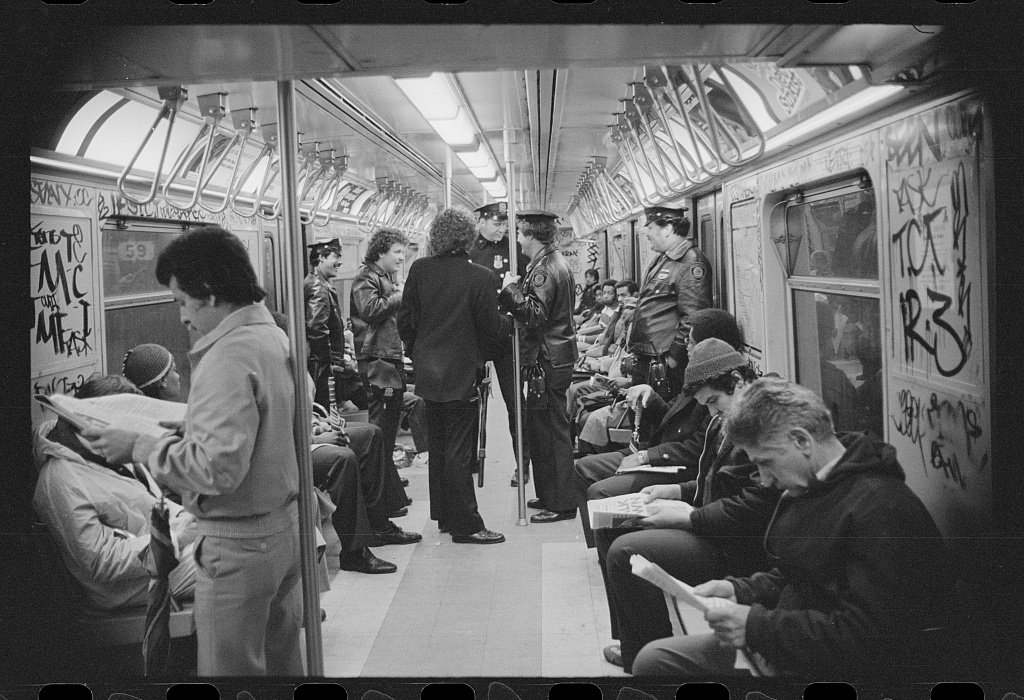
By the late 1980s the Transit Authority administered the buff as a rule with no discretion built into it: a car that came back to the yard bearing graffiti was pulled from service on sight and did not return to the line until every mark on it was gone, whether that took an afternoon’s cleaning or a full repaint.1 The rule did not weigh the piece against the schedule or ask whether the car was needed on the road that day. A whole-car production that had taken a writer a full night to complete could run once, or not at all, before the car went back to the yard and came out clean — the labor erased on a timetable the writer never controlled and the Transit Authority never negotiated. Graffiti removal was not scheduled as one maintenance item among others; it was the precondition a car had to clear before it was allowed to carry a fare-paying passenger at all.
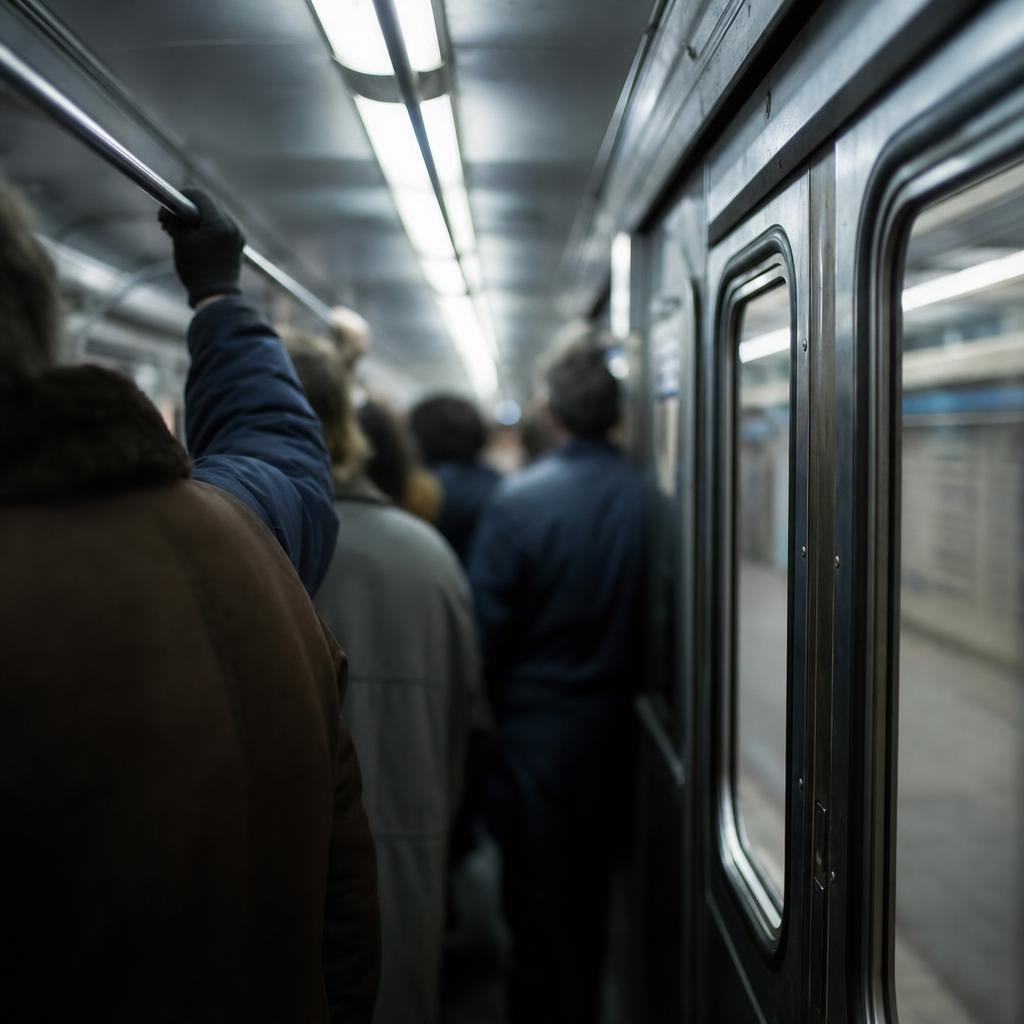
In 1989 the New York City subway carried on the order of a billion trips a year through a system a large part of the professional class had stopped using. The annual count had fallen by roughly three hundred million from its early-1970s peak of more than 1.3 billion, most of the loss to the fear of crime, and the riders who left first were the ones with another way to travel.2 The fare was one dollar.3 A crosstown cab from the Upper East Side to Rockefeller Center — Seventy-ninth and Lexington to the low Fifties — ran the better part of ten dollars with the tip, many times the price of the train that made the same trip underground. The people who could pay the difference paid it. A partner at a white-shoe firm did not ride the subway; a Wall Street managing director did not ride the subway; a senior executive at a Fortune 500 company did not ride the subway. None of this was written down. The line above which a person stopped taking the train was drawn not by salary but by employer and title, and everyone on both sides of it knew where it ran.
Below the line the subway carried the people for whom the alternative did not exist: working and poor New Yorkers, outer-borough commuters with no other way in, students, office workers in the lower salary bands, and the young — professionals in their twenties and early thirties still inside the years when budget discipline meant the platform and not the curb. Between the two was the contested tier, the editors and associates and assistants earning enough for a cab but not enough to take one twice a day. In 1989 many of them rode and were uneasy about it. The uneasiness had a cause. In 1990, the peak year, riders were the victims of 17,497 felonies on the system — robberies, assaults, larcenies, the occasional homicide — and 1989 was close behind it.2
The fear had a shape, and the shape produced habits. The dominant crime was the robbery, and its most-feared form was the wolfpack — a group of young men moving through a car taking chains, Walkmans, and cash — so a rider learned to take the gold chain off before descending the stairs, to keep the Walkman pocketed in the wrong car at the wrong hour, not to fall asleep, to hold the bag in front and not on the back, to avoid an eye without looking away so hard that the looking-away read as fear, and to prefer the crowded middle cars to the empty ends and the car behind the conductor. The calculus shifted by hour and by line. A woman alone on the 2 train at one in the morning decided things she did not have to decide at half past eight, and the lines carried reputations — the Lexington Avenue IRT relatively trusted, certain runs to the outer boroughs late at night not — that every regular rider had memorized without being taught.
The Clean Car
On May 12, 1989, the Transit Authority pulled the last graffiti-covered car from service and declared the system clean.1 The victory was the work of the Clean Car Program, run since the mid-1980s under Transit Authority president David Gunn on a single unbending rule: any car that came back to the yard marked was taken out of service and not returned to the line until the marking was gone. The writers called the removal the buff, and against the buff there was no appeal — a whole-car piece that took a night to paint rode once, if at all, and vanished. Across five years Gunn’s program cleaned, rebuilt, or replaced better than six thousand cars, and the war of attrition ended the way the Transit Authority had promised it would.1 The newest cars, delivered at the end of the 1980s, arrived already smooth and stainless; the older IRT fleet was painted a deep maroon the riders called Redbird, the color put on to cover the marks and keep them covered.
The theory behind the buff was explicit, and it was borrowed. James Q. Wilson and George Kelling had argued in 1982 that visible small disorder — the broken window left unrepaired — signaled that no one was watching and licensed the larger crime; a clean car, on the argument, told rider and robber alike that the system had rules and enforced them.4 The evidence that clean cars cut crime was thin, and crime did not fall in 1989. What the buff changed first was the experience of the ride. A car with smooth stainless walls, orange molded seats, and working fluorescent strips felt unlike a car carrying layers of overpaint and the ghost of old marker underneath, and the difference was legible to a returning commuter as improvement.
It was legible unevenly. A commuter down from Westchester on Metro-North, taking the train the rare times he had cause to, read the clean car as pure gain. A Bronx teenager who had watched specific writers build reputations on specific lines across specific years read it as erasure — the removal of a vernacular that had developed its own technical grammar of fills and throw-ups and its own social order of crews and lineages. The clean car was not neutral. It was a ruling about whose marks belonged in public space. What the buff could not reach was the stations. The cars ran bright through platforms that still leaked, still smelled, and still carried the grime the campaign had lifted off the fleet and never once touched on the walls.
The Crackdown
William Bratton ran the Transit Police from 1990 to 1992, and the subway was the laboratory in which the city’s order-maintenance policing was built before it was carried up to the street.2 Bratton’s focus was fare evasion, which by the early 1990s ran to a daily figure the Transit Authority counted in the hundreds of thousands — turnstile jumpers, gate-pushers, the back-door crowd — a loss the agency read, in the broken-windows idiom, as the visible sign that the system had surrendered.2 The old response had been to count the jumpers; the new one was to arrest them, fingerprint them, and run the names through the warrant database as a matter of course — a routine that turned up an open warrant on roughly one in seven of the ordinary fare-beaters processed and a weapon on roughly one in twenty, a return so consistent the department counted turnstile arrests among its standard methods of clearing wanted men off the system.2
The numbers moved. Felonies on the system fell 27 percent between 1990 and 1992, from the 17,497 of 1990 to about 12,000, and kept falling as the enforcement widened; by 1995 robberies — the crime the riders had feared most — had dropped roughly three-quarters from their 1990 peak.2 On April 2, 1995, at one minute past midnight, the Transit Police ceased to exist as a separate force and became the Transit Bureau of the NYPD — one piece of Mayor Giuliani’s consolidation of the transit, housing, and city forces under a single command.5 The stated reason was operational efficiency. The transit officers, who had largely opposed the merger, watched a mayor gather every force in the city under one authority, and the department with its own history became a bureau designation.
The enforcement removed more than criminals. Through the late 1980s the subway had become shelter — people rode the trains through the night to stay warm, slept in the cars, held territories in particular stations — and order-maintenance policing did not distinguish the sleeper from the robber, because the theory instructed it not to. The disorderly were moved along. Some went to the shelters, some to the street, some to the Grand Central and Penn Station waiting rooms that then drew crackdowns of their own. Where the rest went is not recorded, because the question sat outside the frame in which the improvement was measured. The count that fell was the count of felonies. The count that was never taken was the count of the people for whom the subway had been the last warm room, and who were no longer in it.
The Return
The professional class came back in stages, and the stages tracked the crime statistics with a lag. In the early 1990s a few early returners — people who had grown up on the train and been frightened off it in the 1970s — tried the most-traveled lines at the safest hours, the 4/5/6 and the 1/2/3 at rush. Through the middle of the decade, as Bratton’s reductions were documented and the Times ran its pieces on the turnaround, the trickle became a movement: people who worked in Midtown and lived in the high Seventies began riding the Lexington line instead of raising a hand at the curb. By the late 1990s the subway on certain lines had passed from tolerable to fashionable, a mark of urban competence rather than a confession of its lack.
The fare structure met the returning riders on terms that were not the same for everyone. The unlimited-ride MetroCard introduced in 1995 — sixty-three dollars for thirty days — was a clear saving for anyone riding twice a day, paying for itself in a month and running free after.6 But sixty-three dollars was a single up-front sum, and the rider paid twice a month could plan around it where the cashier paid weekly could not put it down on the first. The token and the pay-per-ride card asked for a dollar and a quarter at a time; the unlimited asked for the month at once, and the saving went most reliably to the rider who least needed it. The card asked for something else, too. It had to be swiped at a speed the hand learned only by repetition, and a swipe too fast or too slow returned the rider PLEASE RE-SWIPE and a line backing up behind him — a small daily failure that fell hardest on the older riders and the recent immigrants who had never had to learn a gesture the token never asked for. The free bus-to-subway transfer that arrived with the card in July 1997 was the genuinely democratizing change, cutting the two-vehicle commute from two fares to one, and system ridership climbed sharply in the years that followed it.6
What the returning riders brought with them was expectation. Platform cleanliness, train frequency, and reliability became the subjects of a middle-class advocacy that the working riders had absorbed for years without a channel to complain through, and the advocacy pulled official attention toward the lines and stations the returners used. The pressure was not wrong; the system needed it. But it was distributed by who was doing the complaining, and the complaining now came loudest from the cars that had been emptiest a decade before.
The class geography of the lines
| Line | 1989 | By 2001 |
|---|---|---|
| 4/5/6 (Lexington IRT) | East Side elite line; many Upper East Side riders had quit it | Reclaimed; frequent, direct, and ridden by the professional class again |
| 1/2/3 (Broadway–Seventh IRT) | Upper West Side spine; academics, students, the Lincoln Center world; more consistently middle-class through the bad years | Crowded and trusted |
| D (Concourse IND) | Bronx essential-worker line under the Grand Concourse; heavy with hospital and service workers | Same riders; the danger had never been a deterrent because the alternative never existed |
| L (Canarsie BMT) | Working-class and immigrant — Polish, Puerto Rican, Hasidic — through Williamsburg | The transformation line; artists and young professionals filling the Bedford Avenue cars |
| G (Crosstown) | Queens to Brooklyn, no Manhattan stop; underfunded, short, forgotten | Still forgotten; no returning professionals, because none had ever ridden it |
The L train was the case the others were measured against. In 1989 it was a working line through Williamsburg, unremarkable, carrying the Polish and Puerto Rican and Hasidic riders who had always been on it. The neighborhood had been named a new bohemia in the press as early as 1992, and by the decade’s end the downtown magazines had followed the artists across the river to it.7 As the cheap rents drew them through the 1990s, the annual entries at the Bedford Avenue station roughly doubled, and the character of the morning car changed with them: the riders heading to shifts in Midtown kitchens and hotels now shared it with riders carrying portfolios and talking about bands.7 The people already on the L did not leave. They were joined, on the same benches, by people who had chosen the neighborhood the way none of them had chosen it — and the subway, which had never stopped being the one New York room where class stood undisguised, kept the two groups in the same fluorescent light for the length of the run.
The subway was the one place in the city where class could not be dressed. In the office the markers were fine and deniable — the right coat, the right school, the ease of access that looked like nothing at all — but on the D train there was no performance available to anyone, and a features editor stood in the same car as a nurse coming off a double at Lincoln Hospital with nothing between them but the pole. The decade’s story is that the editors came back. Between 1989 and 2001 the trains got cleaner, the crime fell hard, and the people who had a choice returned to the platform they had left — and in returning they turned the subway from the thing people rode when they could not afford otherwise into the thing they rode to show they knew the city. What was gained was real: the train got safer, and the safety reached the people who had never been able to leave it as much as the ones who came back. And what the returning class found waiting on the platform was the rest of the city already there, in a single car, on its way to work — the subway doing the one thing the streets above it never had to, which was carry everyone at once.
Meridian would have run the clean-train story in the December 1989 issue, half a year after the Transit Authority declared the buff won that May, and The City would have carried it as the section’s own small triumph made close: the bright cars set against the stations the campaign had never touched, the contrast doing the whole argument’s work without a line of editorializing added.
The City’s June 1990 pages would have taken up the fare-evasion crackdown on its own numbers rather than its politics — the warrant rate among ordinary turnstile jumpers, the weapons the arrests kept turning up — and an articles editor would have shaped it as a floor finally willing to credit enforcement with a result the decade’s fear had made hard to believe. The piece would have priced the fare in the same breath, because a monthly covering the trains that year could not have separated the one from the other.
By the June 1995 issue an editor would have set the Transit Bureau’s absorption into the NYPD on The City’s page as a single paragraph rather than a piece of its own — the badge dissolved at one minute past midnight that April, the merger would have been noted, and the desk would have moved to the next item on the page.
Footnotes
-
Joe Austin, Taking the Train: How Graffiti Art Became an Urban Crisis in New York City (Columbia University Press, 2001), on the Clean Car Program, David Gunn, and the May 12, 1989 declaration. ↩ ↩2 ↩3
-
William J. Bratton with Peter Knobler, Turnaround: How America’s Top Cop Reversed the Crime Epidemic (Random House, 1998). Bratton’s account of the subway’s decline and recovery — the ridership collapse he inherited, the fare-evasion warrant and weapon discovery rates, and the fall in subway crime across the early-to-mid 1990s. ↩ ↩2 ↩3 ↩4 ↩5 ↩6
-
Andrew J. Sparberg, From a Nickel to a Token: The Journey from Board of Transportation to MTA (Empire State Editions / Fordham University Press, 2014), on the 1989–1990 fare. ↩
-
James Q. Wilson and George L. Kelling, “Broken Windows: The Police and Neighborhood Safety,” The Atlantic Monthly, March 1982. ↩
-
George L. Kelling and Catherine M. Coles, Fixing Broken Windows: Restoring Order and Reducing Crime in Our Communities (Free Press, 1996), on subway order-maintenance policing and the 1995 consolidation of the transit force into the NYPD. ↩
-
Sparberg, From a Nickel to a Token, on MetroCard fares, the 1995 unlimited-ride card, and the July 4, 1997 free bus-to-subway transfer. ↩ ↩2
-
Sharon Zukin, Naked City: The Death and Life of Authentic Urban Places (Oxford University Press, 2010), on Williamsburg’s transformation and the L train’s changing ridership. ↩ ↩2