The Bushnell Column: What the Text Actually Was, 1994–1996
Subscribe
https://meridian-archive.com/feed.xmlOpen in your app, or paste the link above into any other:
The Alias Nobody Kept
“Sex and the City” ran for two years in the New York Observer as reporting wearing fiction: Candace Bushnell wrote it, at first as herself and then from behind a semi-autobiographical narrator named Carrie, changing the names of the real, locatable people around her without either the paper or its readers treating the change as a change.1 The device was the column’s foundation and its accepted operating condition, not a subterfuge that succeeded — the Observer’s fifty thousand readers were understood, by Bushnell and by Peter Kaplan, the editor who had hired her, to read straight through an invented name to the person under it, and to do so as routinely as they read the paper’s real-estate listings.2 No one involved treated this as remarkable. It was simply how the column worked: a journalist printing her own life and the men and women in it under names assigned for the occasion, in a paper small enough that the assignment decoded itself.
The first installment appeared November 28, 1994.3 It ran weekly after that. It was not an advice column and not an opinion column; each installment was a compressed reported scene of a few hundred to a thousand words — a conversation at a dinner party, an exchange at a bar, a man’s behavior taken apart afterward with friends — written in a voice that was sardonic, exact, and certain of the rules.
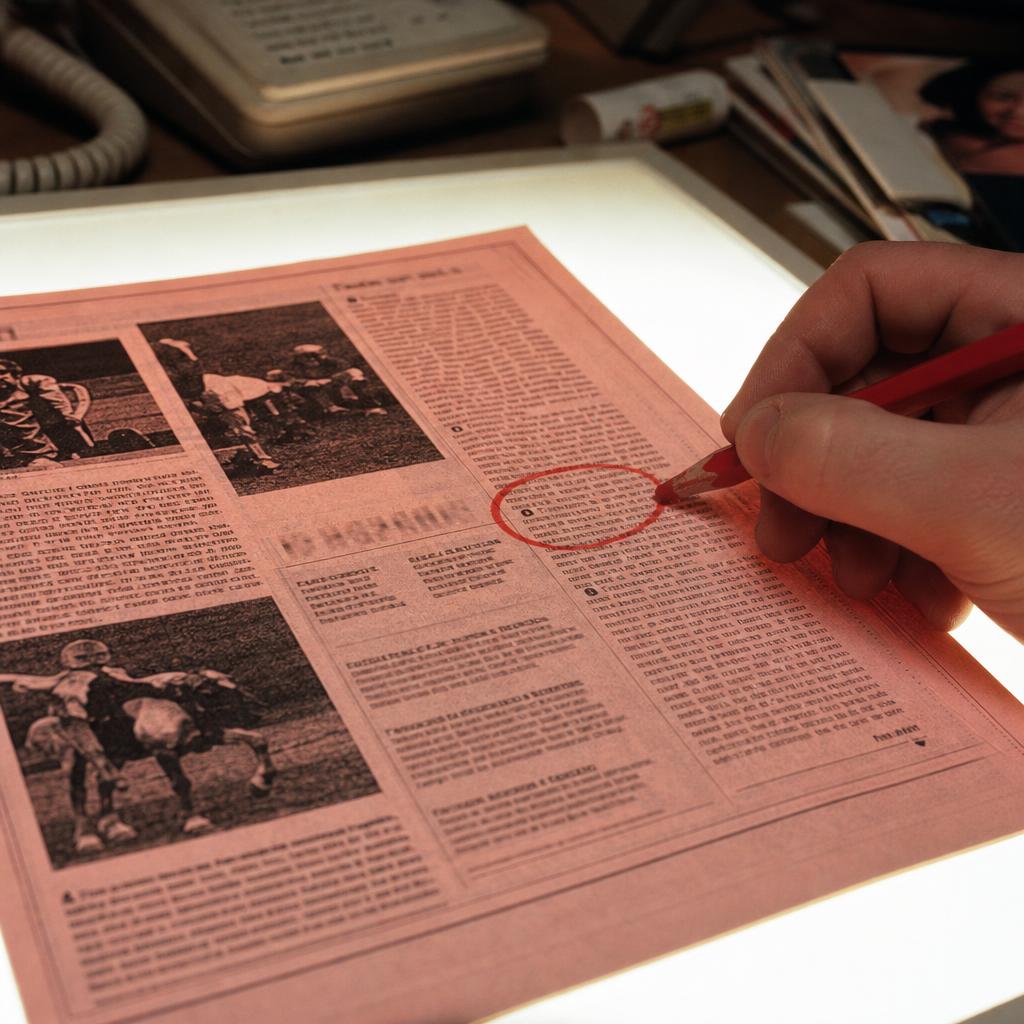
The paper printed on salmon-colored newsprint, roughly fifty thousand copies weekly, disproportionately read by the people it covered: editors, publicists, agents, media executives, real-estate developers, and the people who wanted to be any of those. They read it on the Hampton Jitney. They faxed it to one another. Its reach ran well past its circulation, because its readers were the people who decided what the rest of the city would be reading next. It was not a mass publication telling a general audience about a glamorous elsewhere. It was a small paper telling a specific Manhattan world about itself, and the column was the part of it that world read to each other out loud.
Fourteen Thousand Dollars
Bushnell was thirty-five when the column began. Born December 1, 1958, in Glastonbury, Connecticut, she had come to New York at the start of the 1980s and spent the decade freelancing across the women’s-magazine ecosystem — Mademoiselle, Self, Family Circle, GQ — writing darkly comic pieces about women, men, and dating.1 The sensibility that ran the column was finished before the column existed.
The freelance income was precarious to the edge of collapse. In one year she earned fourteen thousand dollars; behind on the rent, she was evicted from her sublet, and she was sleeping on a friend’s couch when the Observer offered her the column.1 None of that had put her outside the world the column described. She summered in the Hamptons. She went to the book parties. She dated Ron Galotti, a corporate vice president at Condé Nast who had run the business side of Vogue.4 This was not a contradiction to be explained away; it was the exact condition the column existed to document. A person could be broke and simultaneously inside the world of Mortimer’s and Hamptons shares, because access and income were two different things that the same evening required in different amounts. The column was reported from inside the gap between them, by someone standing in it — one of the visible, active, precarious women it called It Girls.
The Arithmetic of the Evening
“We are all kept men and women,” the column proposed, “by our jobs, by our apartments, and then some of us by the pecking order at Mortimers and the Royalton, by Hamptons beachfront, by front-row Garden tickets — and we like it that way.”5 Under the sardonic surface, that sentence carried the column’s actual subject: the cost of participating in New York’s media and social world, and the question of who paid it.
The territory was specific and class-legible. Mortimer’s, the Upper East Side restaurant on Lexington Avenue, was establishment Manhattan — old money, publishing money, a room where the table you were given stated your rank. The Royalton, on West 44th Street, which Ian Schrager had reopened at the end of the 1980s with a Philippe Starck interior, was the opposite pole running on the same principle: the media and fashion world’s lobby, a long bench where people arranged to be seen. The Bowery Bar was the downtown room that drew the same crowd south, and Elaine’s, up on Second Avenue, was the literary pole, where writers and editors ate under the eye of Elaine Kaufman, who decided who sat where. The column mapped the crosstown distance between these places as though it were a distance between kinds of people, because in the world it covered it was. Characters met at these places because these were the places where status was performed and confirmed.
The column was precise about the ritual of the fixed table — not merely eating somewhere but being known there, having the maître d’ produce your name, holding a place other people could see you holding. It marked the line between the people who had arrived and the people still arriving, and the line was the whole game.
The women in the column did not have the money the rooms required. The men they dated — finance men, media executives, publishers and their friends — almost uniformly had more of it, and spent the difference without registering that it was a difference. A dinner for two at the restaurants the column named could cost more than an editorial assistant took home in a week; the column itself paid modestly by the standard of the rooms it described. The men did not notice the arithmetic. The women noticed it constantly, and the column was the record of the noticing.
The gap between what the world cost and what the women earned got closed by one of a few means — a wealthy family, a wealthier man, debt, or a careful management that had to look like ease. The column reported the male behavior at the center of the market — the men who would not commit, who kept a woman for a season as a social accessory and then went quiet — as weather rather than scandal, without outrage and without a remedy. It was equally cold-eyed about the women: the hierarchies they enforced on one another, the self-deceptions about what the men were actually offering. It reached no resolution because the market it described did not offer one.
Being taken seriously by the men who held the institutional power in that world was not free. It required turning up at the right events, in the right rooms, in the right clothes, and it required doing so without pause; a woman who meant to advance could not opt out of the performance, and could not, on what the work paid, easily afford it. The column’s method was to treat that predicament as a reportable fact rather than a private shame.
A Small World
The Observer’s readers took the column as a document about real people, and the world was small enough that they were usually right. The specifics — a particular restaurant, a particular ritual, a particular male behavior rendered with enough precision — made identification straightforward for anyone who moved in the same rooms. Bushnell named no one in print. The naming happened socially, in the reading.
The most durable identification was Mr. Big, the recurring and uncommittable love interest, taken to be drawn in part from Galotti. Bushnell gave him the name for a reason she stated plainly: “He was one of those New York guys with a big personality — you just notice him as soon as he walks in the room.”4 They had met in 1995, while the column was already running. Clifford Streit, a friend, was among the others the readership could place. The mapping was understood rather than printed, which did not make it less exact.
The column also minted a vocabulary for the behavior it catalogued, terms that carried from the paper into the way the city’s media class discussed its own life.5 Bushnell used them clinically, as sociology, not as insult.
The social charge concentrated in precisely the world depicted. To some of the people in it, turning up in the column was proof of centrality and a private pleasure; to others it was an injury. The fifty thousand readers were the fifty thousand people best able to recognize who was meant, so the recognition stayed inside the room the column had been drawn from, and being written about became one more of the goods the world traded in.
What Television Removed
The columns were collected as a book in 1996, published by the Atlantic Monthly Press; the book was substantially the same document, some material reordered and some edges smoothed, the reporting intact.5 What arrived in 1998, when HBO adapted it, was a different thing built on the same premise.6 Darren Star kept the world and reversed its tone.
The adaptation added glamour: the strained aspiration of the column’s wardrobe became fully financed fantasy, the designer shoe a defining trait rather than an occasional splurge. It added the resolution the column had refused, steering its narrator toward romance and, in the end, a wedding. And it smoothed the economics — the televised writer’s finances were famously impossible, unsupportable on a weekly columnist’s income, in exactly the place the column had been honest and even built its subject.
What the adaptation removed was everything underneath: the accounting of what things cost and what the women did and did not have; the coldness about the men, whose on-screen version was made into a romantic lead; the narrator’s own complicity in the rituals she watched; and the class awareness that had marked the line between the women who could afford their lives and the women who could not. The distance between the two versions measured the distance between what a newspaper could print for a knowing Manhattan readership in 1994 and what a television series pitched at a broad and aspirational audience was willing to show in 1998. The column had asked what the world cost and who bore the cost. The series did not ask.
The Bushnell column was, before it was anything else, reporting. Its subject was never really dating; it was the economics of ambition for a woman in New York’s media world in the middle of the 1990s — that access and income were separate things, that appearing at the right events in the right clothes was not optional for a woman who meant to advance and not affordable on what the work paid, and that the shortfall had to be covered somehow. The women in it understood all of this exactly. They read the arithmetic clearly and stayed inside it, because leaving the world altogether was not something they experienced as available to them. That was the column’s steadiness and its refusal both: it did not mistake the people caught in the machinery for fools, and it did not pretend the machinery was gentler than it was. It was a small paper telling a particular city, week by week, something true about itself — which was bearable to that city only because the telling was funny, and only because it came printed on the paper the right people were already holding.
A weekly stapled together on salmon newsprint, read by nearly the same people it wrote about, would have reached the floor within its first few weeks — the fax copies too, passed office to office before anyone on the masthead would have subscribed outright. The City would have carried it: a profile of the column and the small paper’s outsized readership, the kind of oddity the section built for the city describing itself to itself would have been built to take. The piece would have gone into the issue that would have closed that winter, months after the column itself would have debuted, a monthly’s version of promptness.
Two years on, when the columns would have been gathered into a book, the notice would have belonged to The Back — a few hundred words, the length a monthly gives a collection it would already have half-known.
Footnotes
-
Steven Kurutz, “It’s an It Girl! The Birth of ‘Sex and the City,’” The New York Times, June 6, 2018. ↩ ↩2 ↩3
-
“Ex–New York Observer Editor Peter Kaplan Dies at 59,” Associated Press, November 30, 2013. ↩
-
Candace Bushnell, “Sex and the City,” New York Observer, November 28, 1994. ↩
-
Alex Portée, “Is Mr. Big Based on a Real Person? Yes — and He Just Spoke About It,” TODAY.com, July 11, 2025. ↩ ↩2
-
Candace Bushnell, Sex and the City (New York: Atlantic Monthly Press, 1996). ↩ ↩2 ↩3
-
Sex and the City, created by Darren Star (HBO; first aired June 6, 1998). ↩